Showing 15 artworks with Kazimir Malevich and with 1914 and with Accent

-
Kazimir Malevich
-
1914
-
Accent
Not available for this selection
- Espresso
- Putty
- White
- Phthalo Green
- Gray
- Cobalt Violet
- Clay
- Rosy Brown
- Driftwood
- Kazimir Malevich
- Abstract Art
- Suprematism
- Russian Avant-Garde
- Geometric Abstraction
- Malevich Artwork
- Ukrainian Artist
- Malevich
- 1914 Artwork
- Geometric Shapes
- Geometric Forms
- Early 20Th Century
- Russian Art
- Geometric Composition
- Cubism
- Naïve Art
- Early 20Th Century Art
- Abstract Painting
- Black Square Influence
- Naive Art
- Horse Rider
- Painting
- Color Palette
- Avant-Garde Art
- 1914 Art
- Avant-Garde
- Futurism
- Russian Art History
- Cubo-Futurism
- Poster Art
- Mona Lisa
- Contemporary Art
- Malevich Masterpiece
- Windmills
- Hotel Room
- Cubism Painting
- Modern Art Print
- Russian Icon Symbolism
- White Canvas Backdrop
- Wall Decor
- Line Painting
- Black And White
- Gray Palette
- Naïve Art Style
- Composition With La Gioconda
- Yellow Square
- Violent Imagery
- Gun Scene
- Red Coats
- Bold Composition
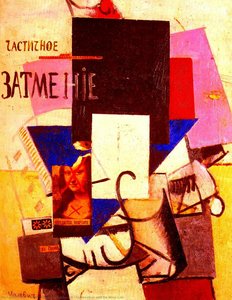
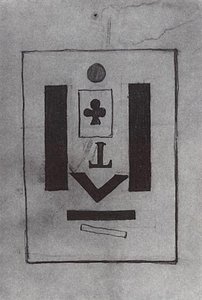
Explore Kazimir Malevich's groundbreaking 'Composition with the Mona Lisa,' a surrealist collage blending Cubism and Suprematism, featuring a striking depiction of Leonardo da Vinci’s iconic portrait.
This artwork explores Malevich’s groundbreaking Suprematism movement—a rejection of traditional realism in favor of geometric abstraction and mystical perception. It debuted at ‘The Last Futurist Exhibition,’ showcasing the artist's belief that art could transcend material reality.
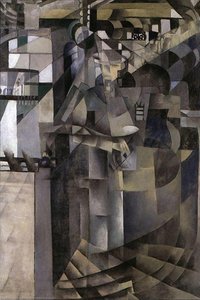
'Living in a big hotel' was created in 1914 by Kazimir Malevich in Cubo-Futurism style. Find more prominent pieces of genre painting at Wikiart.org – best ...
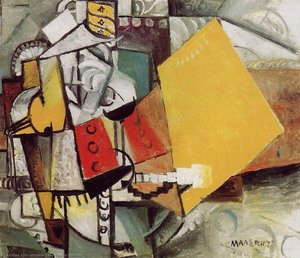
Kazimir Malevich's 'Guard,' painted in 1914, embodies the radical principles of Suprematism—a movement he spearheaded—characterized by geometric abstraction and a rejection of representational imagery. Featuring a prominent yellow square surrounded by simpler shapes, it exemplifies Malevich’s quest for pure visual experience.
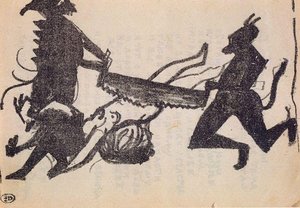
--- Kazimir Malevich (1879-1935): A pivotal figure in abstract art, Malevich’s ‘Devils Sawing a Sinner,’ created in 1914, embodies the raw emotion of Naïve Art. This striking black and white poster showcases two demonic figures brutally sawing through a sinner's body—a chilling commentary on sin and punishment. Explore its artistic significance and lasting legacy.
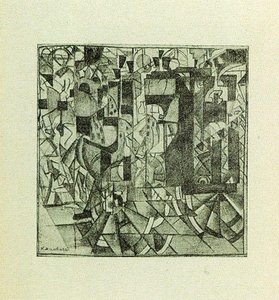
“The crew on the move” was created in 1914 by Kazimir Malevich in Cubo-Futurism style. Find more prominent pieces of genre painting at WikiArt.org – best visual art database.
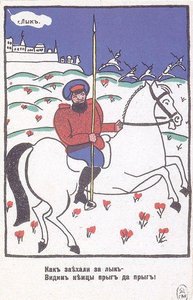
Kazimir Malevich’s ‘As We Stopped For Lyk,’ painted in 1914, embodies Cubo-Futurist abstraction and pure emotion—a cornerstone of early 20th century art. Explore this iconic piece at WikiArt.org – your premier source for visual art.
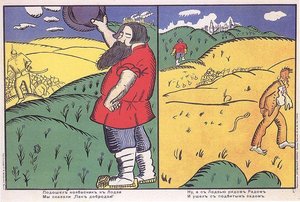
Explore Kazimir Malevich’s ‘Sausage Maker Came to Lodz,’ a vibrant Naïve Art poster depicting a humorous scene with figures and an umbrella amidst rural landscapes. Discover more iconic Malevich artworks.
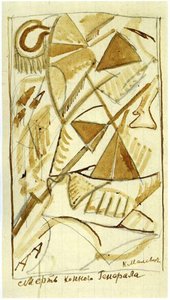
Kazimir Malevich’s striking Cubo-Futurist painting ‘Death of the Mounted General,’ created in 1914, captures a dynamic scene with bold geometric shapes and lines depicting a rider falling from his horse – an unforgettable glimpse into early 20th-century art.
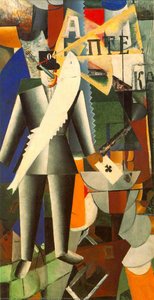
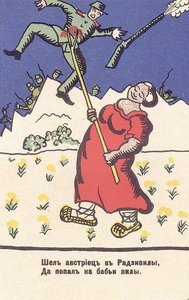
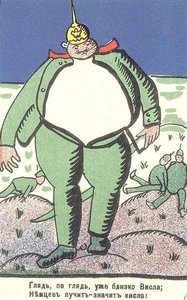
Kazimir Malevich’s striking ‘Austrian Went Into Radziwill,’ a bold abstract painting from 1914, captures a dramatic confrontation amidst mountainous landscapes—a testament to the artist's pioneering exploration of geometric abstraction and his influence on the Russian avant-garde.
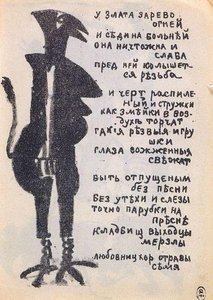
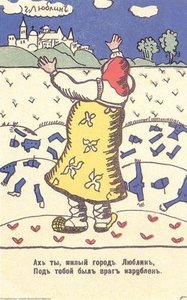
“Oh, my dear city of Lublin” was created in 1914 by Kazimir Malevich in Naïve Art (Primitivism) style. Find more prominent pieces of poster at Wikiart.org – best visual art database.
Malevich was a Ukrainian artist who profoundly influenced 20th-century art through his exploration of abstraction. His seminal work, ‘Black Square,’ remains an emblem of artistic innovation.
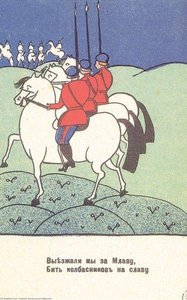
Kazimir Malevich's 'We Went Out of Mlawa' (1914) – a pioneering Naïve Art masterpiece! Explore bold colors, dynamic movement & Suprematism’s core philosophy. Hand-painted reproduction available.