Showing 24 artworks out of 50 with Kazimir Malevich and with Cubism

-
Kazimir Malevich
-
Cubism
Not available for this selection
- Gray
- Espresso
- Putty
- Phthalo Green
- Black
- Clay
- White
- Driftwood
- Brown
- Royal Blue
- Sap Green
- Quinacridone Magenta
- Rosy Brown
- Celadon
- Mahogany
- Bronze
- Khaki
- Coral
- Kazimir Malevich
- Suprematism
- Abstract Art
- Cubism
- Geometric Abstraction
- Malevich
- Russian Art
- Geometric Shapes
- Malevich Artwork
- Russian Avant-Garde
- Avant-Garde Art
- Avant-Garde
- Color Palette
- Suprematism Art
- Modern Art
- Early 20Th Century Art
- Ukrainian Artist
- Geometric Art
- Painting
- Cubist Painting
- 20Th Century Art
- Art Deco Influence
- Oil Painting
- Early 20Th Century
- Kazimir Severinovich Malevich
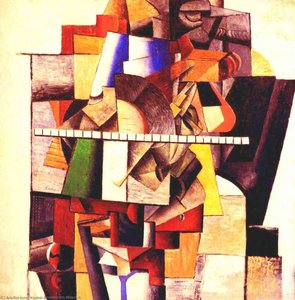
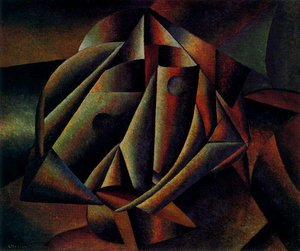
Explore Malevich's revolutionary 'Portrait of Matiushin,' a Cubist masterpiece showcasing geometric forms and vibrant colors. A pivotal work of Suprematism, now available as a handmade oil reproduction.
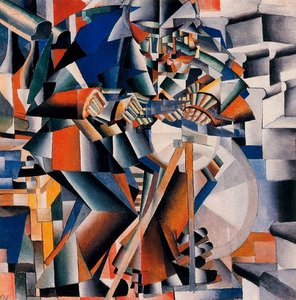
Explore Kazimir Malevich’s ‘Knife Grinder.’ A pivotal Cubist masterpiece showcasing dynamic abstraction & geometric forms. Discover Suprematism's influence on modern art.
Kazimir Malevich's 'Composition VIII,' painted in 1935, embodies Suprematism—a radical abstraction prioritizing geometric forms like squares and circles over recognizable imagery. Its stark simplicity reflects Malevich’s belief in art as pure intellect.
Kazimir Malevich was a Ukrainian pioneer of abstract art, profoundly influenced by folk culture and early exposure to Impressionism, Symbolism, Fauvism, and Cubism. His journey to Paris ignited his passion for modern artistic innovation.
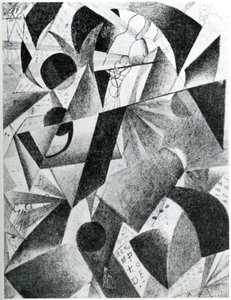
Kazimir Malevich’s ‘Pilot’ (1913) – a striking black & white abstract study in geometric forms. Explore Cubism, dynamic lines & spatial ambiguity. A key work by a pioneer of modern art.
Kazimir Malevich (1878-1935): Ukrainian founder of Suprematism & pioneer of abstract art. Explore iconic works like Black Square, geometric forms, & pure feeling's impact on 20thC art.
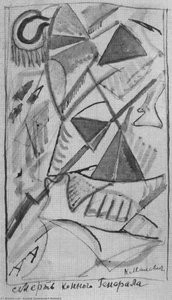
Kazimir Malevich’s ‘Death of the Calvary General,’ executed in 1914, embodies Suprematism's core principles: geometric abstraction and pure emotion. This grayscale sketch showcases angular shapes and bold lines reflecting Cubist aesthetics—a pivotal moment in modern art history.
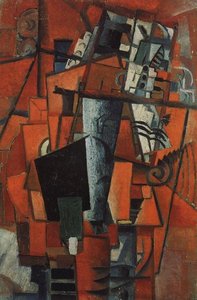
Explore Kazimir Malevich’s ‘The Lady at the Piano,’ a Cubist masterpiece of red & orange geometric abstraction. Discover Suprematism's bold vision of urban alienation.
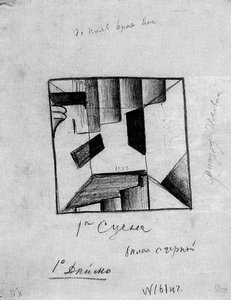
Explore Kazimir Malevich's 'Stage Design, Act 1, Scene1,' a striking black and white Suprematist sketch embodying geometric abstraction and theatrical dynamism. Discover its influence on modern art & see it reproduced in exquisite detail.
Kazimir Malevich’s ‘Reapers’ (1929) exemplifies Suprematism, prioritizing pure geometric abstraction while subtly referencing Ukrainian folk traditions. This painting portrays three women harvesting crops against a dramatic sky, utilizing simplified shapes and expressive colors to convey the essence of rural toil. Explore its influence on 20th-century art through WikiArt and Artchive.
Explore Kazimir Malevich's 'Cubism. Portrait of a Builder,' a groundbreaking abstract painting embodying Suprematism’s core principles – geometric forms and pure feeling. Discover its influence on modern art history.
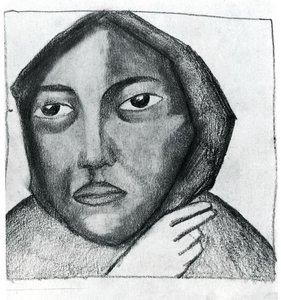
Kazimir Malevich's 'Praying Woman' (1912) is a poignant charcoal sketch capturing spiritual contemplation through simplified lines and muted tones, embodying Expressionist emotion.
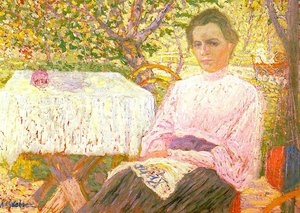
Portrait of a Member of the Artist's Family by Kazimir Malevich (1906). This serene depiction captures a woman lost in contemplation at a table adorned with a vase and book, embodying Malevich’s pioneering approach to abstract art – calm, elegant, and profoundly expressive.
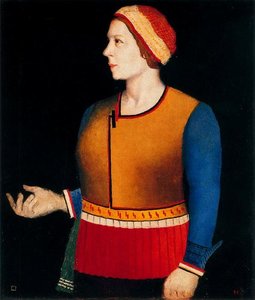
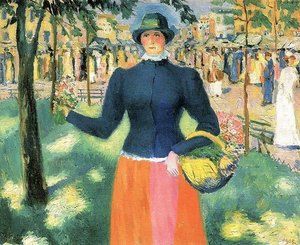
Flowergirl (1930) by Kazimir Malevich is a vibrant Post-Impressionist portrait capturing a woman amidst a garden scene, adorned with umbrellas and featuring an orange dress—a testament to Malevich's pioneering exploration of abstract art.
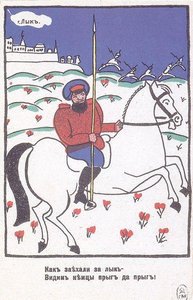
Kazimir Malevich’s ‘As We Stopped For Lyk,’ painted in 1914, embodies Cubo-Futurist abstraction and pure emotion—a cornerstone of early 20th century art. Explore this iconic piece at WikiArt.org – your premier source for visual art.
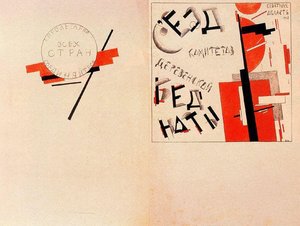
Kazimir Malevich's "Front and Back Program Cover" is an arresting abstract composition featuring bold red squares and black triangles—a seminal piece reflecting the spirit of Russian avant-garde during the turbulent years following World War I.
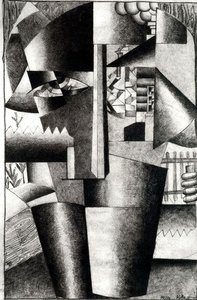
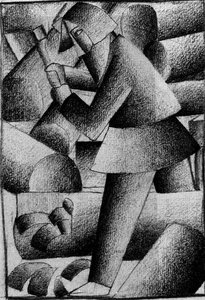
Discover 'The Woodcutter 1,' a striking Cubist-inspired artwork featuring fragmented geometric forms and monochromatic tones. Perfect for modern art collectors seeking depth, abstraction, and artistic innovation.
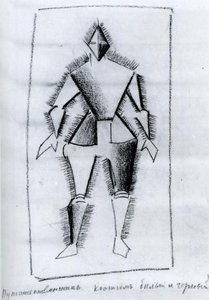
Kazimir Malevich’s ‘Traveler’ (1913): A striking abstract sketch of an armored figure in black & white. Explore Cubist influences & deconstructed form – a key Suprematist work.
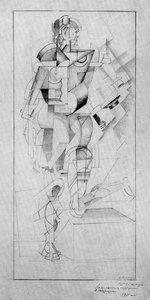
Explore Kazimir Malevich’s Cubo-Futurist drawing – a dynamic geometric study of a woman in pencil. Discover early 20th-century abstraction & Russian avant-garde art.
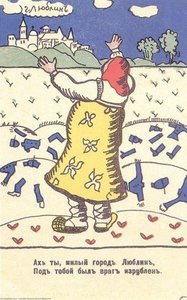
“Oh, my dear city of Lublin” was created in 1914 by Kazimir Malevich in Naïve Art (Primitivism) style. Find more prominent pieces of poster at Wikiart.org – best visual art database.
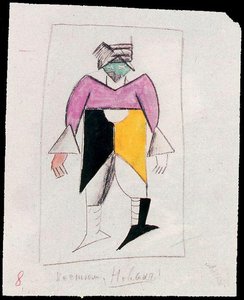
The New One by Kazimir Malevich – An abstract painting featuring a figure dressed in yellow and black geometric costume. Exploring form and structure through bold colors, this piece embodies the pioneering spirit of Russian avant-garde.