 Preview
 Send
Send Share
Share
 Details

 Download
 Similars
 X-Ray
X-Ray Diaporama
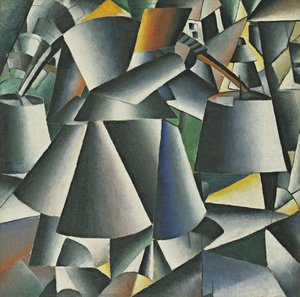
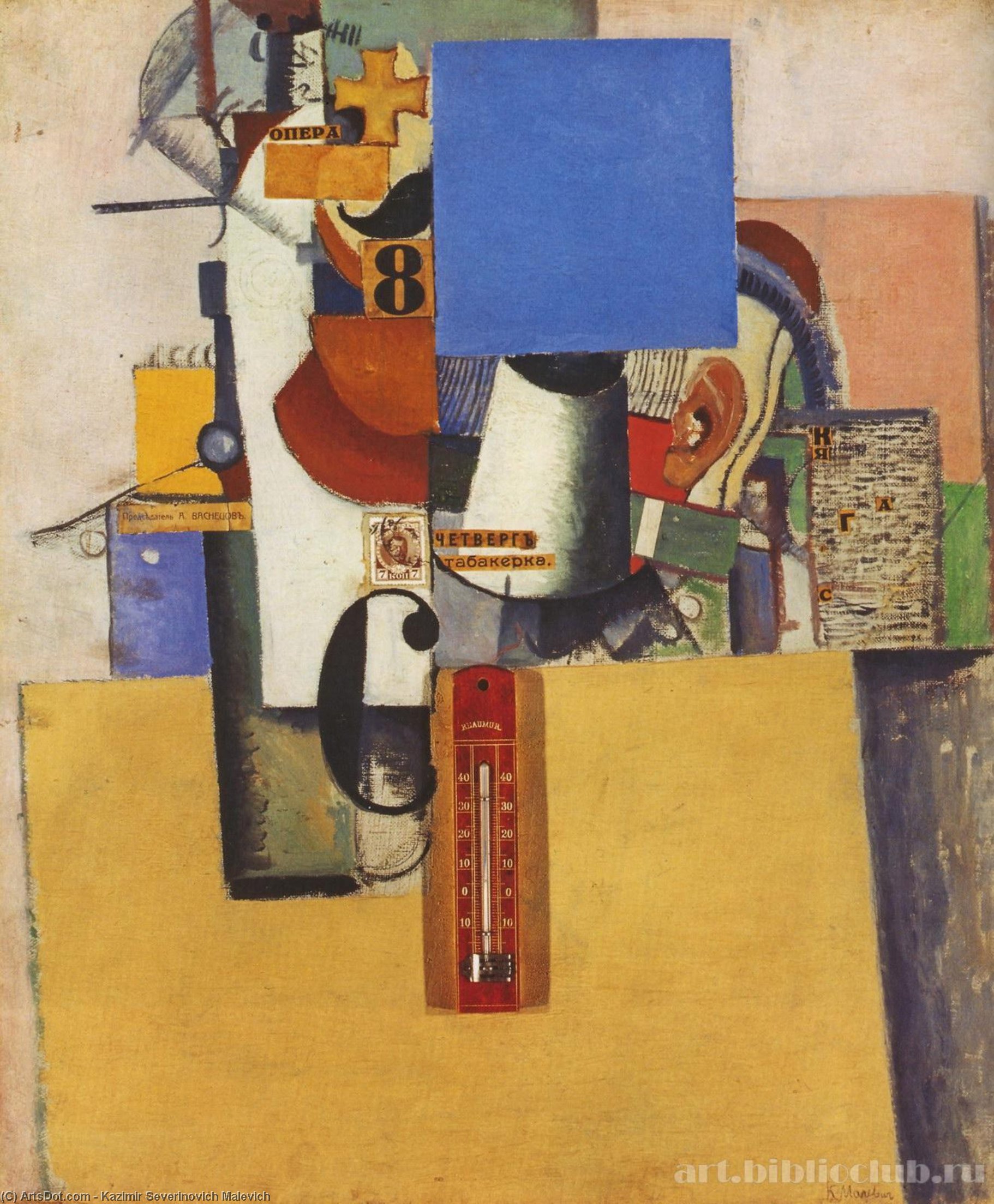
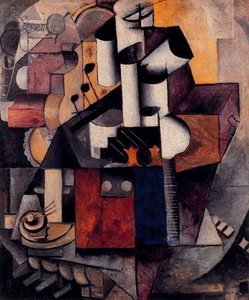
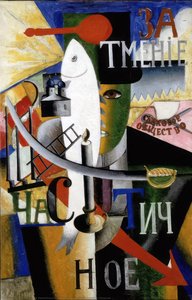
Soldier of the First Division


 Read More
Hand Made Oil Reproduction
Hand-painted oil on canvas in your size and frame, made to order by our artists. ( Buy Print Buy Image)




P118B $10

P118H $10

P118W $10

P438Z $10

P508JH $12

P508YH $12

P805H $10

P805Z $10

P919BZ $10

P919G $10

P919XJ $10

P959ZH $10

P968JZ $12

W106C $8

W218G $10

W218JH $8

W218Y $10

W307PJ $10

W316G $10

W316PJ $8

W316Y $10

W398PJ $8

W4111J $10

W500HY $15

W500JH $15

W692G $12

W849H $8

W940BG $15

W953PJ $8




Pick from our preset sizes that match the artwork's original proportions.

You may enter your own dimensions to fit a specific frame or space. If your selected size does not match the original image's proportions, we will either crop the artwork or extend the painting with additional hand-painted elements. A digital mockup will be sent for your approval before production begins.
Please note that the on-screen preview does not reflect the actual cropping or extension. Only the mockup will accurately show the final composition.
While custom sizes are available, we recommend selecting a dimension from the predefined list to preserve the original proportions.
After order, ArtsDot.com team will email client for instructions and provide a mockup preview
Worldwide Delivery () in 3/4 weeks instead of standard 5 weeks. (16 August). No compromise on quality.

Free Worldwide Express Shipping

High-Quality Linen Canvas

Full Shipping Insurance

Customs Tax Refund Guarantee

True Color Matching Guarantee

60-Day Return Policy (Defects Only)

100% Money-Back Guarantee

Bulk Discount Offer
 Glass option is only available in size under 110 CM

Soldier of the First Division
Reproduction Medium
Reproduction Size
-


Total Price
$ 263
Artwork Description
Kazimir Malevich: A Pioneer of Abstract Art
Kazimir Severinovich Malevich (1879–1935) stands as an undisputed titan among Russian avant-garde artists, recognized globally for his groundbreaking contribution to the genesis of abstract art. Born in Kyiv Oblast, Ukraine, to Polish parents who had fled Poland following the January Uprising of 1863 against Russian rule, Malevich’s formative years instilled within him a profound appreciation for Ukrainian folk culture and its artistic traditions—a sensibility that would subtly permeate his subsequent explorations into radical visual expression. Formal training commenced in Kyiv, yet he swiftly pursued broader horizons, gravitating towards Moscow and immersing himself in the burgeoning currents of European avant-garde movements. This journey exposed him to Impressionism, Symbolism, Fauvism, and Cubism, fostering a synthesis of influences that would ultimately propel him toward his singular artistic vision. A pivotal trip to Paris in 1912 proved transformative, introducing Malevich to the revolutionary ideas circulating amongst Parisian artists—particularly those championed by Pablo Picasso and Georges Braque—who were pioneering Cubist techniques. This encounter ignited within him a fervent desire to transcend representational art altogether, seeking instead to liberate painting from illusionistic depiction and tap into its inherent capacity for conveying pure emotion and spiritual essence. He began experimenting with geometric forms—squares, circles, rectangles—as building blocks of his compositions, rejecting naturalistic imagery in favor of simplified shapes that prioritized visual clarity and intellectual rigor. The culmination of this artistic quest arrived in 1915 with the creation of *Black Square*, arguably Malevich’s most iconic work and a cornerstone of Suprematism—a movement he founded alongside Vladimir Tatlin and Mikhail Larionov. This monumental canvas, executed in black pigment on unstretched linen, embodies Malevich's core aesthetic principles: absolute abstraction, geometric reduction, and the elimination of any reference to external reality. The square’s stark simplicity is deliberately unsettling, confronting viewers with a confrontation between form and color—the absence of recognizable imagery forcing them to engage directly with the painting’s underlying structure and emotional resonance. Malevich famously declared that “The square is not a subconscious form. It is the creation of intuitive reason,” articulating his conviction that Suprematism represented a decisive break from artistic conventions established throughout history. Malevich's influence extended far beyond the confines of Russian art, resonating across Europe and inspiring artists as diverse as Piet Mondrian and Josef Albers. His unwavering commitment to geometric abstraction—characterized by orthogonal lines and primary colors—became a foundational element in the development of Minimalism, shaping artistic discourse for decades to come. The Kunstmuseum Bern, Switzerland, houses an impressive collection of Malevich’s paintings, including *Black Square*, offering visitors a privileged opportunity to contemplate the breadth and depth of his artistic legacy. His unwavering belief in the transformative power of art—and its capacity to transcend cultural boundaries—continues to inspire artists and thinkers alike. Handmade oil painting reproductions of Kazimir Malevich's masterpieces, such as *Soldier of the First Division*, are available for purchase on ArtsDot.com. These reproductions meticulously recreate Malevich’s distinctive style, capturing the vibrancy of his color palette and the precision of his geometric forms—allowing art enthusiasts and collectors to experience the profound aesthetic impact of this seminal artwork in their own homes. The Kunstmuseum Bern's holdings provide invaluable insight into Malevich's artistic trajectory and underscore the enduring significance of his contribution to modern art history.Related Artworks
Artist Biography
Kazimir Malevich: A Pioneer of Abstract Art
Early Life and Influences
- Born in Kyiv Oblast, Ukraine in 1878 to a Polish family, Kazimir Severinovich Malevich’s early life was shaped by the rural Ukrainian landscape and its rich folk culture.
- His upbringing instilled in him an appreciation for traditional artistic expressions that would later subtly influence his work.
- Formal training began in Kyiv, but Malevich quickly sought broader artistic horizons, moving towards Moscow and eventually engaging with the burgeoning avant-garde movements of Europe.
- Key Influences: Early exposure to folk art, combined with a desire for modern expression, formed the foundation of his unique style.
Artistic Development & Key Movements
- Initially, Malevich explored various styles including Impressionism, Symbolism, Fauvism, and Cubism. A pivotal trip to Paris in 1912 exposed him to the latest developments in European art.
- He gradually moved away from representational forms, seeking a purely artistic language based on geometric shapes and color.
- This led to the development of Suprematism around 1915 – an abstract movement focused on “the supremacy of pure feeling” in art.
- Suprematism rejected any attempt to depict objects from the visible world, instead prioritizing basic geometric forms like squares, circles, and rectangles.
Major Achievements & Notable Works
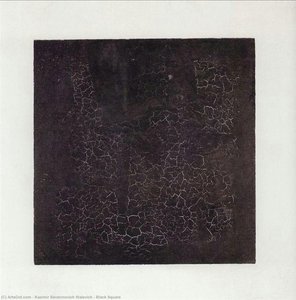
- Black Square (1915): Arguably his most famous work, it represents a radical departure from traditional art and is considered a foundational piece of abstract painting.
- White on White (1918): A series exploring the purity of form and color, featuring white geometric shapes against a white background – pushing abstraction to its limits.
- Stroyuschiysya dom [House under Construction] (1916): An early example of Suprematism showcasing his unique perspective on Ukrainian culture through abstract forms.
- He also wrote extensively on art theory, articulating the philosophical principles behind Suprematism and advocating for a new artistic consciousness.
Historical Significance & Legacy
- Malevich’s work profoundly impacted the development of 20th-century abstract art, influencing movements like Minimalism and Constructivism.
- He challenged conventional notions of representation and paved the way for non-objective art.
- His ideas about pure feeling and geometric abstraction continue to resonate with artists today.
- Despite facing political persecution under Stalin – initially supported, then suppressed – Malevich persevered in his practice and teaching.
- Influence on Later Artists: He directly influenced artists like El Lissitzky and indirectly shaped countless others through the enduring legacy of Suprematism.
Later Life & Death
- In his later years, Malevich revisited figurative painting, attempting to synthesize his abstract principles with representational forms.
- He continued to teach and write about art until his death in Leningrad (now St. Petersburg) in 1935.
- His work remained relatively obscure for decades after his death but experienced a resurgence of interest in the latter half of the 20th century, solidifying his place as one of the most important figures in modern art history.
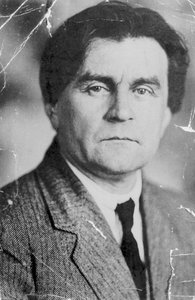
Kazimir Malevich
1878 - 1935 , Ukraine
Quick Facts
- Artistic Movement Or Style: Suprematism, Abstract Art
- Artists Or Movements Influenced By This Artist:
- Minimalism
- Constructivism
- El Lissitzky
- Artists Who Influenced This Artist:
- Cubism
- Fauvism
- Impressionism
- Date Of Birth: 1878
- Date Of Death: 1935
- Full Name: Kazimir Severinovich Malevich
- Nationality: Ukrainian/Russian
- Notable Artworks:
- Black Square
- White on White
- House under Construction
- Place Of Birth: Kyiv, Ukraine
Related Articles
Kazimir Malevich: 25 Masterpieces of Suprematism & Abstract Art | ArtsDot
Explore 25 iconic artworks by Kazimir Malevich, pioneer of Suprematism & abstract art. Discover the stories behind 'Black Square' and more! Find museum-quality prints & elevate your home decor with ArtsDot.com.

Geometric Abstraction's 10 Defining Masterpieces | Art for Your Home - ArtsDot
Explore 10 defining masterpieces of Geometric Abstraction! Discover Kandinsky, Mondrian & Malevich’s iconic works. Find museum-quality art reproductions and curated decor ideas to elevate your home at ArtsDot.com.
Kazimir Malevich: Pioneering Suprematism & the Quest for Non-Objective Art
Explore the revolutionary art of Kazimir Malevich & his groundbreaking Suprematism movement. Discover the origins, core principles, and lasting impact of this pivotal force in modern abstract painting.
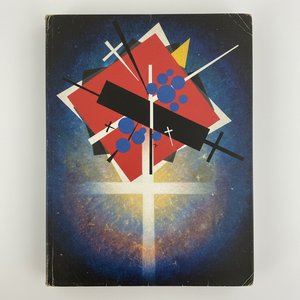
Beyond Representation: Exploring the Radical Geometry of Suprematism & Its Spiritual Foundations
Explore the revolutionary world of Suprematism with our expert guide. Discover Kazimir Malevich's groundbreaking art, its spiritual foundations & lasting influence on modern design. Learn about collecting this iconic movement.
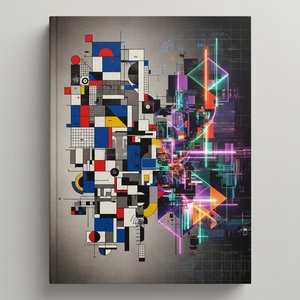
Beyond Form & Color: Geometric Abstraction's Evolution in 20th/21st Century Art
Explore the evolution of geometric abstraction from Cubism to contemporary art. Discover key artists like Malevich & Mondrian, investment insights, and expert collecting advice at ArtsDot.
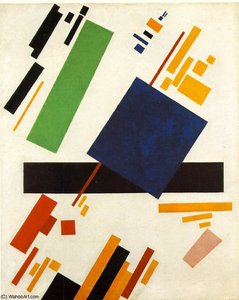
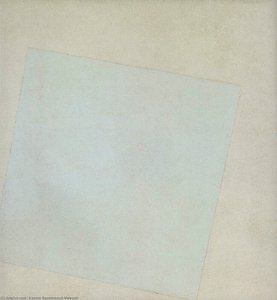
![Black circle [1913] State Russian Museum,](/media/artworks/images/thumbnails/29/9f/299f2153e48d4d70918e77144b5835a6.jpg)