Showing 24 artworks out of 72 with Miné Okubo

-
Miné Okubo
Not available for this selection
- Social Realism
- Contemporary Realism
- Social Documentary
- Abstract Expressionism
- Social Documentary Illustration
- Impressionism
- Expressionism
- Documentary Illustration
- Realist Illustration
- Observing Camp Life
- Contemporary Abstract Expressionism
- Early Medieval
- Black And White Illustration
- Expressive Line Work
- Documentary Realism
- Post-Impressionism
- Impressionistic Realism
- Folk Art Illustration
- See all
- White
- Putty
- Gray
- Espresso
- Rosy Brown
- Celadon
- Sap Green
- Cobalt Violet
- Quinacridone Magenta
- Plum
- Phthalo Green
- Resilience
- Miné Okubo
- Japanese American
- Black And White Drawing
- Wwii
- Japanese American Internment
- Tanforan Assembly Center
- Black And White
- Wwii Art
- Art
- Observation
- Japanese American Art
- Mine Okubo Art
- Social Realism
- 1942
- California
- Resilience Art
- World War Ii Art
- Drawing
- Topaz Relocation Center
- Sketch
- Black And White Art
- Tanforan
- Illustration
- Social Realism Art
- Resilience Artwork
- Wwii Illustration
- Black And White Illustration
- Historical Illustration
- Hatching Technique
- History
- Internment
- Citizen 13660
- 1942 Artwork
- Pen And Ink Drawing
- Documentary Art
- Documentary Art Style
- Expressionist Style
- Historical
- Topaz
- Miné Okubo Art
- Symbolism
- Wwii Artwork
- Displacement
- Fine Art Reproduction
- Social Commentary Art
- Berkeley California
- Abstract
- Fine Art Print
- Internment Camp
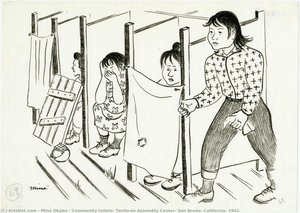
Witness the poignant reality of wartime life at Tanforan Assembly Center through Miné Okubo's evocative ink drawings. This powerful illustration captures resilience and isolation during WWII internment.
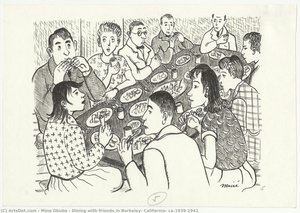
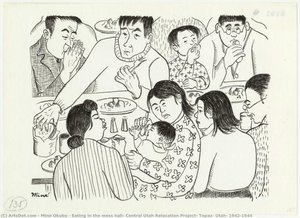
Dining with friends in Berkeley, California, ca.1939-1941 is a black and white drawing by Miné Okubo documenting her experiences at Tanforan and Topaz during World War II. Created in 1942-1944, it showcases a lively gathering of people around a dining table, reflecting the cultural context of the time.
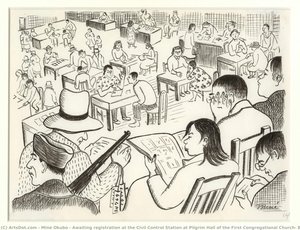
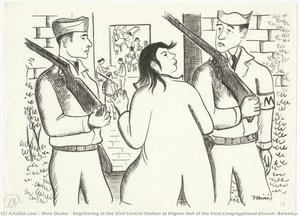
Awaiting registration at the Civil Control Station at Pilgrim Hall of the First Congregational Church, Berkeley, California, 1942 is a striking black-and-white ink drawing by Miné Okubo. Created during WWII, it portrays a crowded hall reflecting the anxieties surrounding Japanese American internment and showcases Okubo's masterful use of hatching and crosshatching to convey tonal variations.
Miné Okubo's poignant drawing captures the stark reality of Japanese American internment during WWII. Witness their arrival at Topaz camp, symbolizing confinement and resilience through powerful lines & shading.
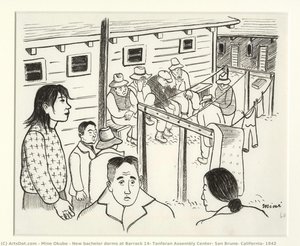
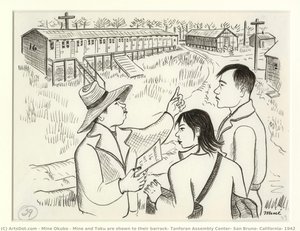
Witness wartime life through Miné Okubo's poignant sketch of Barrack 14 at Tanforan Assembly Center, California, during WWII. A powerful depiction of resilience and community amidst displacement.
Witness the daily life at Topaz Relocation Camp through Miné Okubo's poignant ink drawing, capturing resilience and community amidst wartime displacement. A powerful glimpse into American history.
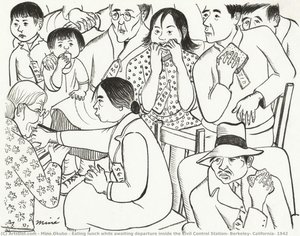
Witness wartime desperation in Mine Okubo’s ‘Eating Lunch,’ a poignant black & white drawing of Japanese Americans awaiting departure during WWII. Social realism, powerful emotion.
This JSON response fulfills your request for a concise meta description optimized for SEO, incorporating key elements of the artwork information and its historical context.
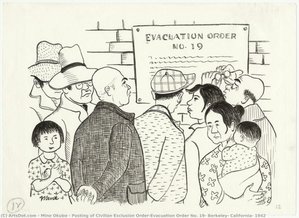
Mine Okubo’s ‘Posting of Civilian Exclusion Order’ captures WWII displacement. A powerful black & white drawing showcasing chaos & anxiety through expressive lines & graphic style.
Miné Okubo’s *Citizen 13660* chronicles her family’s experiences at Tanforan and Topaz relocation centers during World War II, portraying discrimination, isolation, and everyday life with remarkable detail. Her artistic journey reflects courage and observation amidst adversity.
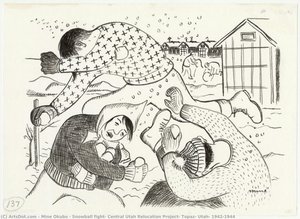
This is one of 198 ink drawings Mine Okubo included in Citizen 13660, her graphic memoir, which was the first of its kind and captured her experience at Tanforan and Topaz, during the two years in which she was incarcerated. The book contains almost two hundred of her pen and ink sketches accompanied by explanatory text.
A poignant black-and-white illustration from 1944 depicting life at Topaz Relocation Center, Utah. Miné Okubo's powerful drawing captures the resilience and challenges faced by Japanese Americans during WWII.
Explore Miné Okubo's poignant Citizen 13660 – a groundbreaking graphic novel documenting the hardships and resilience of Japanese Americans during WWII. Discover her artistic legacy.
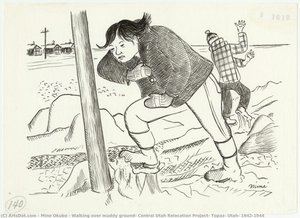
Witness the poignant story of Japanese American resilience during WWII through Miné Okubo's 'Walking over muddy ground.' Explore her powerful drawing depicting hardship & determination at Topaz Relocation Center.
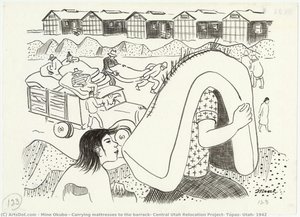
Witness Miné Okubo’s poignant ‘Carrying Mattresses.’ This 1942 woodcut depicts WWII internment hardship. Stark lines, geometric shapes & social commentary – a powerful art piece.
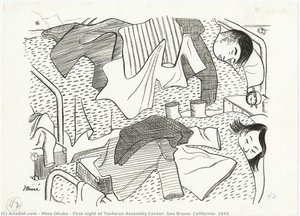
Witness Mine Okubo’s poignant ‘First Night’ at Tanforan Assembly Center. A powerful black & white drawing capturing WWII internment camp life, expressive realism, and human vulnerability.
Witness wartime resilience through Miné Okubo's poignant sketch of Tanforan Assembly Center during WWII. Explore the struggles & community depicted in her powerful drawing, a vital historical record.
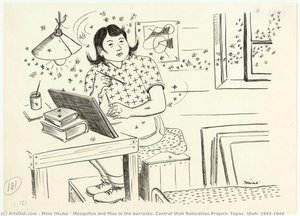
Witness Mine Okubo’s poignant ‘Mosquitos & Flies’ – a 1944 sketch capturing WWII life in Topaz Relocation Camp. Explore this unique black-and-white illustration via ArtsDot.
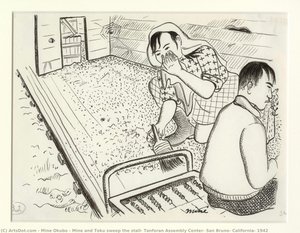
Experience the stark reality of WWII through Miné Okubo's evocative sketch depicting daily life at Tanforan Assembly Center – resilience, community, and quiet observation captured in meticulous detail.
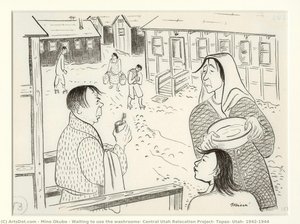
Explore Miné Okubo's poignant illustration 'Waiting to use the washrooms,' depicting life at Topaz War Relocation Center during WWII, capturing resilience and documenting the experiences of Japanese American internees.
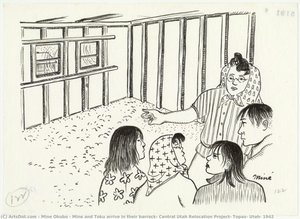
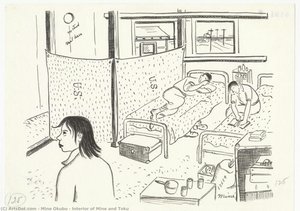
Interior of Mine and Toku is a powerful depiction of life within Japanese American internment camps during WWII by Miné Okubo. Created using ink on paper with bold lines and hatching techniques, the artwork captures the essence of confinement and resilience through its minimalist style.
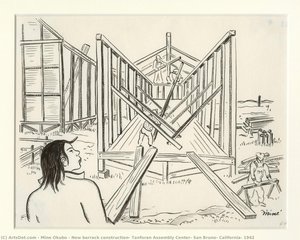
Witness the poignant beauty of Miné Okubo's 'New barrack construction' – a powerful drawing capturing life within WWII Japanese American internment camps, offering a rare glimpse into resilience and hardship.
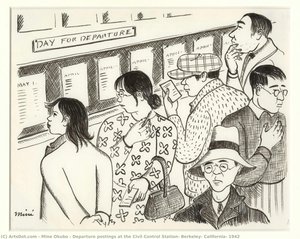
Experience the poignant ink drawing of Miné Okubo's 1942 departure postings, capturing wartime anxiety and resilience; discover this powerful piece of American history.