Showing 24 artworks out of 28 with Surrealism Surrealism

-
Surrealism
Surrealism
Not available for this selection
- Putty
- Black
- Espresso
- Walnut
- Rosy Brown
- Gray
- White
- Cobalt Violet
- Quinacridone Magenta
- Brown
- Mahogany
- Celadon
- Driftwood
- Coral
- Surrealism
- Color Palette
- Chagall
- Vitebsk
- Francis Bacon
- Folklore
- Figure Painting
- Symbolism
- British Art
- Portrait Painting
- Dreamlike Painting
- "Color Palette
- Jewish Art
- "Painting
- Anxiety
- Trauma
- Expressionist Art
- Jewish Folklore
- Frida Kahlo
- Isolation
- Marc
- Female Figure
- Naïve Art
- Blue Background
- Barcelona Artist
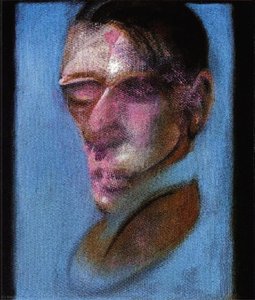
Three Studies for Self-Portrait, 1980, Center Panel - This iconic piece by Francis Bacon showcases an unsettlingly realistic depiction of a man's face—a haunting exploration of identity and emotion characterized by exaggerated features and a striking blue background.
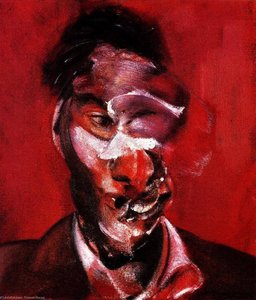
The image depicts a man's face against a stark red backdrop, characterized by distorted features and exaggerated expressions—a disconcerting portrayal reflecting Bacon’s exploration of psychological torment.
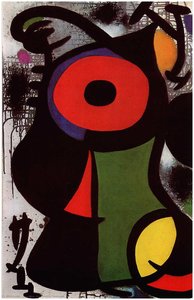
Joan Miró’s "Fascinating Personage" embodies Catalan surrealism with vibrant circles and figures exploring subconscious realms. Painted in 1968, it showcases Miro's signature abstract style influenced by Gaudí and Barcelona’s landscape.
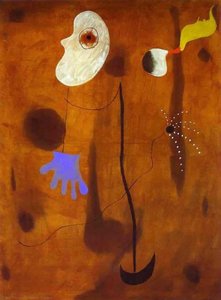
Joan Miró (1893-1983) was a Catalan painter and sculptor known for his vibrant abstract art, characterized by surreal imagery and organic forms inspired by Gaudí and the Catalan landscape. His iconic paintings depict figures with blue hands holding cigarettes amidst fantastical elements.
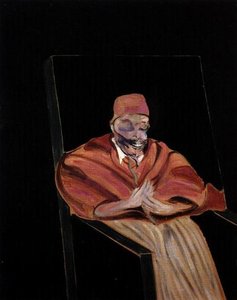
Study for a Pope IV - Francis Bacon A haunting depiction of mortality and psychological torment, this study captures the essence of Bacon's signature style – grotesque figures juxtaposed against stark backgrounds. The painting portrays a man with a skeleton face seated in a chair, embodying themes of decay and existential dread. Its unsettling imagery reflects Bacon’s preoccupation with human vul
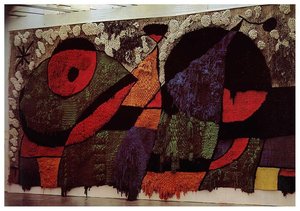
Joan Miró’s "Big Carpet," painted in 1974, embodies Catalan identity through abstract forms—two prominent figures intertwined amidst scattered smaller shapes—reflecting Gaudí's organic inspiration and a masterful blend of meticulous craftsmanship and dreamlike vision.
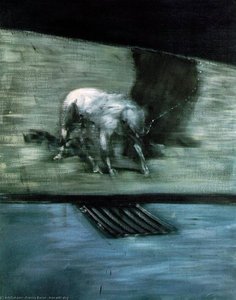
The painting depicts a man and a dog intertwined on a metal grate, embodying Bacon's exploration of vulnerability and confinement amidst a dark backdrop.
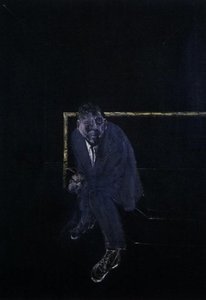
The painting depicts a solitary man seated on a bench, his head bowed, with a cigarette dangling from his lips—a poignant portrayal of introspection and melancholy rendered in stark black and white.
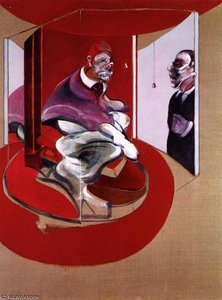
Study of Red Pope Second Version - Francis Bacon The painting depicts a man seated in a chair with his hands on his chest, wearing a red robe. Another figure stands beside him. A dark and unsettling atmosphere dominates the dimly lit room.
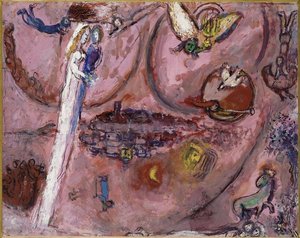
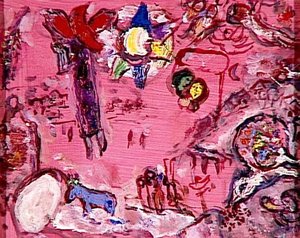
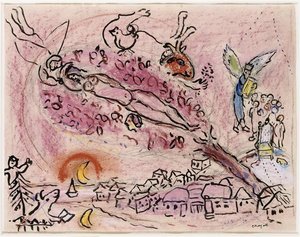
“Song of Songs I” was created in 1960 by Marc Chagall in Surrealism style. Find more prominent pieces of religious painting at WikiArt.org – best visual art database.
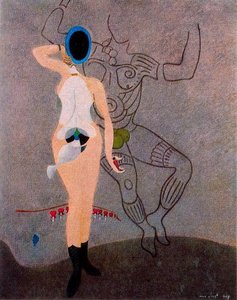
“The Return of the Beautiful Gardener (Homage to women)” is a symbolic painting created by Max Ernst in 1967 in Surrealism style. Find more prominent pieces of symbolic painting at WikiArt.org – best visual art database. sitename: www.wikiart.org date: 2024-03-27 tags: ['allegories-and-symbols', '
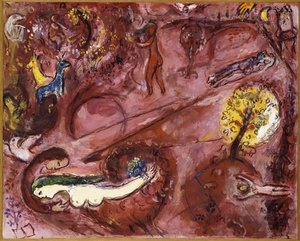
Experience the dreamlike surrealism of Marc Chagall's 1960 masterpiece Song of Songs III, a vibrant tapestry of floating figures and folklore that invites you to bring this poetic vision into your private collection.
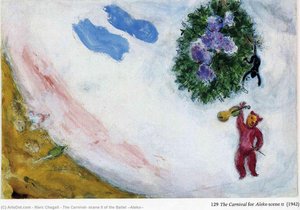
Marc Chagall's "The Carnival, Scene II" captures a surrealist ballet moment with a man holding flowers against a fiery sky, embodying Vitebsk’s cultural heritage and dreamlike imagination.
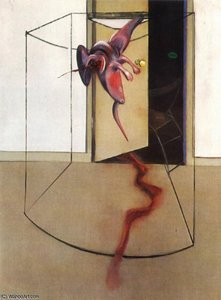
Tript. Insp. By The Oresteia Of Aeschylus, Left - Francis Bacon Painting Analysis The painting depicts a grotesque creature with an open mouth and two eyes, positioned beside a doorway featuring a hole. Francis Bacon (1909-1992), born in Dublin, Ireland, was a British painter known for his visceral depictions of human emotion and psychological torment. Influenced by Surrealism and Expressionism,
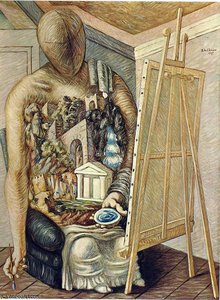
The painting depicts Giorgio de Chirico's signature surrealist style – a solitary artist seated on a bench with an easel, framed by a window and adorned with a mask, creating an atmosphere of mystery and contemplation amidst muted blues and greens.
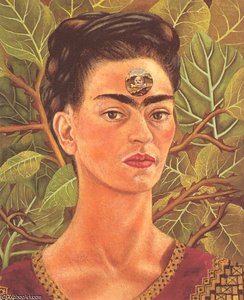
The painting depicts Frida Kahlo wearing a necklace and gazing intently at the viewer, surrounded by leaves symbolizing depth and texture. Its surrealistic style captures her expressive gaze and intricate jewelry details.
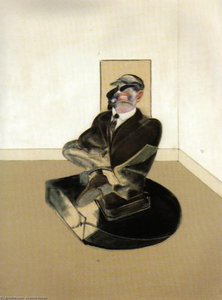
“Seated Figure” by Francis Bacon (1961) explores themes of vulnerability and psychological torment through visceral imagery—a man seated on a stool with an open mouth against a brick wall backdrop—captured in Tate Britain’s Modern and Contemporary British Art collection.
“Song of Songs V” was created in c.1965 by Marc Chagall in Surrealism style. Find more prominent pieces of religious painting at WikiArt.org – best visual art database.
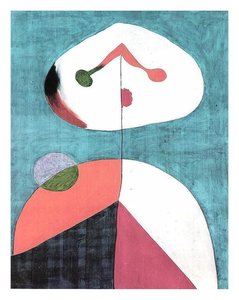
Portrait II by Joan Miró exemplifies Surrealist aesthetics with its depiction of a dancer figure against a vibrant blue backdrop, embodying Catalan identity and exploring subconscious imagery.
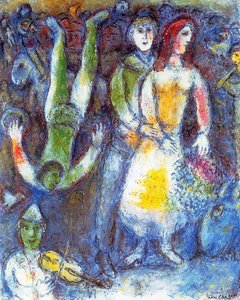
“The flying clown” was created in 1981 by Marc Chagall in Naïve Art (Primitivism) style. Find more prominent pieces of genre painting at WikiArt.org – best visual art database. Genre Painting Colorful Circus Scene Featuring Flying Figures and Animals.
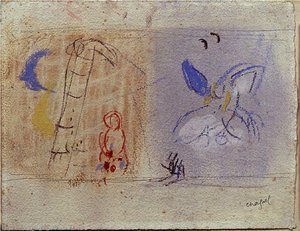
A captivating study by Marc Chagall depicting "The Jacob's Dream," featuring a man ascending a ladder beneath a luminous moon, accompanied by birds and a seated figure—a testament to Chagall’s dreamlike surrealism and vibrant naive art style.
“Song of Songs II” was created in 1957 by Marc Chagall in Surrealism style. Find more prominent pieces of religious painting at WikiArt.org – best visual art database.
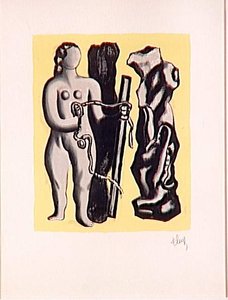
“The alignment star” was created in 1952 by Fernand Leger in Surrealism style. Find more prominent pieces of nude painting (nu) at WikiArt.org – best visual art database.