 Preview
 Send
Send Share
Share
 Details

 Download
 Similars
 X-Ray
X-Ray Diaporama
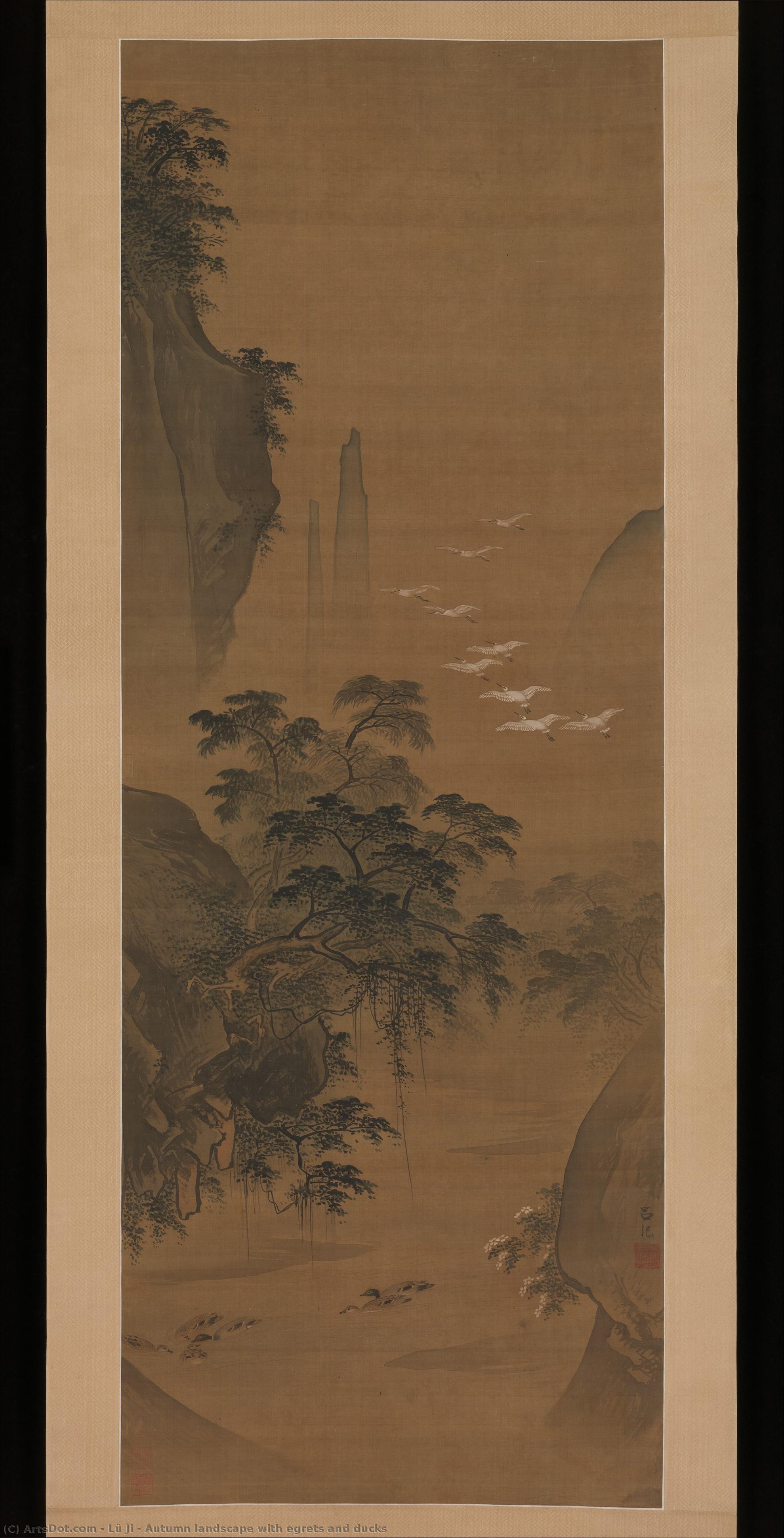
Autumn landscape with egrets and ducks
 401
401 148.0cm x 55.0cm
 Read More
Hand Made Oil Reproduction
Hand-painted oil on canvas in your size and frame, made to order by our artists. ( Buy Print Buy Image)




































Pick from our preset sizes that match the artwork's original proportions.

You may enter your own dimensions to fit a specific frame or space. If your selected size does not match the original image's proportions, we will either crop the artwork or extend the painting with additional hand-painted elements. A digital mockup will be sent for your approval before production begins.
Please note that the on-screen preview does not reflect the actual cropping or extension. Only the mockup will accurately show the final composition.
While custom sizes are available, we recommend selecting a dimension from the predefined list to preserve the original proportions.
After order, ArtsDot.com team will email client for instructions and provide a mockup preview
Worldwide Delivery () in 3/4 weeks instead of standard 5 weeks. (25 August). No compromise on quality.

Free Worldwide Express Shipping

High-Quality Linen Canvas

Full Shipping Insurance

Customs Tax Refund Guarantee

True Color Matching Guarantee

60-Day Return Policy (Defects Only)

100% Money-Back Guarantee

Bulk Discount Offer
 Glass option is only available in size under 110 CM

Autumn landscape with egrets and ducks
Reproduction Medium
Reproduction Size
-


Total Price
$ 263
Artwork Description
Related Artworks









Artist Biography
The Radiant Master of Ming Dynasty Bird-and-Flower Painting
Lü Ji, a name synonymous with the luminous splendor of the Ming Dynasty, stands as one of the most revered figures in the long tapestry of Chinese art history. Born in the culturally rich region of Ningbo, Zhejiang Province, his life unfolded during a period of significant artistic revival. Whether viewed through the lens of his early years around 1429 or the later era of the mid-Ming, Lü Ji’s presence was felt as a master who could bridge the gap between meticulous technical skill and profound emotional resonance. As a professional painter, he achieved a level of distinction that saw him summoned to serve as a court painter during the Hongzhi period, eventually earning an honorary title as an officer in the imperial guard—a rare feat for an artist of his era.
The foundation of Lü Ji’s brilliance was laid through rigorous study and exposure to the evolving aesthetics of his time. He drew deep inspiration from the pioneering bird-and-flower style championed by Bian Wenjin, a movement dedicated to recapturing the grandeur and vitality of the Tang Dynasty. This training instilled in him an unwavering devotion to the precise observation of nature. His technique became a sophisticated marriage of "fine-brushwork" and "sketching-idea," allowing him to capture both the physical texture of a petal and the spiritual essence of a living creature. While some contemporary scholar-painters, such as the legendary Shen Zhou, occasionally critiqued his descriptive style as being merely "of the hand" rather than "of the heart," it was precisely this masterful command of the brush that allowed Lü Ji to achieve a level of naturalness and splendor that few could replicate.
A Symphony of Color and Symbolism
To gaze upon a work by Lü Ji is to enter a world of vibrant, breathing landscapes. His canvases often exploded with a luminous palette—crimson reds, emerald greens, and sapphire blues—that transformed silk and paper into breathtaking panoramas of the natural world. He was a master of the Southern Song ink-wash tradition, yet he infused it with a uniquely Ming vibrancy that made his compositions feel both timeless and immediate. His ability to utilize bright coloring to create depth and movement allowed him to dominate the bird-and-flower genre, creating works that were as much about emotional impact as they were about botanical accuracy.
Beyond the sheer visual delight of his work lies a profound layer of cultural meaning. Lü Ji utilized the natural world as a vocabulary for human virtues and cosmic harmony. In his masterpieces, every element serves a symbolic purpose:
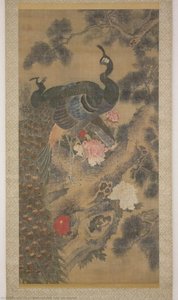
- Peacocks: Representing beauty, dignity, and the concept of immortality.
- Pine Trees: Standing as enduring symbols of longevity and steadfastness amidst the changing seasons.
- Peonies: Embodying wealth, honor, and the flourishing of prosperity.
- Mandarin Ducks: Often depicted in pairs to evoke themes of marital fidelity and harmonious companionship.
Through these motifs, Lü Ji’s paintings became more than mere decorations for the imperial court; they were visual meditations on Confucian ideals of balance and the eternal beauty of the natural order.
Legacy of the Imperial Brush
The historical significance of Lü Ji lies in his ability to elevate professional painting to a level of unparalleled prestige. By mastering the delicate balance between centered brushwork and rounded, upright strokes, he created a standard of excellence that influenced generations of subsequent painters. His work represents a pinnacle of the middle Ming Dynasty’s artistic output, where the technical precision of the "professional" met the grand scale of imperial patronage. Even today, his ability to capture the fleeting essence of a blossom or the dynamic energy of a bird remains a testament to his genius, ensuring that his name continues to resonate within the halls of art history as a true master of light, color, and life.
Quick Facts
- Artistic Movement Or Style: Bird-and-flower painting; Southern Song ink wash style
- Artists Or Movements Influenced By This Artist: ['']
- Artists Who Influenced This Artist: ['Bian Wenjin']
- Date Of Birth: Ningbo, China ()
- Date Of Death: Living
- Full Name: Liu Chi or Lü Ji or Lü Ki
- Nationality: Chinese
- Notable Artworks:
- Mandarin ducks and cotton rose hibiscus
- Peacocks, Pine Tree, and Peonies
- Autumn landscape with egrets and ducks
- Place Of Birth: Ningbo, Zhejiang