 Preview
 Send
Send Share
Share
 Details

 Download
 Similars
 X-Ray
X-Ray Diaporama
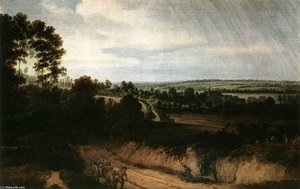
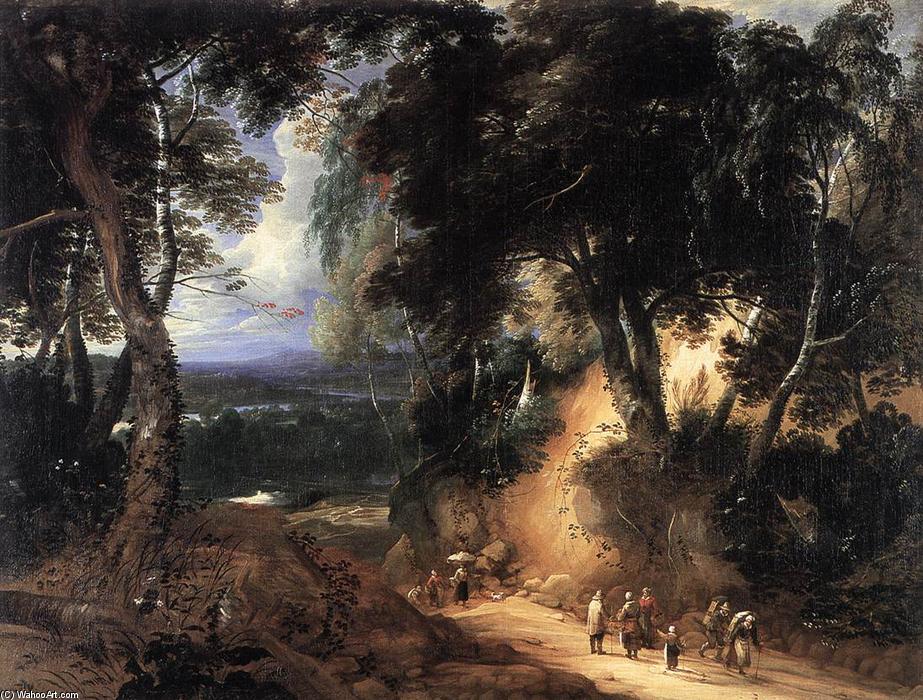
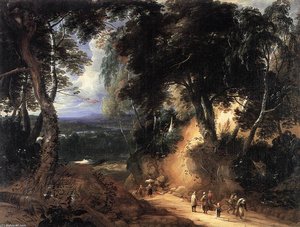
The Soignes Forest
 175.0 x 230.0 cm
 Museum voor Schone Kunsten
 Read More
Giclée / Art Print
Museum-quality giclée or canvas print with fast production and flexible finish options. ( Buy Hand Made Painting Buy Image)




































Pick from our preset sizes that match the artwork's original proportions.

You may enter your own dimensions to fit a specific frame or space. If your selected size does not match the original image's proportions, we will either crop the artwork or extend the image with a mirrored or solid-fill edge. A digital mockup will be sent for your approval before production begins.
Please note that the on-screen preview does not reflect the actual cropping or extension. Only the mockup will accurately show the final composition.
While custom sizes are available, we recommend selecting a dimension from the predefined list to preserve the original proportions.
Worldwide Delivery () in 2 weeks instead of standard 4/5 weeks. (18 August)

Free Worldwide Express Shipping

High-Quality Linen Canvas

Full Shipping Insurance

Customs Tax Refund Guarantee

True Color Matching Guarantee

60-Day Return Policy (Defects Only)

100% Money-Back Guarantee

Bulk Discount Offer
 Glass option is only available in size under 110 CM

The Soignes Forest
Giclée / Art Print
Reproduction Size
-


Total Price
$ 63
Related Artworks
Artist Biography
A Visionary of the Flemish Landscape
Lodewijk de Vadder stands as a pivotal figure in the Dutch Golden Age landscape tradition, a master whose brush captured the breathing essence of the seventeenth-century terrain. Though born in Brussels in 1605, his artistic soul was deeply intertwined with the Flemish Baroque milieu, creating a bridge between the traditions of his homeland and the burgeoning naturalism of the Dutch Republic. Born into a family where the scent of oil and turpentine was a constant companion, de Vorker was the son of Gielis de Vadder, and he grew up surrounded by the creative energy of his brothers, Philippe and Huybrecht. This familial immersion in the arts provided him with a foundational mastery that would eventually lead him to become a master of the Brussels Guild of St. Luke in 1628.
His early development was likely shaped by the guidance of his brother Philippe, whose established reputation in the Brussels guild offered Lodewijk a direct path into the heart of the city's artistic community. This lineage of skilled artisans instilled in him not just technical proficiency, but a profound understanding of the Flemish Baroque aesthetic—a style that favored drama, movement, and a certain grandiosity. However, de Vadder was far from a mere imitator of tradition; he possessed a restless, observant eye that sought to move beyond the rigid, often artificial compositions of the Mannerist period.
The Mastery of Light and Atmosphere
As his career matured, de Vadder’s work began to exhibit a remarkable departure from the stylized landscapes of his predecessors. He embraced a more naturalistic approach, characterized by a distinctive freedom of brushwork that echoed the legendary spirit of Peter Paul Rubens. This loose, expressive handling allowed him to capture the fleeting qualities of light and the heavy, humid atmosphere of the Low Countries. His canvases became windows into a world where the air itself seemed palpable, thick with the moisture of riverbanks and the soft haze of distant horizons.
One of his most significant technical achievements was his pioneering focus on dune landscapes. He holds the distinction of being the first Flemish landscape painter to elevate these coastal features to the primary subject of his compositions. By integrating the rugged, undulating textures of sand dunes with the sweeping vistas of inlets and paths, he introduced a new topographical vocabulary to Flemish art. While his brushwork drew inspiration from the energetic strokes of Adriaen Brouwer, de Vadder maintained a restrained palette that demonstrated a sophisticated awareness of the evolving tonal developments occurring in the Dutch Republic, blending Flemish vigor with a subtle, atmospheric restraint.
A Legacy Woven in Silk and Thread
The true breadth of Lodewijk de Vadder’s genius is perhaps most vividly realized in his contributions to the decorative arts. He was not merely an easel painter but a versatile creator whose vision extended into the grand medium of tapestry design. In 1644, he secured a prestigious privilege from the Brussels city authorities to produce tapestry cartoons, a role that placed him at the center of the flourishing textile industry of his era. These large-scale preparatory drawings served as the essential blueprints for some of the most magnificent woven works produced in Brussels.
Working alongside collaborators such as Jan Cordijs and Boudewijn van Beveren, de Vadder helped create breathtaking tapestries that depicted the lush, verdant scenes of the Sonian Forest. Alongside contemporaries like Pieter van Avont and Jacques D’Arthois, he became part of a celebrated group known as "the Sonian Forest Painters." Through these collaborative efforts, his landscapes were transformed from intimate paintings into monumental textile narratives that adorned the halls of the European elite. His legacy remains etched in both the delicate textures of fine art and the enduring grandeur of woven history, marking him as a true visionary of the Baroque age.
Lodewijk de Vadder
1605 - 1655 , Belgium
Quick Facts
- Artistic Movement Or Style: Baroque
- Artists Or Movements Influenced By This Artist: Sonian Forest Painters
- Artists Who Influenced This Artist: Rubens
- Date Of Birth: Brussels, Belgium (1605)
- Date Of Death: 1655
- Full Name: Lodewijk de Vadder
- Nationality: Flemish
- Notable Artworks:
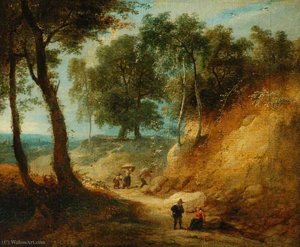
- Wooded Landscape with Figures in a Ravine
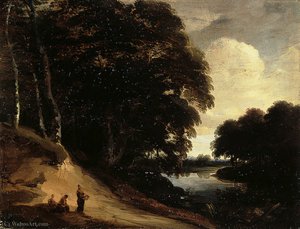
- Forest landscape with river
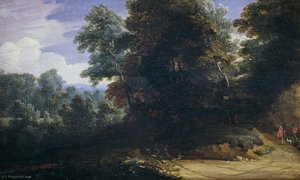
- Landscape with hunter
- Place Of Birth: Brussels