

 Preview
 Send
Send Share
Share
 Details

 Download
 Similars
 X-Ray
X-Ray Diaporama
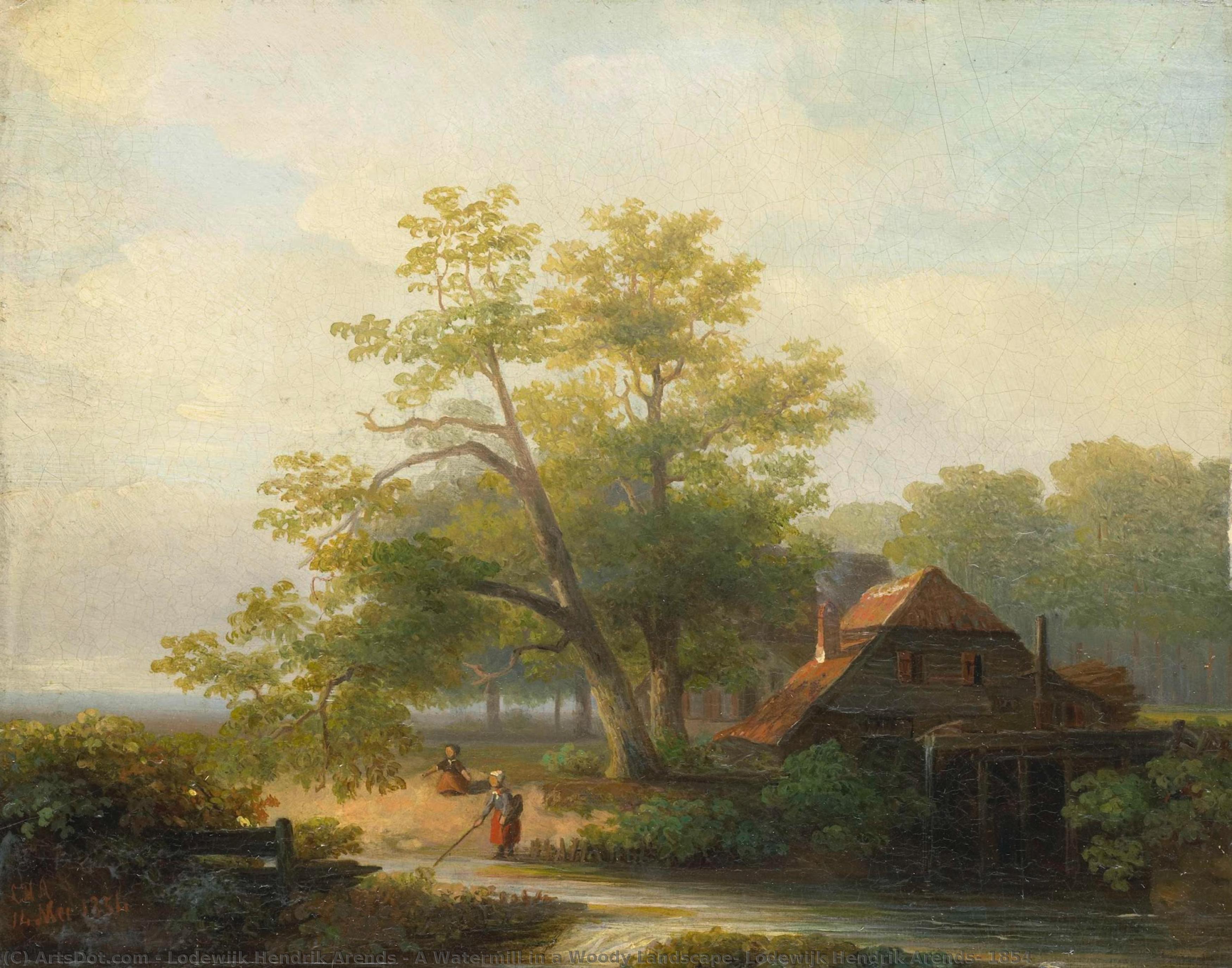
A Watermill in a Woody Landscape, Lodewijk Hendrik Arends, 1854
 1854
1854 20.0 x 25.0 cm
 Read More
Purchase a high-resolution, enhanced digital image, far superior to the online preview.
Each file is meticulously prepared by our in-house specialists using advanced tools and expert manual retouching. We ensure every image has exceptional clarity, precise color accuracy, and fine detail.
The final file is delivered via email within 72 hours, optimized for immediate use in professional, editorial, and print environments. This is the same quality trusted by top-tier design studios, publishers, and galleries.
Digital Image
Download a high-resolution file for personal display, printing, and creative projects. ( Buy Print Buy Hand Made Painting)
Included in Every Digital Image Order
Expert Digital Delivery, Guaranteed
When you choose ArtsDot.com, you're not just getting an image - you're receiving a professionally enhanced digital artwork, crafted with precision and backed by a satisfaction guarantee. Here's everything that comes with your order, automatically:

Fast Email Delivery
Your high-resolution digital image file will be emailed to you within 72 hours of ordering - ready for immediate use.

AI-Enhanced Digital File
Your artwork is professionally optimized using advanced AI tools and manual editing, ensuring maximum detail, clarity, and color accuracy.

Free Lifetime Re-Delivery
Accidentally deleted or lost your file? No worries - we'll resend it to you anytime, free of charge.

No Import Fees - Ever
Enjoy your artwork instantly with zero customs, duties, or delivery fees - digital downloads are always tax-free.

Color Accuracy Guarantee
We ensure your digital image reflects the original colors as closely as possible using professional tools and color management.

60-Day Satisfaction Guarantee
If you're not satisfied with your digital image, we'll revise it or refund 100% within 60 days - no questions asked.

100% Money-Back Guarantee
Not satisfied? Get a full refund within 60 days of receiving your digital file - no questions asked.

Bulk Order Discounts
Buy 3 images, save 10% - Buy 5, save 15% - Buy 10+, save 20%. Great for creative projects, galleries, and agencies.
Related Artworks









Artist Biography
A Quiet Observer of Dutch Landscapes: The Life and Art of Lodewijk Hendrik Arends
Lodewijk Hendrik Arends, a name perhaps less celebrated than some of his contemporaries in the 19th-century Dutch art world, nevertheless occupies a significant place as a skilled interpreter of the nation’s pastoral beauty. Born in 1817, Arends dedicated his life to capturing the tranquil scenes of the Dutch countryside – its watermills, winding rivers, and expansive skies. While detailed biographical information remains scarce, the surviving body of his work speaks volumes about an artist deeply attuned to the subtleties of light, atmosphere, and the enduring charm of rural life. He wasn’t a painter of grand historical narratives or bold social commentary; instead, Arends found his voice in the quiet poetry of everyday existence, offering viewers a glimpse into a world seemingly untouched by the rapid changes unfolding around him.Early Influences and Artistic Development
The specifics of Arends’ early training are not extensively documented, but it is reasonable to assume he would have been exposed to the prevailing artistic currents of his time in the Netherlands. The Dutch Romantic movement, with its emphasis on emotional expression and a reverence for nature, undoubtedly played a role in shaping his aesthetic sensibilities. Artists like Jacob van Ruisdael and Jan van Goyen, masters of landscape painting from the Golden Age, would have served as important precedents, inspiring Arends’ meticulous attention to detail and atmospheric perspective. However, Arends' work also reveals an affinity for the Barbizon school, a French movement that championed realism and *plein air* painting – working directly from nature rather than relying solely on studio compositions. This influence is evident in his naturalistic rendering of foliage, his nuanced depiction of light effects, and his overall commitment to capturing the authentic appearance of the Dutch landscape.A Focus on Watermills and Rural Scenes
Arends’ artistic output is characterized by a consistent focus on watermills as central motifs. These structures, integral to the Dutch economy and cultural identity, appear repeatedly in his paintings, often depicted nestled within idyllic woodland settings or alongside gently flowing rivers. “A Watermill in a Woody Landscape” (1854), one of his most recognizable works, exemplifies this preoccupation. The painting is not merely a topographical representation; it’s an evocation of a specific mood – a sense of peaceful solitude and harmonious coexistence between nature and human endeavor. His technique involved careful layering of paint to create depth and texture, with particular attention paid to the play of light on water and foliage. He wasn't interested in dramatic flourishes or sensational effects; instead, he sought to capture the subtle nuances of atmosphere and the quiet beauty of the Dutch countryside.Legacy and Historical Significance
While Arends may not have achieved widespread fame during his lifetime, his work continues to resonate with viewers today. His paintings offer a valuable glimpse into 19th-century rural life in the Netherlands, providing a visual record of a landscape undergoing transformation. He died in 1873, leaving behind a body of work that demonstrates a deep appreciation for the natural world and a remarkable skill in capturing its beauty. His paintings are now held in prominent collections such as the Rijksmuseum, ensuring his legacy endures. Arends’ significance lies not in groundbreaking innovation but in his masterful execution of traditional landscape painting techniques, combined with a sensitive eye for detail and an ability to evoke a sense of peaceful contemplation. He stands as a testament to the enduring power of quiet observation and the timeless appeal of the Dutch countryside.Key Characteristics of His Style
- Meticulous attention to detail in rendering foliage, water, and architectural elements.
- Nuanced depiction of light effects and atmospheric perspective.
- A preference for naturalistic color palettes reflecting the Dutch landscape.
- Consistent focus on watermills as central motifs within idyllic rural scenes.
- Emphasis on creating a sense of peaceful solitude and harmonious coexistence between nature and human life.
Quick Facts
- Date Of Death: Living
- Full Name: Lodewijk Hendrik Arends
- Notable Artworks: ['A Watermill in a Woody Landscape']

