 Preview
 Send
Send Share
Share
 Details

 Download
 Similars
 X-Ray
X-Ray Diaporama
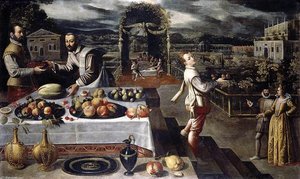
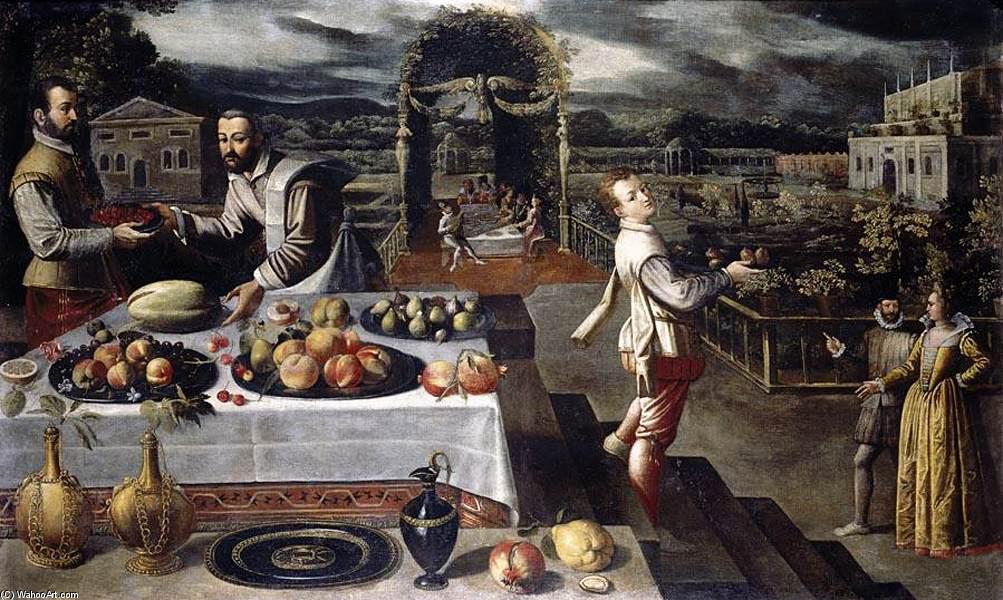
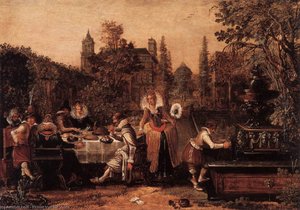
Banquet in a Formal Palace Garden
 122.0 x 202.0 cm
 Read More
Hand Made Oil Reproduction
Hand-painted oil on canvas in your size and frame, made to order by our artists. ( Buy Print Buy Image)




































Pick from our preset sizes that match the artwork's original proportions.

You may enter your own dimensions to fit a specific frame or space. If your selected size does not match the original image's proportions, we will either crop the artwork or extend the painting with additional hand-painted elements. A digital mockup will be sent for your approval before production begins.
Please note that the on-screen preview does not reflect the actual cropping or extension. Only the mockup will accurately show the final composition.
While custom sizes are available, we recommend selecting a dimension from the predefined list to preserve the original proportions.
After order, ArtsDot.com team will email client for instructions and provide a mockup preview
Worldwide Delivery () in 3/4 weeks instead of standard 5 weeks. (5 September). No compromise on quality.

Free Worldwide Express Shipping

High-Quality Linen Canvas

Full Shipping Insurance

Customs Tax Refund Guarantee

True Color Matching Guarantee

60-Day Return Policy (Defects Only)

100% Money-Back Guarantee

Bulk Discount Offer
 Glass option is only available in size under 110 CM

Banquet in a Formal Palace Garden
Reproduction Medium
Reproduction Size
-


Total Price
$ 263
Related Artworks

Artist Biography
Lodewijk Toeput (Il Pozzoserrato): A Flemish Master of Biblical Narrative and Elegant Genre Scenes
Lodewijk Toeput, commonly known as Il Pozzoserrato – a name derived from his birthplace in Pozzo Serra, Antwerp – stands as a pivotal figure within the artistic landscape of 16th-century Flanders. Born around 1550 in Antwerp’s thriving artisan community, Toeput's life was marked by both considerable success and tragic loss, shaping him into an artist deeply attuned to the complexities of human experience and profoundly influenced by the humanist ideals prevalent during his time. Despite limited biographical details surviving – largely due to the meticulous nature of archival records – scholars have pieced together a portrait of a dedicated craftsman who achieved renown for his masterful depictions of biblical narratives alongside exquisitely rendered genre paintings that captured the nuances of aristocratic life.- Early Life and Training: Toeput’s formative years were spent in Antwerp, a city renowned as a center for artistic innovation during the Renaissance. While precise information regarding his formal training remains elusive, it is believed he apprenticed under Abraham van Neste, a prominent Antwerp painter known for his monumental altarpieces and portraits of noble families. This association instilled within Toeput a foundational understanding of compositional principles and technical virtuosity – skills that would serve as the bedrock of his subsequent artistic endeavors.
- The Antwerp Workshop Tradition: Toeput’s artistic output aligns seamlessly with the established workshop tradition of Antwerp, characterized by collaborative projects and meticulous attention to detail. He operated within a milieu where artists honed their craft through apprenticeships and engaged in dialogues about stylistic developments, fostering an environment conducive to artistic excellence.
Notable Works: Biblical Scenes and Genre Paintings
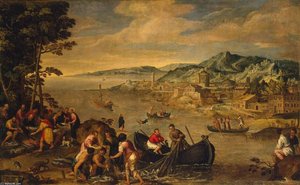
Toeput’s oeuvre is distinguished by two primary categories of artwork: ambitious biblical scenes and delicately executed genre paintings. His depictions of religious subjects – particularly those inspired by the Gospels – demonstrate an unparalleled command of perspective, color palettes, and sculptural modeling. “Miraculous Fishing,” housed in the Gemäldegalerie Alte Meister Dresden, exemplifies his ability to convey dramatic emotion through precise anatomical rendering and masterful use of chiaroscuro—the interplay between light and shadow—creating a palpable sense of immediacy and spiritual fervor. The painting’s composition skillfully guides the viewer's gaze across the scene, emphasizing the central miracle and capturing the astonishment of the fishermen involved.Style and Technique: Flemish Renaissance Idealism
Toeput’s artistic style embodies the core tenets of Flemish Renaissance idealism – a preoccupation with humanist values, anatomical accuracy, and psychological realism. Influenced by artists such as Pieter Bruegel the Elder and Hans Holbein the Younger, Toeput adopted techniques honed during the High Renaissance, prioritizing clarity of form and luminous color to achieve an aesthetic that prioritized beauty and intellectual contemplation. His meticulous attention to detail—evident in every brushstroke—underscores his commitment to capturing the essence of his subjects with unwavering fidelity.Legacy and Historical Significance
Lodewijk Toeput’s contribution to Flemish art is undeniable, securing him a place among the most celebrated painters of his era. His works continue to inspire admiration for their technical brilliance and emotional depth, serving as enduring emblems of humanist artistic achievement. Furthermore, Toeput's workshop tradition—characterized by collaborative endeavors and stylistic dialogues—contributed significantly to the flourishing Antwerp art scene, shaping the trajectory of Flemish painting throughout the latter half of the 16th century. His legacy persists not only in the surviving masterpieces but also in the enduring influence he exerted on subsequent generations of artists.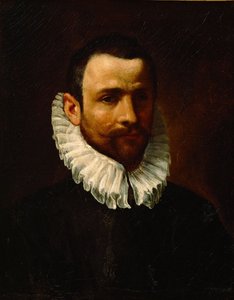
lodewijk toeput (il pozzoserrato)
1550 - 1605 , Belgium
Quick Facts
- Artistic Movement Or Style: Renaissance
- Artists Or Movements Influenced By This Artist: ['Baroque']
- Artists Who Influenced This Artist: ['Pieter Bruegel the Elder']
- Date Of Birth: Antwerp, Belgium (1550)
- Date Of Death: 1605
- Full Name: Lodewijk Toeput
- Nationality: Flemish
- Notable Artworks:
- Miraculous Fishing
- Banquet in a Formal Palace Garden
- Place Of Birth: Antwerp