 Preview
 Send
Send Share
Share
 Details

 Download
 Similars
 X-Ray
X-Ray Diaporama
Miraculous Fishing
 Oil On Canvas
- WallArt
- Renaissance
 1587
1587- Renaissance
 84.0 x 156.0 cm
 Hermitage Museum
 Read More
Giclée / Art Print
Museum-quality giclée or canvas print with fast production and flexible finish options. ( Buy Hand Made Painting Buy Image)




P118B $10

P118H $10

P118W $10

P438Z $10

P508JH $12

P508YH $12

P805H $10

P805Z $10

P919BZ $10

P919G $10

P919XJ $10

P959ZH $10

P968JZ $12

W106C $8

W218G $10

W218JH $8

W218Y $10

W307PJ $10

W316G $10

W316PJ $8

W316Y $10

W398PJ $8

W4111J $10

W500HY $15

W500JH $15

W692G $12

W849H $8

W940BG $15

W953PJ $8




Pick from our preset sizes that match the artwork's original proportions.

You may enter your own dimensions to fit a specific frame or space. If your selected size does not match the original image's proportions, we will either crop the artwork or extend the image with a mirrored or solid-fill edge. A digital mockup will be sent for your approval before production begins.
Please note that the on-screen preview does not reflect the actual cropping or extension. Only the mockup will accurately show the final composition.
While custom sizes are available, we recommend selecting a dimension from the predefined list to preserve the original proportions.
Worldwide Delivery () in 2 weeks instead of standard 4/5 weeks. (5 September)

Free Worldwide Express Shipping

High-Quality Linen Canvas

Full Shipping Insurance

Customs Tax Refund Guarantee

True Color Matching Guarantee

60-Day Return Policy (Defects Only)

100% Money-Back Guarantee

Bulk Discount Offer
 Glass option is only available in size under 110 CM

Miraculous Fishing
Giclée / Art Print
Reproduction Size
-


Total Price
$ 63
A Glimpse into Renaissance Life: Miraculous Fishing
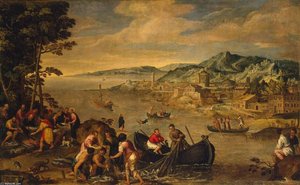
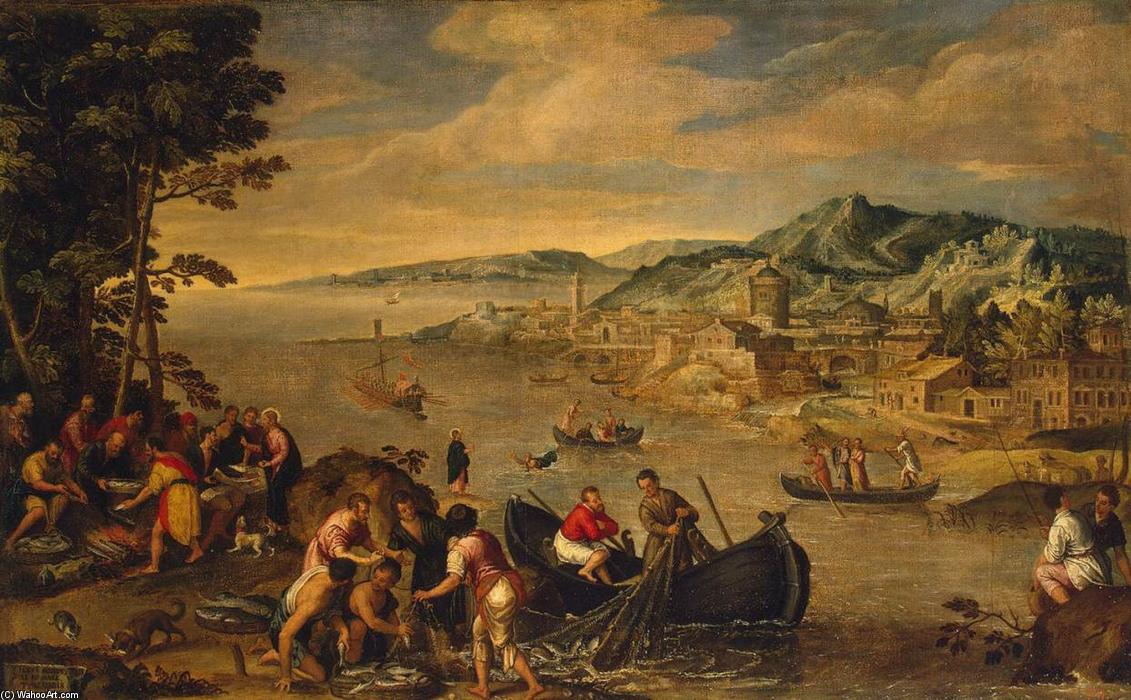
To stand before Miraculous Fishing is to be instantly transported across the centuries, to the vibrant heart of the late sixteenth century in Flanders. Lodewijk Toeput (Il Pozzoserrato) captured not merely a scene, but an entire atmosphere—a moment suspended between labor and divine grace. This oil on canvas masterpiece, dating from 1587, invites the viewer into a bustling tableau set upon a tranquil body of water. The composition is alive with human energy; figures are scattered across the shore and aboard anchored boats, their every gesture suggesting the rhythm of daily life intertwined with something profoundly miraculous.
Mastery in Light and Detail
Toeput’s technical brilliance shines through every visible brushstroke. He possessed an extraordinary gift for rendering texture—the slick sheen of water contrasting against the rough weave of period garments, or the deep, verdant richness of the surrounding foliage. The artist masterfully manipulates light, allowing it to fall across the figures and the landscape in a way that imbues the scene with palpable depth. Notice how the sunlight catches the ripples on the water, creating pockets of brilliant reflection against the deeper blues of the background sky. This meticulous attention to detail is characteristic of the Flemish school, grounding the sublime narrative within an almost hyper-realistic depiction of the natural world.
The Context and Symbolism of the Scene
Beyond its technical prowess, Miraculous Fishing resonates with deep historical and symbolic currents. Set against a picturesque backdrop featuring rolling hills and a distant town nestled among the greenery, the painting speaks to the enduring relationship between humanity and nature during the Renaissance. The act of fishing itself carries layers of meaning—it is sustenance, yes, but it has long been a potent metaphor for providence, for the bounty provided by unseen forces. Toeput balances this earthly activity with an underlying sense of wonder, suggesting that even in the most mundane moments, there resides a touch of the divine.
Bringing History Home: Owning a Masterpiece
For the collector or designer seeking to infuse a space with the gravitas and beauty of Old Masters, this work offers unparalleled depth. While the original canvas at The Hermitage museum remains an untouchable treasure, owning a high-quality reproduction allows you to curate history within your own walls. Imagine the conversation starter: the rich palette of earth tones, vibrant blues, and lush greens filling a drawing room or gallery. It is more than decoration; it is a tangible connection to the artistic genius of Lodewijk Toeput, allowing the narrative energy of 1587 to breathe life into your modern sanctuary.
Related Artworks



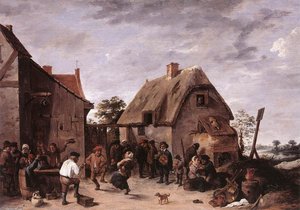
Artist Biography
Lodewijk Toeput (Il Pozzoserrato): A Flemish Master of Biblical Narrative and Elegant Genre Scenes
Lodewijk Toeput, commonly known as Il Pozzoserrato – a name derived from his birthplace in Pozzo Serra, Antwerp – stands as a pivotal figure within the artistic landscape of 16th-century Flanders. Born around 1550 in Antwerp’s thriving artisan community, Toeput's life was marked by both considerable success and tragic loss, shaping him into an artist deeply attuned to the complexities of human experience and profoundly influenced by the humanist ideals prevalent during his time. Despite limited biographical details surviving – largely due to the meticulous nature of archival records – scholars have pieced together a portrait of a dedicated craftsman who achieved renown for his masterful depictions of biblical narratives alongside exquisitely rendered genre paintings that captured the nuances of aristocratic life.- Early Life and Training: Toeput’s formative years were spent in Antwerp, a city renowned as a center for artistic innovation during the Renaissance. While precise information regarding his formal training remains elusive, it is believed he apprenticed under Abraham van Neste, a prominent Antwerp painter known for his monumental altarpieces and portraits of noble families. This association instilled within Toeput a foundational understanding of compositional principles and technical virtuosity – skills that would serve as the bedrock of his subsequent artistic endeavors.
- The Antwerp Workshop Tradition: Toeput’s artistic output aligns seamlessly with the established workshop tradition of Antwerp, characterized by collaborative projects and meticulous attention to detail. He operated within a milieu where artists honed their craft through apprenticeships and engaged in dialogues about stylistic developments, fostering an environment conducive to artistic excellence.
Notable Works: Biblical Scenes and Genre Paintings
Toeput’s oeuvre is distinguished by two primary categories of artwork: ambitious biblical scenes and delicately executed genre paintings. His depictions of religious subjects – particularly those inspired by the Gospels – demonstrate an unparalleled command of perspective, color palettes, and sculptural modeling. “Miraculous Fishing,” housed in the Gemäldegalerie Alte Meister Dresden, exemplifies his ability to convey dramatic emotion through precise anatomical rendering and masterful use of chiaroscuro—the interplay between light and shadow—creating a palpable sense of immediacy and spiritual fervor. The painting’s composition skillfully guides the viewer's gaze across the scene, emphasizing the central miracle and capturing the astonishment of the fishermen involved.Style and Technique: Flemish Renaissance Idealism
Toeput’s artistic style embodies the core tenets of Flemish Renaissance idealism – a preoccupation with humanist values, anatomical accuracy, and psychological realism. Influenced by artists such as Pieter Bruegel the Elder and Hans Holbein the Younger, Toeput adopted techniques honed during the High Renaissance, prioritizing clarity of form and luminous color to achieve an aesthetic that prioritized beauty and intellectual contemplation. His meticulous attention to detail—evident in every brushstroke—underscores his commitment to capturing the essence of his subjects with unwavering fidelity.Legacy and Historical Significance
Lodewijk Toeput’s contribution to Flemish art is undeniable, securing him a place among the most celebrated painters of his era. His works continue to inspire admiration for their technical brilliance and emotional depth, serving as enduring emblems of humanist artistic achievement. Furthermore, Toeput's workshop tradition—characterized by collaborative endeavors and stylistic dialogues—contributed significantly to the flourishing Antwerp art scene, shaping the trajectory of Flemish painting throughout the latter half of the 16th century. His legacy persists not only in the surviving masterpieces but also in the enduring influence he exerted on subsequent generations of artists.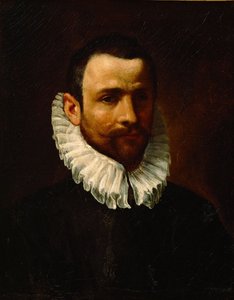
lodewijk toeput (il pozzoserrato)
1550 - 1605 , Belgium
Quick Facts
- Artistic Movement Or Style: Renaissance
- Artists Or Movements Influenced By This Artist: ['Baroque']
- Artists Who Influenced This Artist: ['Pieter Bruegel the Elder']
- Date Of Birth: Antwerp, Belgium (1550)
- Date Of Death: 1605
- Full Name: Lodewijk Toeput
- Nationality: Flemish
- Notable Artworks:
- Miraculous Fishing
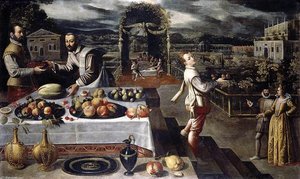
- Banquet in a Formal Palace Garden
- Place Of Birth: Antwerp
Related Articles

Oil on Canvas: A Historical & Technical Exploration of a Timeless Artistic Medium
Explore the rich history & enduring techniques of oil painting on canvas. Discover the science behind its longevity, conservation practices, and contemporary relevance. Expert insights for art enthusiasts.

Giclée Prints: Archival Quality & Aesthetic Nuances for the Discerning Collector
Explore the world of giclée prints with ArtsDot. Learn about archival quality, aesthetic nuances & investment potential. Expert guidance for discerning art collectors seeking museum-quality reproductions and lasting value.

The Enduring Legacy of Oil on Canvas: Technique, History & Aesthetic Impact
Explore the rich history & techniques of oil painting – from Renaissance masters to Impressionism. Discover pigments, layering methods, and why this timeless medium endures. Expert insights for artists & art enthusiasts.

The Enduring Legacy of Oil on Canvas: Technique, History & Contemporary Practice
Explore the rich history & enduring techniques of oil painting on canvas. Discover the science behind its longevity, conservation practices, and contemporary relevance. Expert insights for art enthusiasts.
Oil on Canvas Masters: 10 Paintings That Redefined Art History |
Journey through art history with our guide to 10 legendary oil on canvas masterpieces! Explore iconic works by Van Gogh, Monet & Rembrandt. Find museum-quality reproductions and elevate your home decor at . Discover all masterpieces online.