 Preview
 Send
Send Share
Share
 Details

 Download
 Similars
 X-Ray
X-Ray Diaporama
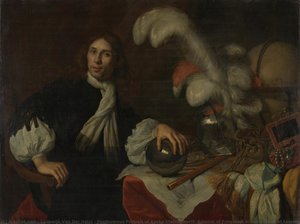
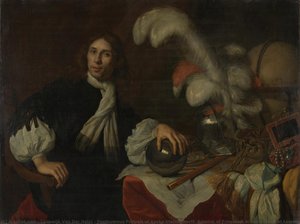
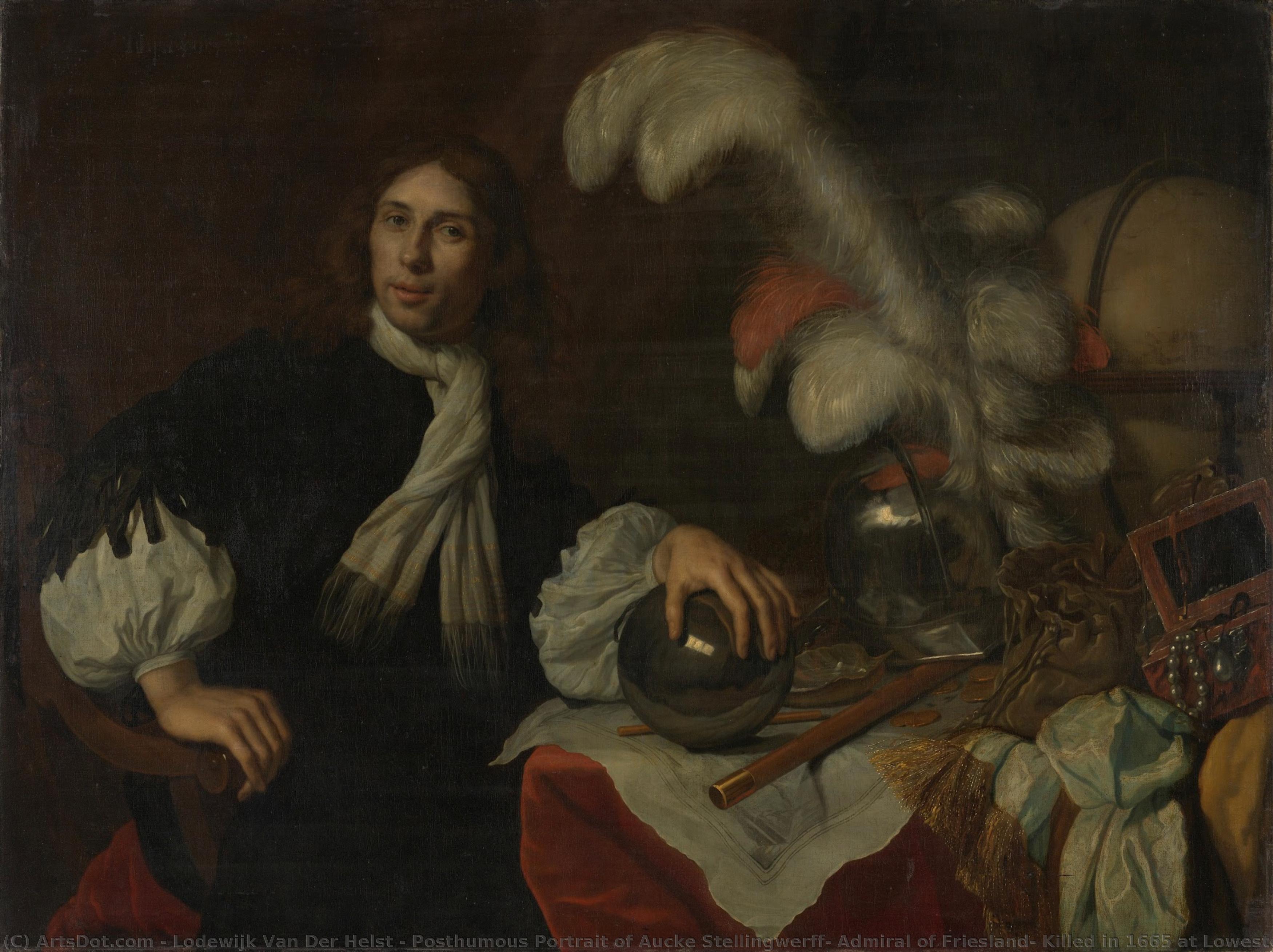
Posthumous Portrait of Aucke Stellingwerff, Admiral of Friesland, Killed in 1665 at Lowestoft by a Cannonball, Lodewijk van der Helst, 1670
 1670
1670 103.0 x 136.0 cm
 Read More
Hand Made Oil Reproduction
Hand-painted oil on canvas in your size and frame, made to order by our artists. ( Buy Print Buy Image)




































Pick from our preset sizes that match the artwork's original proportions.

You may enter your own dimensions to fit a specific frame or space. If your selected size does not match the original image's proportions, we will either crop the artwork or extend the painting with additional hand-painted elements. A digital mockup will be sent for your approval before production begins.
Please note that the on-screen preview does not reflect the actual cropping or extension. Only the mockup will accurately show the final composition.
While custom sizes are available, we recommend selecting a dimension from the predefined list to preserve the original proportions.
After order, ArtsDot.com team will email client for instructions and provide a mockup preview
Worldwide Delivery () in 3/4 weeks instead of standard 5 weeks. (1 September). No compromise on quality.

Free Worldwide Express Shipping

High-Quality Linen Canvas

Full Shipping Insurance

Customs Tax Refund Guarantee

True Color Matching Guarantee

60-Day Return Policy (Defects Only)

100% Money-Back Guarantee

Bulk Discount Offer
 Glass option is only available in size under 110 CM

Posthumous Portrait of Aucke Stellingwerff, Admiral of Friesland, Killed in 1665 at Lowestoft by a Cannonball, Lodewijk van der Helst, 1670
Reproduction Medium
Reproduction Size
-


Total Price
$ 263
Related Artworks



Artist Biography
The Legacy of a Golden Age Master
In the vibrant, bustling heart of seventeenth-century Amsterdam, where the canals reflected the prosperity of a rising maritime power, Lodewijk van der Helst emerged as a significant voice in the Dutch Golden Age. Born in 1642 and baptized on the second of February, Lodewijk was destined for a life steeped in the fine arts. As the son and pupil of the renowned Bartholomeus van der Helst, one of the most celebrated portraitists of his era, his early years were spent within the aromatic confines of a master's studio. Growing up near the Nieuwmarkt, he was not merely an observer but an active participant in the lineage of Dutch excellence, absorbing the technical precision and elegant compositions that defined his father’s prestigious career.
While his foundation was built upon the teachings of his father, Lodewijk possessed a creative spirit that sought to carve out its own distinct artistic language. He did not merely replicate the styles of the past; instead, he navigated the transition of the Dutch Baroque with a unique sensitivity. His training allowed him to master the intricate details of texture and light, yet his work began to reflect a personal nuance that distinguished him from the shadows of his predecessor. This period of development was marked by an intimate connection to the cultural fabric of Amsterdam, as he moved through the city's elite circles, eventually settling on the prestigious Herengracht.
Artistic Vision and Technical Mastery
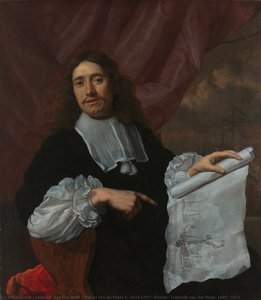
The work of Lodewijk van der Helst is characterized by a profound ability to capture both the physical presence and the underlying dignity of his subjects. His portraits often serve as windows into the social hierarchy of the Dutch Republic, showcasing the wealth, status, and character of the era's prominent figures. One can observe his mastery in works such as his portrait of Willem van de Velde II, where he utilizes a delicate balance of light and shadow to bring the painter to life, emphasizing the tools of the trade and the contemplative nature of the artist. His ability to render materials—the sheen of silk, the cold weight of metal, or the soft glow of skin—demonstrates a technical command typical of the highest caliber of Dutch portraiture.
Beyond simple likeness, Lodewijk’s paintings often weave complex narratives through symbolism and composition. In his Posthumous Portrait of Aucke Stellingwerff, he achieves a hauntingly beautiful tribute to an admiral lost to battle. Through the careful arrangement of objects—a helmet with plumes, a globe, and even the grim reminder of a cannonball—he constructs a memorial that speaks of both heroic sacrifice and the heavy toll of maritime glory. This capacity to blend historical documentation with emotional resonance is what elevates his work from mere portraiture to profound historical commentary.
A Life Amidst the Shadows of History
Despite his talent, the later years of Lodewijk’s life were marked by personal tragedy and the inevitable ebb of fortune. His biography reveals a man whose personal world was as turbulent as the seas his subjects often commanded. After marrying in 1677 and experiencing the joys of fatherhood with the birth of his son, Lodewijk faced the devastating loss of his wife. This period of mourning coincided with a period of disappearance from the historical record; by 1684, it appears he had left the city of Amsterdam, leaving behind a legacy that remains etched in the annals of art history. Though his exact date and place of death remain shrouded in mystery, the echoes of his brushwork continue to resonate.
Today, the significance of Lodewijk van der Helst is preserved through the enduring presence of his works in some of the world's most esteemed institutions, including the Rijksmuseum in Amsterdam. His contributions represent a vital chapter in the Dutch Golden Age, serving as a bridge between the established traditions of his father and the evolving aesthetic sensibilities of the late seventeenth century. To study his paintings is to encounter the soul of an era—a time of immense maritime ambition, profound religious devotion, and an unparalleled dedication to the art of seeing.