 Preview
 Send
Send Share
Share
 Details

 Download
 Similars
 X-Ray
X-Ray Diaporama
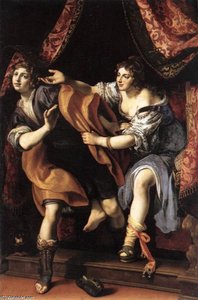
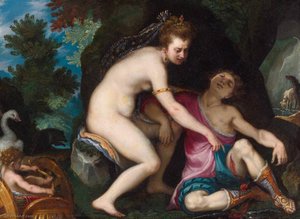
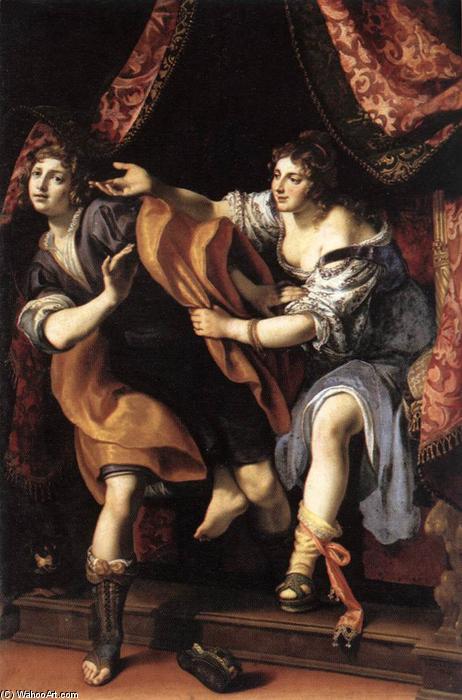
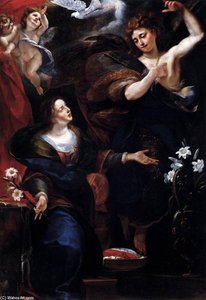
Joseph and Potiphar's Wife


 Read More
Hand Made Oil Reproduction
Hand-painted oil on canvas in your size and frame, made to order by our artists. ( Buy Print Buy Image)




P118B $10

P118H $10

P118W $10

P438Z $10

P508JH $12

P508YH $12

P805H $10

P805Z $10

P919BZ $10

P919G $10

P919XJ $10

P959ZH $10

P968JZ $12

W106C $8

W218G $10

W218JH $8

W218Y $10

W307PJ $10

W316G $10

W316PJ $8

W316Y $10

W398PJ $8

W4111J $10

W500HY $15

W500JH $15

W692G $12

W849H $8

W940BG $15

W953PJ $8




Pick from our preset sizes that match the artwork's original proportions.

You may enter your own dimensions to fit a specific frame or space. If your selected size does not match the original image's proportions, we will either crop the artwork or extend the painting with additional hand-painted elements. A digital mockup will be sent for your approval before production begins.
Please note that the on-screen preview does not reflect the actual cropping or extension. Only the mockup will accurately show the final composition.
While custom sizes are available, we recommend selecting a dimension from the predefined list to preserve the original proportions.
After order, ArtsDot.com team will email client for instructions and provide a mockup preview
Worldwide Delivery () in 3/4 weeks instead of standard 5 weeks. (16 August). No compromise on quality.

Free Worldwide Express Shipping

High-Quality Linen Canvas

Full Shipping Insurance

Customs Tax Refund Guarantee

True Color Matching Guarantee

60-Day Return Policy (Defects Only)

100% Money-Back Guarantee

Bulk Discount Offer
 Glass option is only available in size under 110 CM

Joseph and Potiphar's Wife
Reproduction Medium
Reproduction Size
-


Total Price
$ 263
Related Artworks
Artist Biography
The Visionary Brush of Lodovico Cardi
In the vibrant, transformative landscape of late 16th and early 17th-century Italy, few artists captured the spiritual intensity and dramatic movement of the burgeoning Baroque era as profoundly as Lodovico Cardi. Known to history by his evocative moniker, Cigoli, this Tuscan master emerged from a lineage of profound artistic tradition to become a cornerstone of Roman painting. Born in 1559, Cigoli’s journey was one of constant evolution, moving from the refined, often artificial elegance of Mannerism toward a more visceral, emotionally resonant realism that would define the next generation of European art.
Cigoli's artistic identity was forged in the studios of Urbino, where he studied under the legendary Federico Barocci. This early apprenticeship was pivotal; from Barocci, Cigoli inherited a delicate sensitivity to color and a mastery of soft, expressive light. However, as he migrated toward the bustling heart of Rome, his style began to shed its more rigid, Mannerist constraints. He embraced the burgeoning energy of the Baroque, learning to utilize chiaroscuro—the dramatic interplay of light and shadow—to breathe life into sacred narratives. His work became a bridge between the poised grace of the Renaissance and the theatrical, high-stakes emotion that would soon dominate the Roman art scene.
A Master of Sacred Drama and Roman Patronage
The true brilliance of Cigoli lies in his ability to transform theological concepts into palpable human experiences. His canvases were not merely decorations for altars but windows into the divine. Through his command of composition, he could guide the viewer's eye through complex biblical scenes, creating a sense of movement that felt both spontaneous and meticulously orchestrated. This skill earned him the favor of Rome’s most powerful patrons, including the illustrious Borgia and Farnese families, whose commissions allowed him to decorate some of the city's most significant religious spaces.
His repertoire was as diverse as it was profound, ranging from intimate studies to monumental religious cycles. Consider the following hallmarks of his celebrated oeuvre:
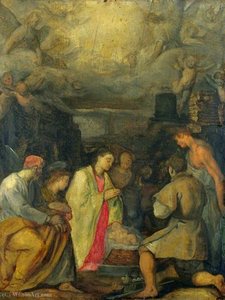
- The Adoration of the Shepherds: A masterpiece of texture and light, where the humble warmth of the figures contrasts with the divine radiance of the Christ child, showcasing his ability to blend the earthly with the celestial.
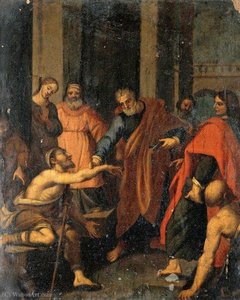
- Saint Peter and Saint John Healing a Cripple: An exhibition of dramatic realism, where the physical struggle and spiritual triumph are rendered with an almost cinematic intensity.
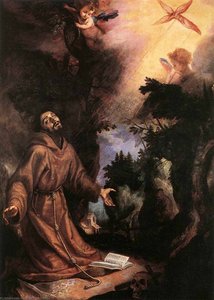
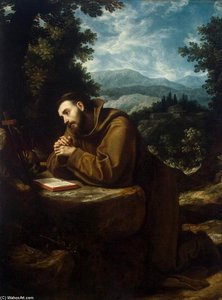
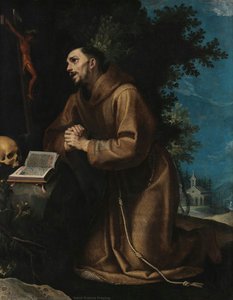
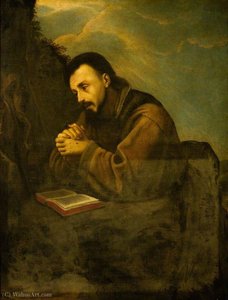
- St. Francis: A poignant exploration of asceticism and devotion, capturing the saint's humility through soft, emotive brushwork that reflects his Barocci-inspired roots.
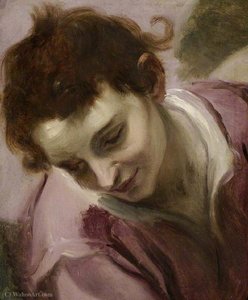
- Study of Head and Bust of Youth: Demonstrating his versatility beyond religious themes, these portraits reveal a Mannerist elegance and a keen eye for the subtle nuances of human anatomy and character.
Legacy and Historical Significance
Cigoli’s influence extended far beyond the borders of his own canvases. As a painter, sculptor, and architect, he was a true polymath of the Roman Baroque. His collaborations with sculptors like Alessandro Algardi helped create integrated, monumental environments where painting and sculpture functioned as a single, cohesive narrative force. This holistic approach to art-making was essential in shaping the aesthetic language of the Counter-Reformation, an era that demanded art be both instructional and emotionally overwhelming.
Though his life ended in 1613, the echoes of his technique remained. By infusing the structured traditions of his Tuscan upbringing with the theatrical dynamism of Rome, Cigoli helped pave the way for the great masters of the high Baroque. He remains a vital figure for any student of art history—a painter who understood that to depict the divine, one must first master the profound, moving reality of the human condition.
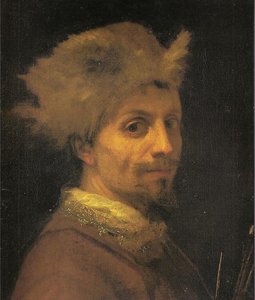
lodovico cardi (cigoli)
1559 - 1613 , Italy
Quick Facts
- Artistic Movement Or Style: Mannerist/Baroque
- Artists Who Influenced This Artist:
- Giambattista Bassano
- Michelangelo
- Date Of Birth: September 21, 1559
- Full Name: Ludovico Cardi Cigoli
- Nationality: Italian
- Notable Artworks:
- St Francis
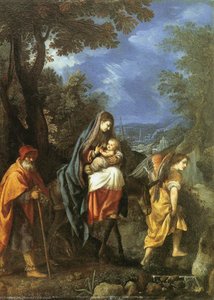
- The Flight into Egypt
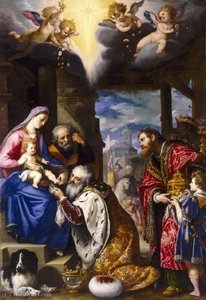
- The Adoration of the Magi
- Place Of Birth: Tuscany, Italy