 Preview
 Send
Send Share
Share
 Details

 Download
 Similars
 X-Ray
X-Ray Diaporama
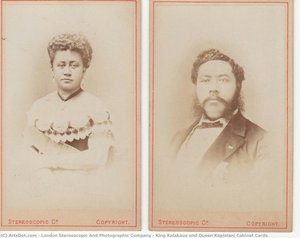
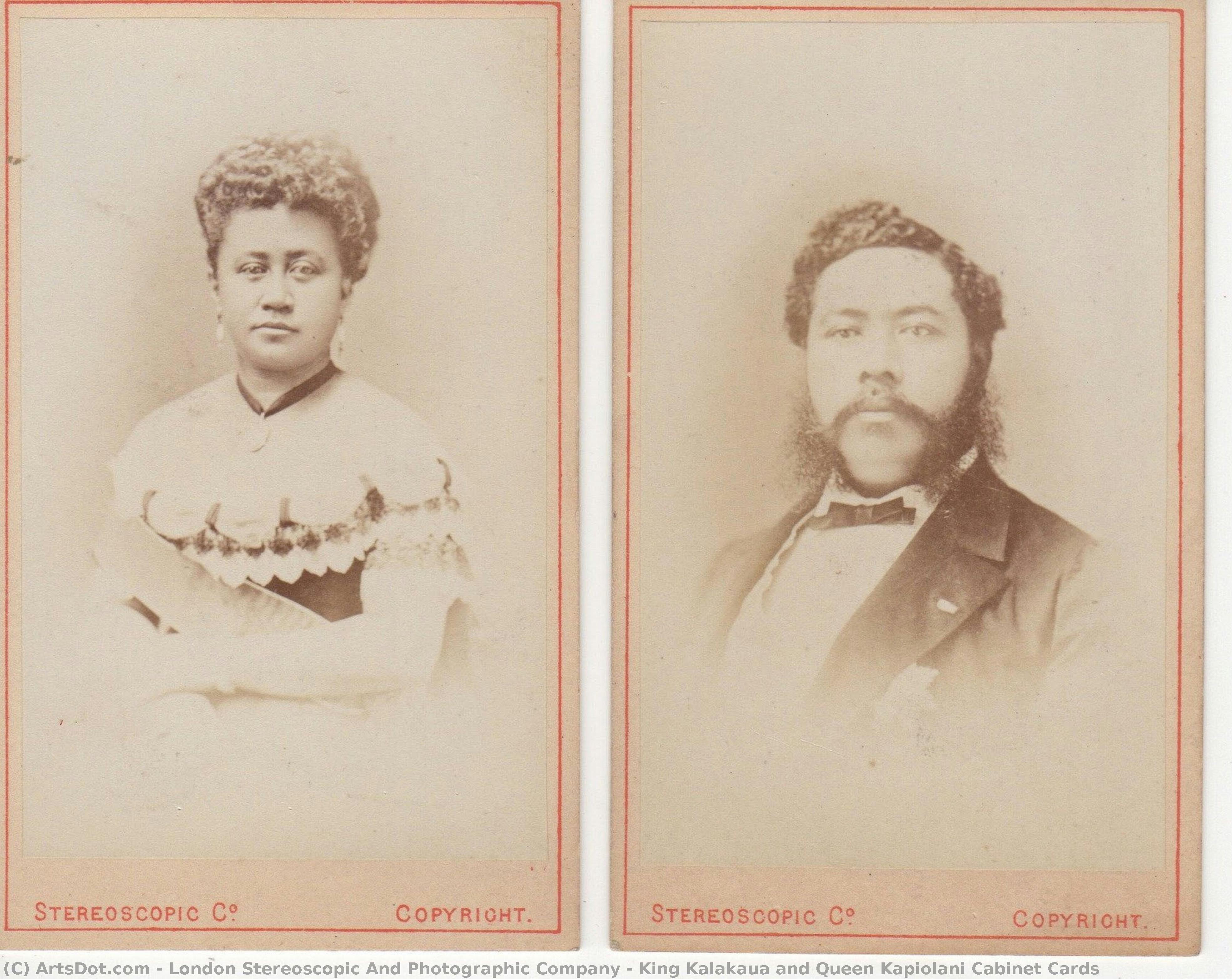
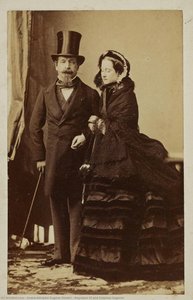
King Kalakaua and Queen Kapiolani Cabinet Cards


 Read More
Hand Made Oil Reproduction
Hand-painted oil on canvas in your size and frame, made to order by our artists. ( Buy Print Buy Image)




































Pick from our preset sizes that match the artwork's original proportions.

You may enter your own dimensions to fit a specific frame or space. If your selected size does not match the original image's proportions, we will either crop the artwork or extend the painting with additional hand-painted elements. A digital mockup will be sent for your approval before production begins.
Please note that the on-screen preview does not reflect the actual cropping or extension. Only the mockup will accurately show the final composition.
While custom sizes are available, we recommend selecting a dimension from the predefined list to preserve the original proportions.
After order, ArtsDot.com team will email client for instructions and provide a mockup preview
Worldwide Delivery () in 3/4 weeks instead of standard 5 weeks. (7 September). No compromise on quality.

Free Worldwide Express Shipping

High-Quality Linen Canvas

Full Shipping Insurance

Customs Tax Refund Guarantee

True Color Matching Guarantee

100-Day Return Policy (Defects Only)

100% Money-Back Guarantee

Bulk Discount Offer
 Glass option is only available in size under 110 CM

King Kalakaua and Queen Kapiolani Cabinet Cards
Reproduction Medium
Reproduction Size
-


Total Price
$ 263
Related Artworks








Artist Biography
The Pioneering Vision of the London Stereoscopic & Photographic Company
The London Stereoscopic & Photographic Company, a name synonymous with the early blossoming of photographic art and commercial enterprise, stands as a remarkable testament to Victorian innovation. Founded in 1854, this wasn’t merely a business; it was an engine driving the popularization of photography, transforming it from a scientific curiosity into a widely accessible medium for documentation, entertainment, and artistic expression. The company's story is inextricably linked with the rise of stereoscopy – the creation of three-dimensional images – and their masterful exploitation of this technology cemented their place in photographic history. While individual names associated directly with the creative output are often elusive, the collective vision of the Company’s founders and employees shaped how a generation experienced the world through the lens.From Daguerreotypes to Global Views: A Rapid Evolution
The mid-19th century witnessed a flurry of photographic processes – the daguerreotype, the calotype, the wet collodion process – each offering unique qualities and challenges. The London Stereoscopic & Photographic Company didn’t limit itself to one technique; instead, they embraced innovation, swiftly adapting to new advancements as they emerged. Initially focusing on portraiture, a lucrative market catering to Victorian society's desire for likenesses, the company quickly recognized the potential of stereoscopy. This technology, which presented two nearly identical images viewed through a special viewer, created an astonishing illusion of depth and realism. They began producing stereoscopic views of London landmarks, popularizing them at exhibitions like The Great Exhibition of 1851. However, their ambition extended far beyond the city limits. Recognizing the public’s thirst for exploration and distant lands, they dispatched photographers across Britain, Europe, North Africa, India, and even America. This ambitious undertaking resulted in an unparalleled collection of stereoscopic views, bringing exotic locales and monumental architecture into the parlors of Victorian homes.The Power of Stereoscopy: A New Form of Visual Experience
What distinguished the London Stereoscopic & Photographic Company wasn’t simply *what* they photographed, but *how*. The stereoscopic format offered an immersive experience unlike anything previously available. Viewers weren't merely looking at a picture; they were transported – virtually – to the scene itself. This had profound implications. For those unable to travel, these images provided a window onto the world, fostering curiosity and broadening horizons. The company’s views of historical sites, for example, allowed audiences to experience ancient ruins as if they were present, fueling an interest in archaeology and cultural heritage. Furthermore, the stereoscopic format lent itself beautifully to architectural photography, providing a sense of scale and spatial relationships that flat images couldn't replicate. The success of their stereoviews led to the establishment of dedicated reading rooms and viewing galleries where people could immerse themselves in these three-dimensional worlds. The company effectively created an early form of virtual reality.Influences and Legacy: Shaping a Photographic Culture
While pinpointing direct artistic influences is difficult given the collaborative nature of the Company, their work clearly reflects the prevailing aesthetic sensibilities of the Victorian era. A fascination with detail, a romanticized view of landscape, and an emphasis on historical grandeur are all evident in their photographs. The company’s success also spurred competition, leading to a proliferation of stereoscopic photography businesses and a wider availability of photographic materials. Their standardized production methods and widespread distribution network democratized access to photography. The London Stereoscopic & Photographic Company's influence extended beyond the realm of art; their images served as valuable documentation for scientific research, urban planning, and even military intelligence. Though the company eventually faded with the advent of more advanced photographic technologies, its legacy endures in the vast archive of stereoviews it created – a remarkable visual record of the 19th century that continues to captivate and inform us today.Major Achievements & Historical Significance
The London Stereoscopic & Photographic Company’s achievements are multifaceted. They were pioneers in commercial photography, establishing a sustainable business model that paved the way for future generations of photographers. Their extensive catalog of stereoviews – numbering in the tens of thousands – represents an unparalleled visual record of Victorian life and global exploration.- They played a crucial role in popularizing stereoscopy, transforming it from a novelty into a mainstream form of entertainment.
- Their images fostered a sense of global awareness and cultural exchange.
- The company’s standardized production methods made photography more accessible to the public.
- They contributed significantly to the development of architectural and landscape photography.

Quick Facts
- Artistic Movement Or Style: Stereoscopy, Photography
- Date Of Death: Living
- Full Name: London Stereoscopic & Photographic Company