

 Preview
 Send
Send Share
Share
 Details

 Download
 Similars
 X-Ray
X-Ray Diaporama
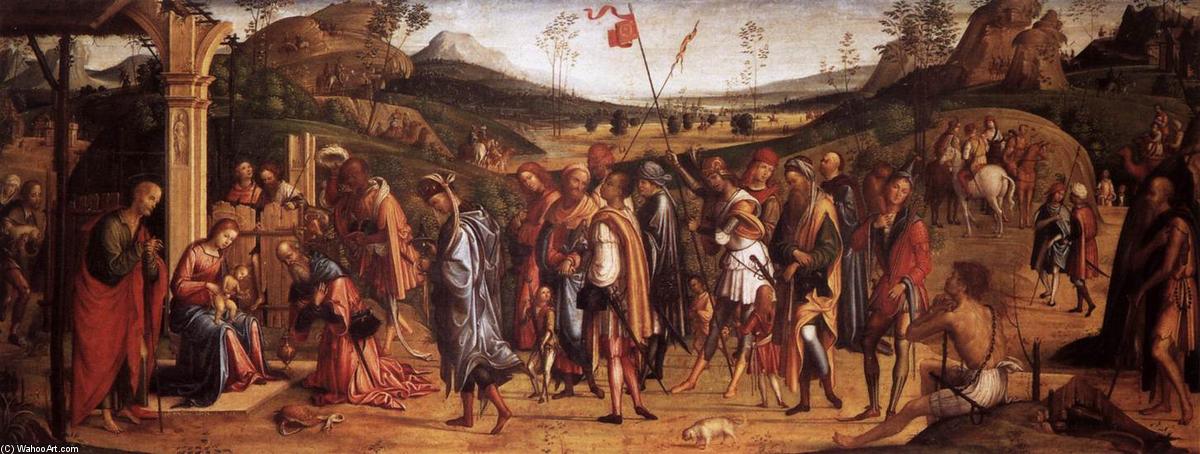
Adoration of the Magi
 Oil On Canvas
- WallArt
- Renaissance Baroque
 1499
1499 75.0 x 181.0 cm
 Pinacoteca di Brera
 Read More
Purchase a high-resolution, enhanced digital image, far superior to the online preview.
Each file is meticulously prepared by our in-house specialists using advanced tools and expert manual retouching. We ensure every image has exceptional clarity, precise color accuracy, and fine detail.
The final file is delivered via email within 72 hours, optimized for immediate use in professional, editorial, and print environments. This is the same quality trusted by top-tier design studios, publishers, and galleries.
Digital Image
Download a high-resolution file for personal display, printing, and creative projects. ( Buy Print Buy Hand Made Painting)
Included in Every Digital Image Order
Expert Digital Delivery, Guaranteed
When you choose ArtsDot.com, you're not just getting an image - you're receiving a professionally enhanced digital artwork, crafted with precision and backed by a satisfaction guarantee. Here's everything that comes with your order, automatically:

Fast Email Delivery
Your high-resolution digital image file will be emailed to you within 72 hours of ordering - ready for immediate use.

AI-Enhanced Digital File
Your artwork is professionally optimized using advanced AI tools and manual editing, ensuring maximum detail, clarity, and color accuracy.

Free Lifetime Re-Delivery
Accidentally deleted or lost your file? No worries - we'll resend it to you anytime, free of charge.

No Import Fees - Ever
Enjoy your artwork instantly with zero customs, duties, or delivery fees - digital downloads are always tax-free.

Color Accuracy Guarantee
We ensure your digital image reflects the original colors as closely as possible using professional tools and color management.

60-Day Satisfaction Guarantee
If you're not satisfied with your digital image, we'll revise it or refund 100% within 60 days - no questions asked.

100% Money-Back Guarantee
Not satisfied? Get a full refund within 60 days of receiving your digital file - no questions asked.

Bulk Order Discounts
Buy 3 images, save 10% - Buy 5, save 15% - Buy 10+, save 20%. Great for creative projects, galleries, and agencies.
Collectible Description
The Divine Tableau: An Exploration of Lorenzo Costa’s ‘Adoration of the Magi’
Lorenzo Costa (the Elder)’s “Adoration of the Magi,” completed in 1499, transcends mere visual representation; it embodies the very spirit of Renaissance artistic ambition and spiritual contemplation. Housed within the Pinacoteca di Brera in Milan—a testament to Isabella d'Este’s patronage—this monumental oil on panel painting (75 x 181 cm) commands attention not only for its impressive scale but also for its profound engagement with biblical narrative and humanist ideals. Examining Costa’s stylistic choices, technical mastery, and the artwork’s symbolic resonance unveils a masterpiece that continues to captivate audiences centuries later.A Masterclass in Naturalistic Detail
Costa’s artistic approach firmly rooted in the Bolognese School—influenced by Francesco Francia—prioritized meticulous observation of nature alongside idealized forms. He achieved this remarkable feat through sfumato, a technique perfected by Leonardo da Vinci, skillfully blurring contours and creating subtle gradations of light and shadow to imbue the scene with an ethereal luminescence. The artist’s painstaking attention to detail extends beyond mere representation; it encompasses the intricate folds of drapery, the expressive faces of the Magi—particularly Saint Joseph—and the luminous skin tones of Mary and Jesus—reflecting a commitment to anatomical accuracy that was groundbreaking for its time.Renaissance Faith Illuminated: Context and Symbolism
“Adoration of the Magi” emerged during a period of fervent religious fervor within Italy, fueled by papal patronage and humanist scholarship. The painting depicts the Virgin Mary accepting homage from three wise men—Melchior, Caspar, and Gaspar—who arrive bearing gifts to venerate Jesus Christ’s birth. This iconic depiction draws upon established Christian iconography, referencing Old Testament prophecies and symbolizing divine grace descending upon humanity. The mountainous landscape backdrop serves as a visual metaphor for the ascent of faith towards God, reinforcing the artwork's overarching theme of spiritual devotion.Comparative Visions: Echoes in Other Masterpieces
Similar explorations of the Magi’s adoration can be found in other notable artworks from the Renaissance era. Fra Angelico’s “Madonna delle ombre,” exemplifies a similarly serene aesthetic and masterful use of color, demonstrating Costa’s position within a broader artistic dialogue. Furthermore, Pieter Coecke Van Aelst's "Triptych: Adoration of the Magi," showcased on ArtsDot.com, offers another compelling perspective on this biblical subject—highlighting stylistic variations across artists working during the same period.A Legacy Enduring Through Reproduction
Today, reproductions of “Adoration of the Magi” are available through platforms like ArtsDot.com, allowing art enthusiasts worldwide to experience the beauty and grandeur of Costa’s original vision. Visiting the Pinacoteca di Brera in Milan provides an invaluable opportunity to contemplate the artwork firsthand—immersing oneself in its atmosphere and appreciating the subtle nuances of its artistic execution. Lorenzo Costa (the Elder)’s “Adoration of the Magi” remains a beacon of Renaissance art, inspiring admiration for its technical brilliance and conveying a timeless message of faith and humility.Related Artworks
Artist Biography
The Painter of Myth and Faith: The Life of Lorenzo Costa
Lorenzo Costa (1460–1535) stands as a cornerstone figure within the flourishing artistic landscape of the Italian Renaissance, embodying the intellectual dynamism of the Ferrara and Bologna schools. Born in the vibrant city of Ferrara, Costa emerged during a period where the boundaries between spiritual devotion and humanist inquiry were beautifully blurred. His oeuvre is characterized by a distinctive blend of stylistic elegance and profound contemplation, a quality that allowed him to navigate the complex demands of both religious institutions and the most sophisticated secular courts of his era. Through his brush, the ethereal light of the divine met the structured grace of classical mythology, creating a visual language that resonated deeply with the Renaissance spirit.Formative Years and the Mastery of Light
While the archival records of Costa’s earliest years remain somewhat elusive, his artistic DNA was clearly forged in the workshops of Northern Italy. It is widely recognized that he underwent rigorous training under the master Francesco Francia in Bologna. This apprenticeship was transformative, instilling in him a meticulous attention to detail and an early fascination with the technique of sfumato—the subtle, smoky blending of tones popularized by Leonardo da Vinci. From Francia, Costa inherited a profound understanding of perspective and the dramatic use of chiaroscuro, which allowed him to sculpt figures out of shadow and imbue his compositions with an unprecedented sense of depth and emotional weight. This technical foundation enabled him to move beyond mere representation, seeking instead to capture the very atmosphere surrounding his subjects.The Splendor of the Mantuan Court
The zenith of Costa’s career was inextricably linked to his prestigious appointment as court painter to Isabella d'Este, the Marchioness of Mantua. As one of the most formidable and discerning patrons in European history, Isabella d'Este demanded art that functioned as both aesthetic triumph and intellectual puzzle. Under her watchful eye, Costa’s work evolved to embrace complex mythological allegories and humanist ideals. His paintings became much more than religious icons; they were sophisticated narratives designed for an audience of scholars and aristocrats. This period of his life was marked by:- The integration of classical Greek and Roman myths into contemporary Italian painting.
- A heightened focus on symbolic meaning, where every gesture and botanical detail carried weight.
- The refinement of a soft, atmospheric style that could convey the delicate grace required by courtly taste.
Legacy and Historical Significance
As the Renaissance progressed, Costa’s influence rippled through the artistic communities of Ferrara and Bologna, leaving an indelible mark on the development of the Italian school. His ability to harmonize the rugged, emotive traditions of the Ferrarese masters with the more lyrical, polished style of the Bolognese painters created a unique stylistic bridge. Even as new movements began to emerge, Costa’s dedication to the balance of beauty and narrative remained a standard for his successors. Today, he is remembered not merely as a skilled craftsman, but as a visionary who captured the soul of an age—an artist capable of making the ancient myths feel as immediate and breathing as the sacred figures of the Christian faith.
lorenzo costa (the elder)
1460 - 1535 , Italy
Quick Facts
- Artistic Movement Or Style: Ferrara & Bologna Schools
- Artists Who Influenced This Artist:
- Cosimo Tura
- Francesco Francia
- Date Of Birth: c. 1460 Ferrara, Italy
- Date Of Death: March 5, 1535
- Full Name: Lorenzo Costa il Vecchio
- Nationality: Italian Renaissance
- Notable Artworks:
- Venus (detail)
- High Altarpiece, Oratory of S. Pietro in Vincoli
- Madonna and Saints
- Place Of Birth: Ferrara

