

 Preview
 Send
Send Share
Share
 Details

 Download
 Similars
 X-Ray
X-Ray Diaporama
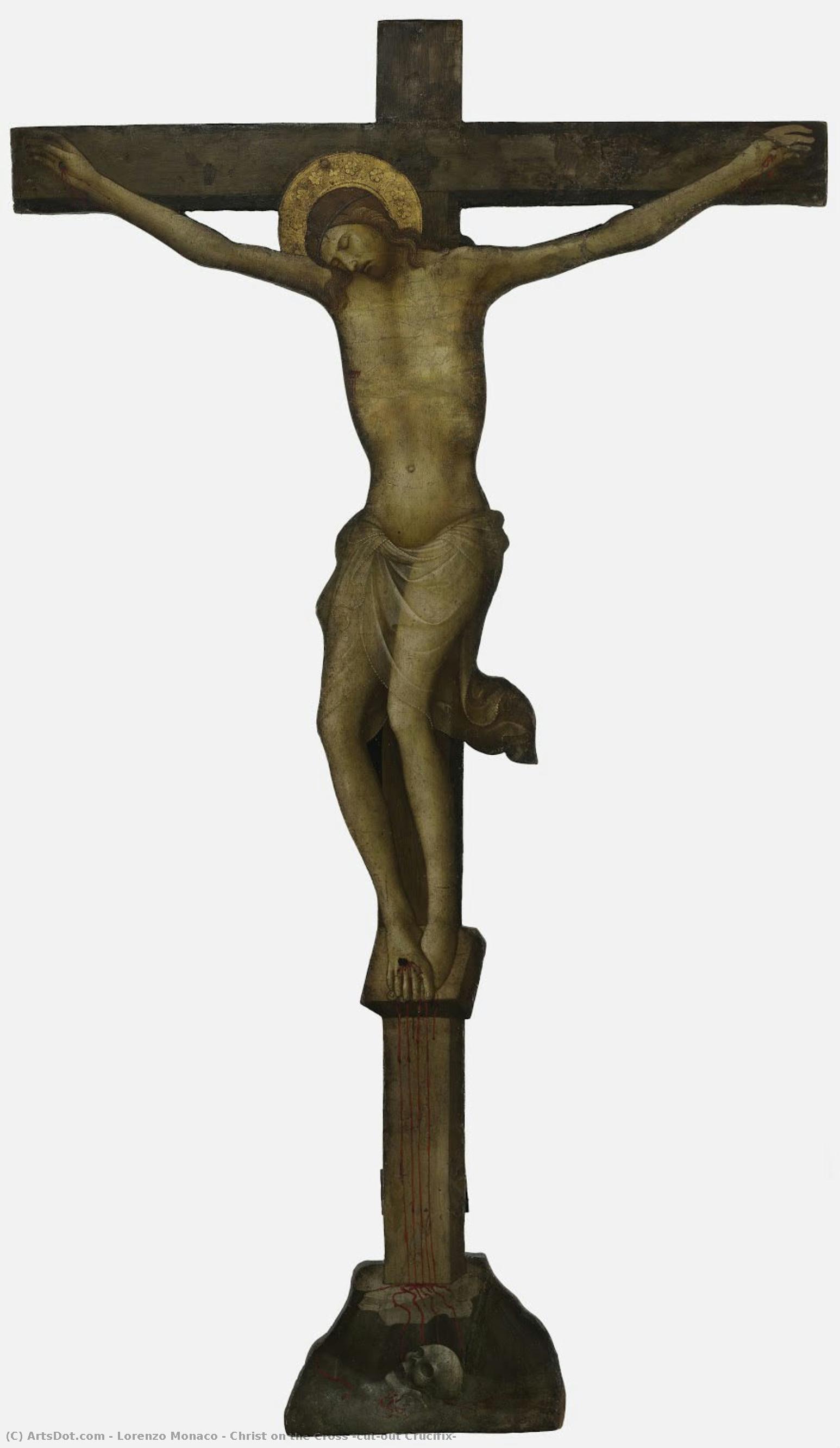
Christ on the Cross (cut-out Crucifix)
 Acrylic On Canvas
- WallArt
- International Gothic
 1420
1420 146.0 x 84.0 cm
 Museum of Fine Arts
 Read More
Purchase a high-resolution, enhanced digital image, far superior to the online preview.
Each file is meticulously prepared by our in-house specialists using advanced tools and expert manual retouching. We ensure every image has exceptional clarity, precise color accuracy, and fine detail.
The final file is delivered via email within 72 hours, optimized for immediate use in professional, editorial, and print environments. This is the same quality trusted by top-tier design studios, publishers, and galleries.
Digital Image
Download a high-resolution file for personal display, printing, and creative projects. ( Buy Print Buy Hand Made Painting)
Included in Every Digital Image Order
Expert Digital Delivery, Guaranteed
When you choose ArtsDot.com, you're not just getting an image - you're receiving a professionally enhanced digital artwork, crafted with precision and backed by a satisfaction guarantee. Here's everything that comes with your order, automatically:

Fast Email Delivery
Your high-resolution digital image file will be emailed to you within 72 hours of ordering - ready for immediate use.

AI-Enhanced Digital File
Your artwork is professionally optimized using advanced AI tools and manual editing, ensuring maximum detail, clarity, and color accuracy.

Free Lifetime Re-Delivery
Accidentally deleted or lost your file? No worries - we'll resend it to you anytime, free of charge.

No Import Fees - Ever
Enjoy your artwork instantly with zero customs, duties, or delivery fees - digital downloads are always tax-free.

Color Accuracy Guarantee
We ensure your digital image reflects the original colors as closely as possible using professional tools and color management.

60-Day Satisfaction Guarantee
If you're not satisfied with your digital image, we'll revise it or refund 100% within 60 days - no questions asked.

100% Money-Back Guarantee
Not satisfied? Get a full refund within 60 days of receiving your digital file - no questions asked.

Bulk Order Discounts
Buy 3 images, save 10% - Buy 5, save 15% - Buy 10+, save 20%. Great for creative projects, galleries, and agencies.
Collectible Description
Lorenzo Monaco’s “Christ on the Cross” – A Silent Echo of Faith
The painting before us, Lorenzo Monaco's "Christ on the Cross (cut-out Crucifix)," is not merely a depiction of a pivotal moment in Christian history; it’s a profound meditation on suffering, faith, and the enduring power of spiritual contemplation. Executed around 1420 during his time as a monk at Santa Maria degli Angeli in Florence, this work transcends its simple subject matter to reveal a deeply personal and emotionally resonant vision. Monaco, a figure often considered a bridge between the late Gothic and the nascent Renaissance, masterfully captures the essence of Christ’s sacrifice not through dramatic action or overt emotion, but through an exquisite balance of restraint and subtle intensity.
Monaco's style at this period is characterized by a remarkable stillness. The figure of Christ is rendered with a deliberate lack of dynamism – his body, elongated and subtly undulating, possesses a quiet dignity that speaks volumes about acceptance and surrender. This isn’t the heroic depiction of a warrior martyr; instead, we see a vulnerable human being bearing an unbearable burden. The artist eschews the sharp, angular forms prevalent in some contemporary works, opting for a smoother, more flowing line – a characteristic inherited from his training with Giotto but refined through his monastic experience. The palette is similarly restrained, dominated by muted earth tones and punctuated by the luminous gold of the halo above Christ’s head, creating an atmosphere of solemn reverence.
The Monastic Vision: A Reflection of Inner Life
Monaco's decision to paint this work within the confines of a monastery profoundly shaped its character. His life as a Camaldolese monk instilled in him a deep sense of introspection and a focus on spiritual contemplation. This is evident in the painting’s quietude, its lack of theatricality, and its emphasis on inner experience rather than external drama. The composition itself—Christ alone on the cross, framed by an undefined space—reinforces this sense of isolation and profound solitude. It invites the viewer to step into a meditative state, mirroring the artist's own devotional practice.
The painting’s historical context is equally important. Florence in the early 15th century was undergoing a period of rapid artistic and intellectual transformation. The Renaissance was taking hold, but traditional Gothic sensibilities still lingered. Monaco skillfully navigated this transition, retaining elements of the past while subtly incorporating new techniques and ideas. His work represents a crucial moment in art history – a synthesis of spiritual depth and formal innovation.
Symbolism and Spiritual Resonance
Beyond its technical mastery, “Christ on the Cross” is rich in symbolic meaning. The stark simplicity of the composition—the figure of Christ against the bare cross—underscores the universality of his sacrifice. The absence of extraneous details forces the viewer to confront the core message of redemption and forgiveness. The halo, a traditional symbol of divine grace, radiates from Christ’s head, signifying his connection to God. Even the muted colors contribute to the painting's spiritual atmosphere, evoking a sense of humility and reverence.
The “cut-out crucifix” format itself is significant. This technique—a hallmark of Florentine panel painting at the time—allowed for a greater illusionistic depth and a more dramatic effect when viewed from behind. It also served to emphasize Christ’s body, drawing attention to his suffering and vulnerability. The piece's enduring power lies in its ability to evoke a profound sense of empathy and spiritual connection – a testament to Monaco’s artistic vision and the timelessness of the subject matter.
A Legacy of Quiet Contemplation
Lorenzo Monaco’s “Christ on the Cross” is more than just a painting; it's an invitation to pause, reflect, and contemplate the mysteries of faith. Its quiet intensity, its masterful technique, and its profound symbolism continue to resonate with viewers centuries after its creation. Reproductions of this work offer a unique opportunity to bring this powerful image into any space, fostering a sense of serenity and spiritual awareness – a fitting tribute to one of Florence’s most important artists.
Related Artworks
Artist Biography
A Florentine Monk’s Vision: The World of Lorenzo Monaco
Lorenzo Monaco, born Piero di Giovanni around 1370 in Siena, occupies a fascinating and pivotal position in the transition from the Gothic grace of the Trecento to the burgeoning Renaissance ideals of the Quattrocento. Though biographical details remain scarce, his artistic journey reveals a compelling story of adaptation, innovation, and deeply felt spirituality. Apprenticed in Florence, he absorbed the lessons of masters like Giotto, Spinello Aretino, and Agnolo Gaddi – artists who established a foundation of narrative clarity and emotional resonance. However, it was his embrace of monastic life in 1390, joining the Camaldolese order at Santa Maria degli Angeli, that truly shaped both his artistic identity and earned him the name by which he is best known: Lorenzo Monaco, or “Lawrence the Monk.” This commitment to a contemplative existence profoundly influenced the character of his work, imbuing it with an introspective quality and a focus on devotional themes.Blending Gothic Elegance with Renaissance Stirrings
Monaco’s early works, emerging in the 1390s, demonstrate a masterful command of the International Gothic style then prevalent throughout Europe. These paintings are characterized by their refined elegance, delicate linearism, and a palette initially restrained in its chromatic range. Yet even within this established framework, hints of his individual artistic voice begin to emerge. He absorbed influences from contemporaries like Lorenzo Ghiberti and Gherardo Starnina, incorporating elements of their sophisticated compositions and attention to detail. Over time, Monaco’s style evolved, becoming increasingly marked by elongated figures draped in sinuous, flowing garments, a preference for sharp edges and brilliant colors – particularly the luxurious hues of gold and lapis lazuli – and a subtle, almost ethereal quality of light. His gestures are often understated, hinting at inner emotion rather than overtly displaying it, and his spatial arrangements tend to be flattened, prioritizing symbolic resonance over strict realism. He consistently sought to depict scenes imbued with strong spiritual value, often distancing himself from the pursuit of purely naturalistic representation.Masterpieces of Faith and Artistic Innovation
The breadth of Monaco’s artistic output is impressive, encompassing panel paintings, frescoes, and illuminated manuscripts. The Pietà, housed in Florence's Galleria dell'Accademia, stands as a testament to his early mastery, showcasing a nervous energy in its lines and a palpable sense of emotional tension. The magnificent Coronation of the Virgin, now gracing the Uffizi Gallery, exemplifies his mature style – a vibrant tapestry of saints rendered with sinuous forms and dazzling colors. The Polyptych of Monteoliveto, also in the Galleria dell'Accademia, reveals a profound spirituality that anticipates the work of Fra Angelico. Perhaps one of his most celebrated achievements is the Adoration of the Magi (1420-1422), where his innovative use of foreshortening, though lacking strict geometrical perspective, creates a compelling and visually arresting composition. His frescoes in the Bartolini Salimbeni Chapel represent one of his few surviving mural works, offering a glimpse into his skill as a large-scale decorator. These pieces demonstrate not only technical brilliance but also a deep understanding of theological symbolism and a commitment to conveying religious narratives with clarity and grace.A Bridge Between Eras
Despite the revolutionary artistic currents sweeping Florence during his lifetime – particularly the groundbreaking innovations of Masaccio and Filippo Brunelleschi in perspective and naturalism – Lorenzo Monaco remained largely unaffected by these developments. He steadfastly maintained his distinctive style, forging a unique path that bridged the gap between late Gothic traditions and the emerging Renaissance aesthetic. Giorgio Vasari, writing in his Lives of the Artists, acknowledged Monaco’s talent while noting his untimely death from an unidentified infection around 1425. While biographical details are limited, his contributions to art history are undeniable. He stands as the last significant exponent of the Giotto style, preserving its legacy while simultaneously incorporating elements that foreshadowed the artistic transformations to come. His emphasis on spirituality, stylized forms, and refined elegance represents a distinct aesthetic within Florentine painting, leaving an enduring mark on subsequent generations of artists.Legacy and Enduring Influence
Lorenzo Monaco’s work continues to captivate viewers with its delicate beauty, profound piety, and subtle innovations. He was not a revolutionary in the same vein as Masaccio, but his contribution lies in his ability to synthesize existing traditions into a harmonious and deeply personal style. He demonstrated that artistic excellence could flourish within the confines of established conventions, enriching them with individual expression and spiritual depth. His influence can be seen in the work of later artists who appreciated his refined technique and devotional sensibility. Today, his paintings serve as invaluable windows into a pivotal moment in art history – a time of transition, experimentation, and the enduring power of faith expressed through artistic vision.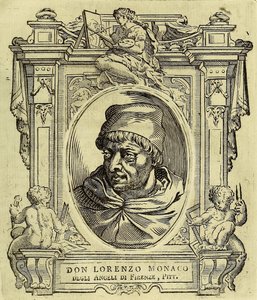
Lorenzo Monaco
1370 - 1425 , Italy
Quick Facts
- Artistic Movement Or Style: Gothic, Early Renaissance
- Artists Or Movements Influenced By This Artist: ['Fra Angelico']
- Artists Who Influenced This Artist:
- Giotto
- Spinello Aretino
- Agnolo Gaddi
- Lorenzo Ghiberti
- Date Of Birth: c. 1370
- Date Of Death: c. 1425
- Full Name: Lorenzo Monaco
- Nationality: Italian
- Notable Artworks:
- Pietà
- Coronation of the Virgin
- Polyptych of Monteoliveto
- Adoration of the Magi
- Place Of Birth: Siena, Italy

