 Preview
 Send
Send Share
Share
 Details

 Download
 Similars
 X-Ray
X-Ray Diaporama
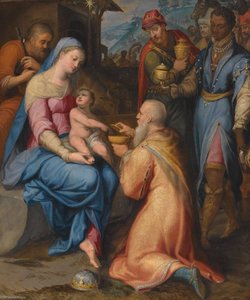
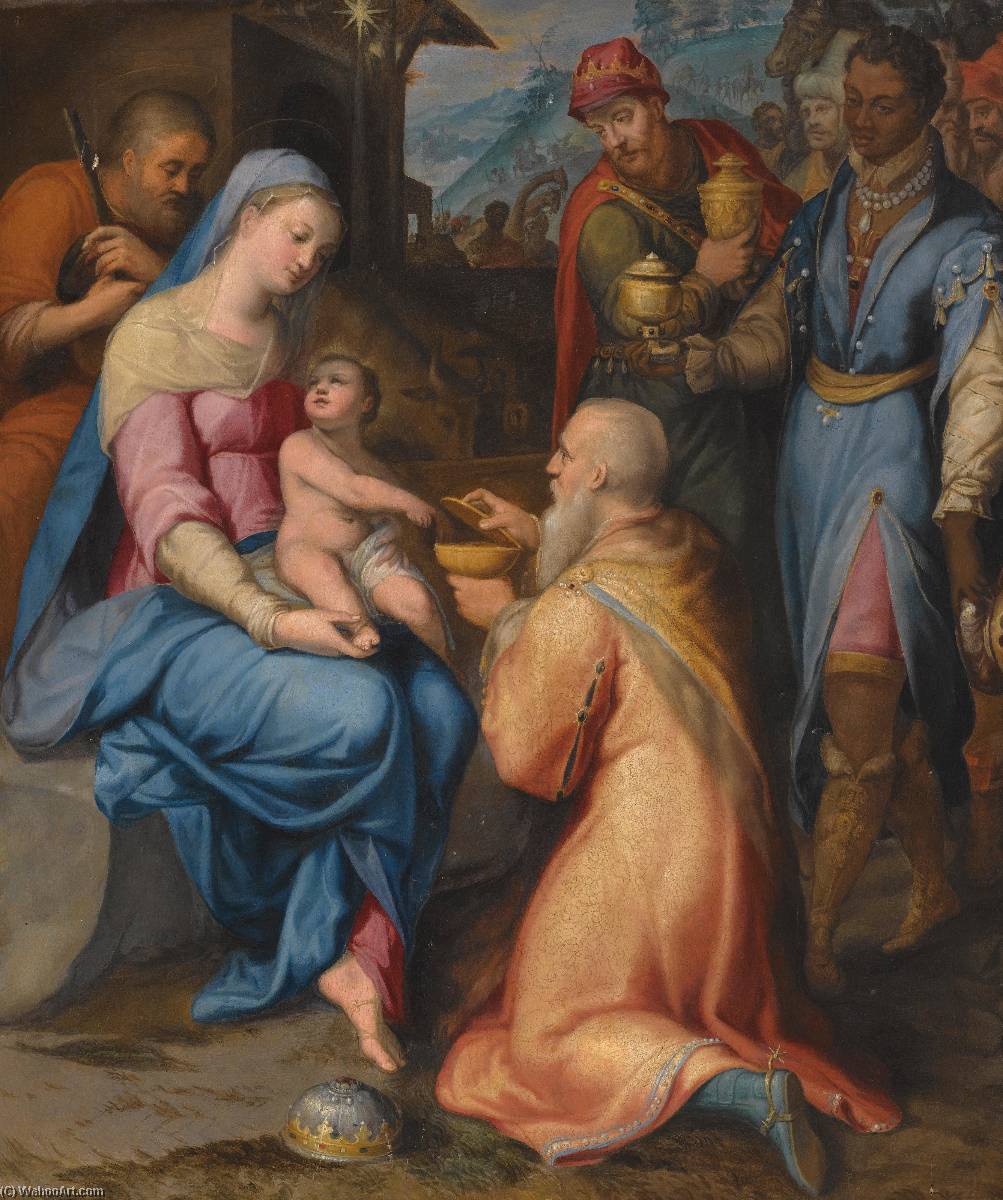
the adoration of the magi
 66.0 x 56.0 cm
 Read More
Hand Made Oil Reproduction
Hand-painted oil on canvas in your size and frame, made to order by our artists. ( Buy Print Buy Image)




































Pick from our preset sizes that match the artwork's original proportions.

You may enter your own dimensions to fit a specific frame or space. If your selected size does not match the original image's proportions, we will either crop the artwork or extend the painting with additional hand-painted elements. A digital mockup will be sent for your approval before production begins.
Please note that the on-screen preview does not reflect the actual cropping or extension. Only the mockup will accurately show the final composition.
While custom sizes are available, we recommend selecting a dimension from the predefined list to preserve the original proportions.
After order, ArtsDot.com team will email client for instructions and provide a mockup preview
Worldwide Delivery () in 3/4 weeks instead of standard 5 weeks. (28 August). No compromise on quality.

Free Worldwide Express Shipping

High-Quality Linen Canvas

Full Shipping Insurance

Customs Tax Refund Guarantee

True Color Matching Guarantee

60-Day Return Policy (Defects Only)

100% Money-Back Guarantee

Bulk Discount Offer
 Glass option is only available in size under 110 CM

the adoration of the magi
Reproduction Medium
Reproduction Size
-


Total Price
$ 263
Related Artworks










Artist Biography
Lorenzo Sabbatini: Bridging Raphael and the Mannerist Soul
Lorenzo Sabbatini (c. 1530 – 1576) stands as a pivotal, yet often overlooked, figure in the vibrant tapestry of Italian Renaissance art. Born in Bologna, his artistic journey was one of constant evolution, marked by a profound engagement with both the established grandeur of Raphael and the increasingly complex currents of Mannerism. While overshadowed by contemporaries like Parmigianino and Giulio Romano, Sabbatini’s distinctive style – characterized by its dramatic lighting, intricate detail, and a palpable sense of psychological depth – secured his place as a significant contributor to the artistic landscape of the late 16th century, particularly within the Vatican’s prestigious workshops.
Sabbatini's early training was deeply rooted in the Bolognese tradition. He studied under Prospero Fontana, a master known for his meticulous realism and skillful handling of color. However, Sabbatini quickly absorbed influences beyond his immediate teacher, notably from Giorgio Vasari, whose studio he joined around 1565. This association proved crucial, exposing him to the demands of large-scale commissions and fostering an understanding of the collaborative nature of artistic production within the Vatican’s vast operation. It was during this period that Sabbatini began to develop his own unique voice, a synthesis of technical proficiency and expressive innovation.
The Rise of a Vatican Master
Sabbatini's career truly blossomed in Rome, where he became a sought-after decorator for the Papal court. Following Vasari’s death in 1574, Pope Gregory XIII appointed Sabbatini as superintendent of works within the Vatican – a position he held until his untimely demise in 1577. This appointment marked a significant elevation, placing him at the heart of artistic patronage and providing access to some of the most ambitious projects of the era. He was tasked with overseeing the decoration of the Cappella Paolina (Chapel of Paul III) and the Sala Regia (Royal Hall) in St. Peter’s Basilica – spaces that demanded a mastery of perspective, illusionism, and dramatic composition.
His work in these monumental settings exemplifies his stylistic development. Sabbatini skillfully blended Raphael's harmonious balance with the heightened emotionality and unsettling distortions characteristic of Mannerism. The *Triumph of Faith over Infidelity*, perhaps his most celebrated painting, vividly illustrates this synthesis. The scene depicts a dramatic confrontation between virtuous faith and seductive infidelity, rendered with arresting detail and psychological intensity. The figures are elongated, their poses exaggerated, and their expressions imbued with a sense of torment and urgency – hallmarks of Sabbatini’s distinctive approach.
A Mannerist Palette: Techniques and Influences
Sabbatini's artistic technique was characterized by a meticulous attention to detail and a sophisticated understanding of color theory. He employed a layered glazing technique, building up surfaces with thin washes of pigment to achieve remarkable luminosity and depth. His use of light and shadow – often dramatically contrasted – created a sense of theatricality and heightened emotional impact. He also demonstrated a keen awareness of perspective, utilizing techniques such as foreshortening and aerial perspective to create the illusion of three-dimensional space.
Beyond his technical skills, Sabbatini was profoundly influenced by the works of Raphael, Michelangelo, and other masters of the High Renaissance. However, he pushed beyond mere imitation, imbuing these influences with a distinctly Mannerist sensibility. His compositions are often asymmetrical, his figures elongated and distorted, and his color palettes rich and intense. The influence of artists like Parmigianino is also evident in his work, particularly in its emphasis on elegant lines, graceful poses, and a subtle sense of melancholy.
Legacy and Lasting Significance
Despite his relatively short career, Lorenzo Sabbatini left an indelible mark on the art of the 16th century. His contributions to the decoration of the Vatican’s most prestigious spaces cemented his reputation as one of Rome's leading artists. While he may not be as widely celebrated as some of his contemporaries, his work continues to fascinate scholars and art enthusiasts alike. Sabbatini’s ability to seamlessly blend Raphael’s classical ideals with the unsettling innovations of Mannerism offers a unique window into the complex artistic currents of his time.
His legacy is particularly evident in the works of subsequent generations of artists, who drew inspiration from his dramatic compositions and expressive use of color. Furthermore, Sabbatini's exploration of psychological themes – particularly in works like *Triumph of Faith over Infidelity* – anticipates many of the concerns that would dominate art in the Baroque period. He remains a testament to the dynamism and creativity of Italian Renaissance painting, a master who bridged the gap between tradition and innovation.
lorenzo sabatini
1530 - 1576
Quick Facts
- Artistic Movement Or Style: Mannerist, Raphael-influenced
- Artists Or Movements Influenced By This Artist: ['Raphael']
- Artists Who Influenced This Artist:
- Prospero Fontana
- Giorgio Vasari
- Date Of Birth: c. 1530
- Date Of Death: 1576
- Full Name: Lorenzo Sabbatini
- Nationality: Italian
- Notable Artworks:
- Triumph of Faith
- Holy Family
- Place Of Birth: Bologna, Italy