

 Preview
 Send
Send Share
Share
 Details

 Download
 Similars
 X-Ray
X-Ray Diaporama
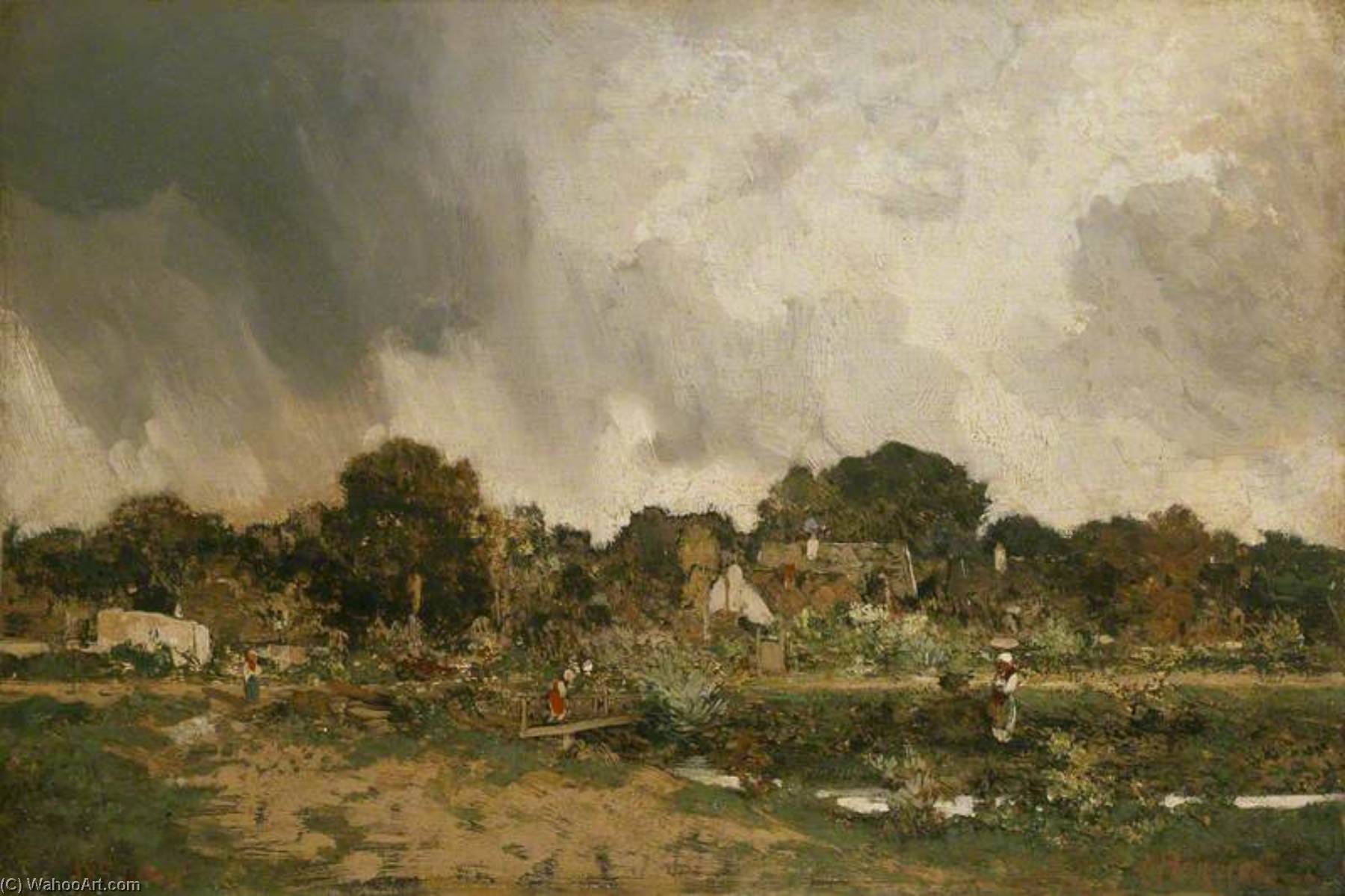
The Outskirts of a Village
 1852
1852 23.0 x 33.0 cm
 The Ashmolean Museum of Art And Archaeology
 Read More
Purchase a high-resolution, enhanced digital image, far superior to the online preview.
Each file is meticulously prepared by our in-house specialists using advanced tools and expert manual retouching. We ensure every image has exceptional clarity, precise color accuracy, and fine detail.
The final file is delivered via email within 72 hours, optimized for immediate use in professional, editorial, and print environments. This is the same quality trusted by top-tier design studios, publishers, and galleries.
Digital Image
Download a high-resolution file for personal display, printing, and creative projects. ( Buy Print Buy Hand Made Painting)
Included in Every Digital Image Order
Expert Digital Delivery, Guaranteed
When you choose ArtsDot.com, you're not just getting an image - you're receiving a professionally enhanced digital artwork, crafted with precision and backed by a satisfaction guarantee. Here's everything that comes with your order, automatically:

Fast Email Delivery
Your high-resolution digital image file will be emailed to you within 72 hours of ordering - ready for immediate use.

AI-Enhanced Digital File
Your artwork is professionally optimized using advanced AI tools and manual editing, ensuring maximum detail, clarity, and color accuracy.

Free Lifetime Re-Delivery
Accidentally deleted or lost your file? No worries - we'll resend it to you anytime, free of charge.

No Import Fees - Ever
Enjoy your artwork instantly with zero customs, duties, or delivery fees - digital downloads are always tax-free.

Color Accuracy Guarantee
We ensure your digital image reflects the original colors as closely as possible using professional tools and color management.

60-Day Satisfaction Guarantee
If you're not satisfied with your digital image, we'll revise it or refund 100% within 60 days - no questions asked.

100% Money-Back Guarantee
Not satisfied? Get a full refund within 60 days of receiving your digital file - no questions asked.

Bulk Order Discounts
Buy 3 images, save 10% - Buy 5, save 15% - Buy 10+, save 20%. Great for creative projects, galleries, and agencies.
Collectible Description
Painting Description
The painting depicts a serene village scene with people working in the fields under a cloudy sky. The atmosphere suggests that it might be raining or about to rain, adding a sense of melancholy to the overall mood. The villagers are engaged in various activities related to agriculture and daily life, creating a sense of community and cooperation among them.Artistic Style
Louis Adolphe Hervier's artistic style is characterized by his attention to detail and ability to capture the essence of rural life. His use of colors and brushstrokes creates a sense of depth and dimension, drawing the viewer into the scene. The painting is a great example of Realism, a art movement that focuses on depicting everyday life in a realistic and accurate manner.Similar Paintings
Other notable paintings that showcase similar themes and styles include:- Self-portrait by Samuel Laurence, available at /art/list/?Filter=AQSJER-Samuel-Laurence-Self-portrait
- La Maison de la Sourde, Éragny by Lucien Pissarro, available at /art/list/?Filter=ARJHA8-Lucien-Pissarro-La-Maison-de-la-Sourde-Eragny
- Winfrith, Dorset by Frederick William Newton Whitehead, available at /art/list/?Filter=AQV78B-Frederick-William-Newton-Whitehead-Winfrith-Dorset
The painting The Outskirts of a Village by Louis Adolphe Hervier is a beautiful representation of rural life in the 19th century. Its attention to detail, use of colors, and realistic depiction make it a great example of Realism. For more information on this painting and other similar works, visit /art/list/?Filter=AQSPTR-Louis-Adolphe-Hervier-The-Outskirts-of-a-Village.
Related Artworks










Artist Biography
A Quiet Observer of Rural Life: The World of Louis-Adolphe Hervier
Louis-Adolphe Hervier, born in 1818 and passing away in 1879, occupies a fascinating, often overlooked position within the landscape of 19th-century French painting. While not achieving the widespread renown of his contemporaries like Courbet or Millet, Hervier carved out a distinctive niche for himself with his sensitive depictions of rural Normandy life and an evolving style that hinted at the burgeoning Impressionist movement. His work offers a poignant glimpse into a world on the cusp of change, capturing the beauty and dignity of peasant existence before it was irrevocably altered by industrialization and modernization. Hervier’s artistic journey wasn't one of radical breaks or flamboyant pronouncements; rather, it was a gradual refinement of observation, technique, and an increasingly nuanced understanding of light and atmosphere.Early Training and the Salon Years
Details regarding Hervier’s early life and formal training remain somewhat scarce. He likely received instruction in Paris, the artistic heart of France, but specific mentors are not definitively known. What is clear is his early ambition to succeed within the established art world. He began exhibiting at the prestigious Salon de Paris in 1843, a crucial proving ground for aspiring artists. His initial submissions were typical of the academic style prevalent at the time – carefully rendered genre scenes featuring peasant figures engaged in everyday activities. These early works demonstrate a solid technical proficiency and an eye for realistic detail, but lack the distinctive personal voice that would later characterize his mature paintings. He focused on portraying the rhythms of agricultural life: harvesting, tending livestock, and moments of domestic tranquility. The palette was generally subdued, reflecting the traditional tones favored by Salon audiences. However, even in these early pieces, a certain empathy for his subjects is evident, setting him apart from artists who merely used peasants as picturesque props.Normandy as Muse: A Developing Style
The turning point in Hervier’s career came with his sustained focus on the Normandy countryside. He settled in this region, drawn to its rolling hills, expansive skies, and the authenticity of rural life. Here, he moved beyond simply *depicting* peasant life to *experiencing* it, immersing himself in the environment and developing a deeper connection with his subjects. This immersion is reflected in his evolving style. His palette began to brighten, influenced by the changing light conditions of the Normandy coast. He started experimenting with looser brushwork, capturing the fleeting effects of sunlight on fields and water. The influence of Barbizon School painters like Corot and Rousseau is discernible in his landscapes, particularly in their emphasis on atmospheric perspective and a sense of quiet contemplation. However, Hervier’s work differs from that of the Barbizons in its greater focus on figures within the landscape, integrating them seamlessly into the natural world rather than presenting nature as an independent entity. He wasn't merely painting *about* Normandy; he was attempting to capture its very essence – its light, air, and spirit.Engravings and Broader Recognition
While primarily known as a painter, Hervier also produced a significant body of engravings. This foray into printmaking proved crucial for expanding his reach and establishing his reputation beyond the confines of the Salon. Engravings allowed him to reproduce his images more widely, bringing his vision of rural life to a broader audience. The process of engraving also influenced his painting style, encouraging him to simplify forms and focus on essential details. His engravings often served as studies for larger paintings, demonstrating a thoughtful approach to composition and technique. By the 1860s, Hervier had gained recognition as a skilled interpreter of rural life, attracting collectors and critical attention. He continued to exhibit regularly at the Salon, receiving positive reviews for his increasingly sophisticated landscapes and genre scenes. Although he never fully embraced the radical tenets of Impressionism, his work foreshadowed many of its key concerns – the importance of light, atmosphere, and subjective perception.Legacy and Historical Significance
Louis-Adolphe Hervier’s legacy lies in his ability to capture a specific moment in time – the waning years of traditional rural life in France. His paintings are not grand historical narratives or dramatic allegories; they are quiet, intimate observations of everyday existence. He offered a dignified portrayal of peasant life, devoid of sentimentality or romanticization. His landscapes, with their subtle gradations of light and atmosphere, anticipate the Impressionist movement, demonstrating a sensitivity to visual effects that was ahead of its time. While he may not be a household name, Hervier’s work continues to resonate with viewers today, offering a poignant reminder of a world lost – a world of close connection to nature, hard labor, and simple beauty. His paintings serve as valuable historical documents, providing insights into the social and economic realities of 19th-century France, while simultaneously captivating us with their artistic merit and enduring emotional power.- Key Characteristics: Sensitive depictions of rural Normandy life, evolving style hinting at Impressionism, emphasis on light and atmosphere.
- Influences: Barbizon School painters (Corot, Rousseau), academic tradition.
- Major Themes: Peasant life, agricultural labor, Normandy landscapes, the changing seasons.
- Techniques: Oil painting, engraving; loose brushwork, atmospheric perspective, realistic detail.
louis adolphe hervier
1818 - 1879
Quick Facts
- Artistic Movement Or Style: Impressionism
- Artists Or Movements Influenced By This Artist: ['Romanticism']
- Artists Who Influenced This Artist: ['Romanticism']
- Date Of Birth: 1818
- Date Of Death: 1879
- Full Name: Louis Adolphe Hervier
- Nationality: French
- Notable Artworks:
- The Outskirts of a Village
- Interior of a Church
- Village in Picardy
- Place Of Birth: Paris, France

