 Preview
 Send
Send Share
Share
 Details

 Download
 Similars
 X-Ray
X-Ray Diaporama
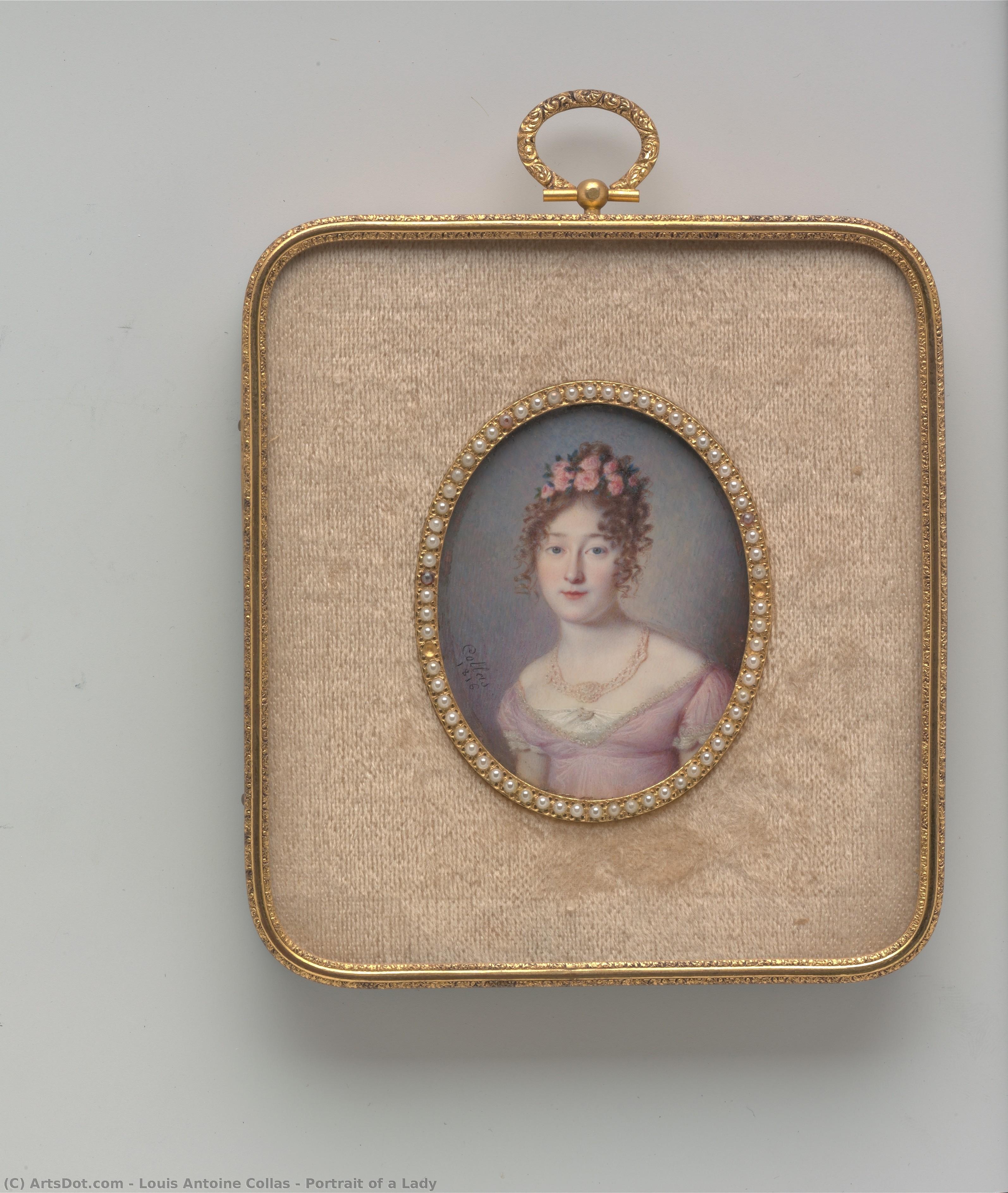
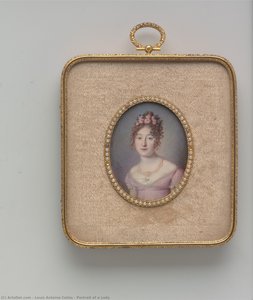
Portrait of a Lady
 1816
1816 7.0 x 6.0 cm
 Read More
Hand Made Oil Reproduction
Hand-painted oil on canvas in your size and frame, made to order by our artists. ( Buy Print Buy Image)




































Pick from our preset sizes that match the artwork's original proportions.

You may enter your own dimensions to fit a specific frame or space. If your selected size does not match the original image's proportions, we will either crop the artwork or extend the painting with additional hand-painted elements. A digital mockup will be sent for your approval before production begins.
Please note that the on-screen preview does not reflect the actual cropping or extension. Only the mockup will accurately show the final composition.
While custom sizes are available, we recommend selecting a dimension from the predefined list to preserve the original proportions.
After order, ArtsDot.com team will email client for instructions and provide a mockup preview
Worldwide Delivery () in 3/4 weeks instead of standard 5 weeks. (26 August). No compromise on quality.

Free Worldwide Express Shipping

High-Quality Linen Canvas

Full Shipping Insurance

Customs Tax Refund Guarantee

True Color Matching Guarantee

60-Day Return Policy (Defects Only)

100% Money-Back Guarantee

Bulk Discount Offer
 Glass option is only available in size under 110 CM

Portrait of a Lady
Reproduction Medium
Reproduction Size
-


Total Price
$ 263
Related Artworks





Artist Biography
A Transatlantic Brush: The Life and Art of Louis Antoine Collas
Louis Antoine Collas, born in the elegant city of Bordeaux, France, in 1775, represents a fascinating intersection of artistic traditions and cultural exchange. He wasn’t merely a painter; he was a conduit, carrying the refined techniques of French portraiture across the Atlantic to a burgeoning American art scene. While his name might not resonate with the immediate recognition afforded some of his contemporaries, Collas played a pivotal role in shaping early 19th-century portraiture in both the United States and, particularly, New Orleans. His journey reflects a period of significant artistic migration, where European masters sought new opportunities and, in turn, profoundly influenced the development of American styles.
Early Training and Parisian Beginnings
Details surrounding Collas’s earliest artistic education remain somewhat elusive, though it is known he studied under François-André Vincent in Paris. This grounding in classical French portraiture would become a defining characteristic of his work. He debuted at the prestigious Salon in 1798 with a self-portrait—a common practice for aspiring artists seeking recognition and patronage. The following years saw him consistently exhibit miniatures, honing his skills in this delicate art form. The meticulous detail and subtle shading favored by French miniaturists were hallmarks of his early style. This period was crucial in establishing Collas’s technical foundation and introducing him to the competitive world of Parisian art.
A Russian Interlude: Courtly Commissions
Around 1803, or possibly as late as 1808, Collas embarked on a significant detour—a move to St. Petersburg, Russia. For several years, he served the court of Czar Alexander I, painting portraits of aristocrats and prominent figures. This experience undoubtedly broadened his artistic horizons and exposed him to a different aesthetic sensibility. Among his subjects were Duchess Catherine Pavlovna and Prince Serge Nikolaewitch Galitinne, commissions that attest to his growing reputation and skill. Working within the Russian court demanded not only technical proficiency but also an ability to capture the status and personality of his sitters—a talent Collas clearly possessed.
Arrival in America: Establishing a New Presence
By 1816, Collas had crossed another ocean, establishing himself in New York City. He initially registered as “Lewis Collers” in city directories, perhaps an attempt to anglicize his name for easier recognition. He actively exhibited at the American Academy of Art, showcasing a range of miniatures and portraits that demonstrated both his French training and an evolving style. Collas didn’t remain confined to New York; he traveled extensively along the East Coast—Philadelphia, Baltimore, Charleston—advertising his services and seeking commissions. This itinerant lifestyle was common for artists of the period, as they followed the concentrations of wealth and patronage.
New Orleans and Lasting Legacy
In 1822, Collas arrived in New Orleans, a city rapidly becoming a cultural hub. He quickly became one of the most sought-after portraitists in the region, particularly among wealthy plantation owners and prominent citizens. His arrival coincided with a growing demand for sophisticated portraiture that reflected the status and aspirations of the Creole elite. While other artists, like Jean-François de Vallee, also practiced miniature painting in New Orleans, Collas garnered significant attention from the press and public alike. His portraits were praised for their resemblance to life and their graceful execution—qualities deeply rooted in his French artistic heritage. Collas continued to exhibit and advertise in New Orleans for many years, leaving behind a substantial body of work that provides valuable insights into the lives and appearances of early 19th-century Louisiana society. He is considered an American artist despite his origins, having significantly contributed to the development of portraiture within the United States.
louis antoine collas
1775 - 1856 , France
Quick Facts
- Artistic Movement Or Style: Portraiture, Miniature painting
- Artists Who Influenced This Artist: ['F.A. Vincent']
- Date Of Birth: 1775
- Date Of Death: 1856
- Full Name: Louis Antoine Collas
- Nationality: French-American
- Place Of Birth: Bordeaux, France