 Preview
 Send
Send Share
Share
 Details

 Download
 Similars
 X-Ray
X-Ray Diaporama
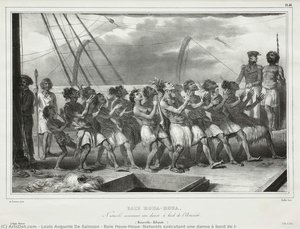
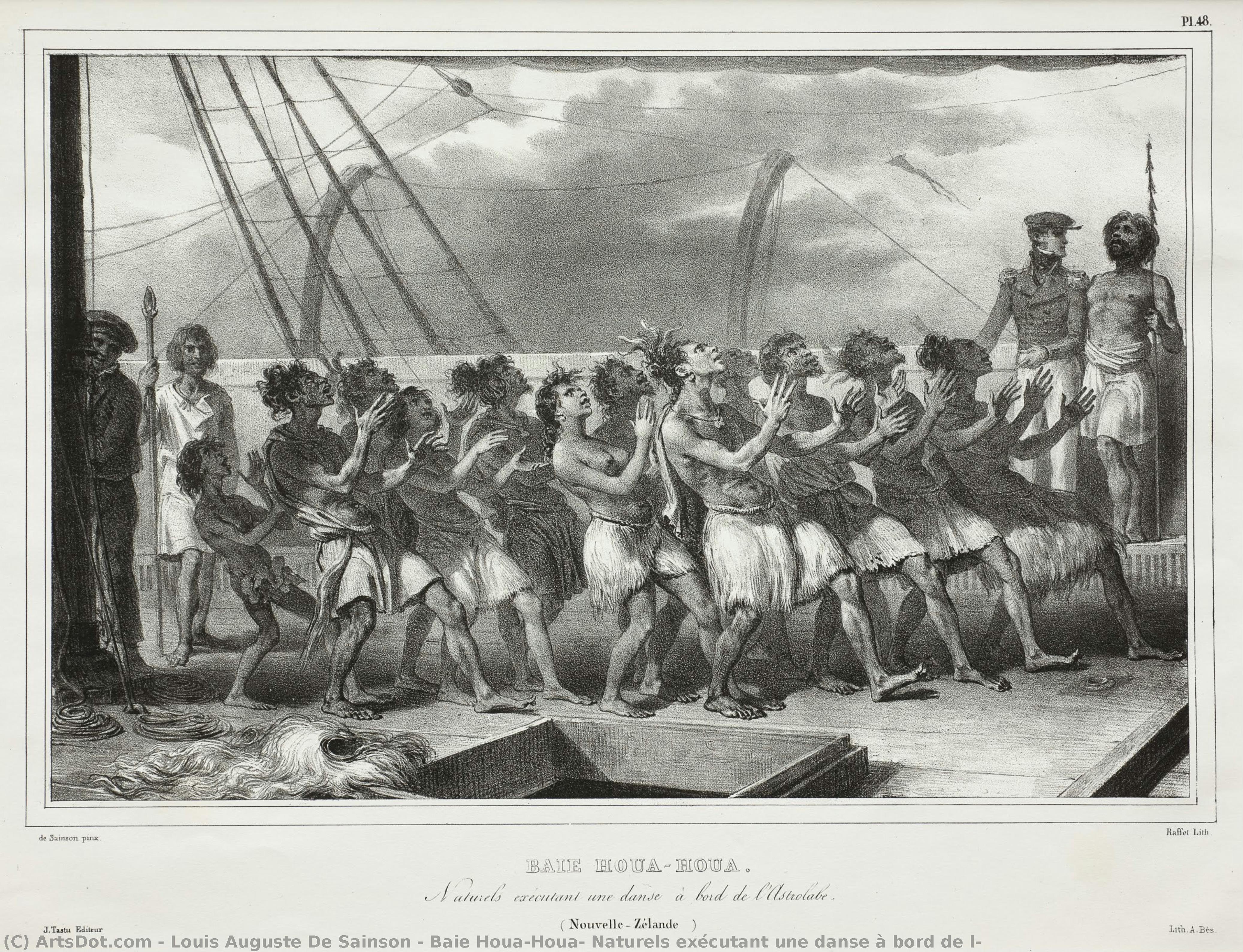
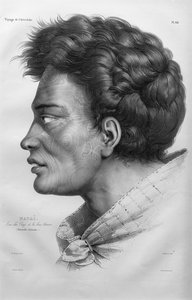
Baie Houa-Houa, Naturels exécutant une danse à bord de l
 1839
1839 55.0 x 36.0 cm
 Auckland Art Gallery Toi o Tāmaki
 Read More
Giclée / Art Print
Museum-quality giclée or canvas print with fast production and flexible finish options. ( Buy Hand Made Painting Buy Image)




































Pick from our preset sizes that match the artwork's original proportions.

You may enter your own dimensions to fit a specific frame or space. If your selected size does not match the original image's proportions, we will either crop the artwork or extend the image with a mirrored or solid-fill edge. A digital mockup will be sent for your approval before production begins.
Please note that the on-screen preview does not reflect the actual cropping or extension. Only the mockup will accurately show the final composition.
While custom sizes are available, we recommend selecting a dimension from the predefined list to preserve the original proportions.
Worldwide Delivery () in 2 weeks instead of standard 4/5 weeks. (24 August)

Free Worldwide Express Shipping

High-Quality Linen Canvas

Full Shipping Insurance

Customs Tax Refund Guarantee

True Color Matching Guarantee

60-Day Return Policy (Defects Only)

100% Money-Back Guarantee

Bulk Discount Offer
 Glass option is only available in size under 110 CM

Baie Houa-Houa, Naturels exécutant une danse à bord de l
Giclée / Art Print
Reproduction Size
-


Total Price
$ 63
Collectible Description
Related Artworks



![Praia Dom Manuel [dom Manuel Beach] — Félix Émile Taunay, Baron Of Taunay, Romanticism](/media/artworks/images-thumb/30/f5/30f5f6a7971c1d1d10f94900ca4c9e09.jpg)
Artist Biography
Louis Auguste de Sainson: A Pioneer of Natural History in Watercolor
Born in Paris in 1800, Louis Auguste de Sainson’s life was inextricably linked to the burgeoning field of natural history illustration and the spirit of scientific exploration. He wasn't merely an artist; he was a meticulous observer, a dedicated documentarian, and a pivotal figure in transforming watercolor from a delicate pastime into a powerful tool for scientific representation. De Sainson’s legacy rests not just on his stunning artistic skill but also on his crucial role in shaping how the natural world was depicted and understood during the 19th century.
De Sainson's early training instilled a deep appreciation for draughtsmanship, a foundation he would later expertly utilize. However, it was his involvement with the French naval expedition to explore the Pacific Islands between 1826 and 1829 aboard the corvette *L’Astrolabe* that truly cemented his place in art history. Commissioned by the French Geographical Society, de Sainson was tasked with producing a comprehensive visual record of the flora, fauna, and indigenous cultures encountered during this remarkable voyage. He spent nearly two years meticulously documenting over 500 drawings – an astonishing output for the time – capturing the vibrant ecosystems of New Zealand, Hawaii, Rapa Nui, and numerous other islands. These weren’t simply pretty pictures; they were scientific observations rendered with unparalleled detail and accuracy. The expedition's focus on observation and documentation reflected a broader shift in European thought during this period, aligning with the rise of positivism and a desire to understand the world through empirical evidence.
Watercolor as Scientific Instrument
Prior to de Sainson’s work, watercolor was often associated with landscapes and portraits. However, he demonstrated its remarkable potential for detailed botanical and zoological illustration. He mastered the technique of layering washes, using subtle tonal variations to convey texture, light, and shadow – essential elements in accurately representing natural subjects. Crucially, he developed a system of color mixing that allowed him to reproduce the nuances of plant pigments with astonishing fidelity. His approach moved beyond mere imitation; he sought to capture the *essence* of each specimen, conveying its unique characteristics through careful observation and skillful execution.
De Sainson’s method involved extensive field studies, often working directly from life. He would spend hours observing a single flower or animal, painstakingly rendering every detail – the delicate veins in a leaf, the intricate patterns on an insect's wing, the subtle coloration of a bird’s plumage. This dedication to realism was further enhanced by his understanding of anatomy and morphology, knowledge he likely gleaned from his studies of scientific texts.
The Influence of Scientific Illustration
De Sainson’s work profoundly influenced subsequent generations of natural history illustrators. His meticulous approach and commitment to accuracy set a new standard for the genre. Artists like William Henry Fox Talbot, who pioneered photographic techniques, were deeply inspired by de Sainson's detailed renderings. Talbot recognized that watercolor could achieve a level of precision previously unattainable with traditional media. De Sainson’s legacy extends beyond individual artworks; he helped establish watercolor as a legitimate and respected medium for scientific documentation.
Furthermore, his work reflects the broader intellectual currents of the time – the Enlightenment's emphasis on reason and observation, the rise of scientific societies, and the growing interest in exploring and cataloging the natural world. His illustrations weren’t just beautiful; they were vital components of a larger project of understanding and classifying the planet’s biodiversity.
A Lasting Legacy
Louis Auguste de Sainson died in Paris in 1874, leaving behind an extraordinary body of work that continues to fascinate art historians and naturalists alike. His expedition drawings remain invaluable resources for scientists studying the flora and fauna of the Pacific Islands. His meticulous technique and dedication to accuracy established a benchmark for scientific illustration, demonstrating the power of art to illuminate our understanding of the world around us. The Musée National du Château in Versailles houses examples of his work, offering visitors a glimpse into the life and artistry of this remarkable pioneer.
To explore more of de Sainson’s captivating artwork, please visit Baie Houa-Houa, Naturels exécutant une danse à bord de l’Astrolabe.
louis auguste de sainson
1800 - 1874 , France
Quick Facts
- Artistic Movement Or Style: Watercolourist & draughtsman
- Date Of Birth: 1800
- Date Of Death: 1874
- Full Name: Louis Auguste de Sainson
- Nationality: French
- Notable Artworks: ['Baie Houa-Houa']
- Place Of Birth: Paris, France