 Preview
 Send
Send Share
Share
 Details

 Download
 Similars
 X-Ray
X-Ray Diaporama
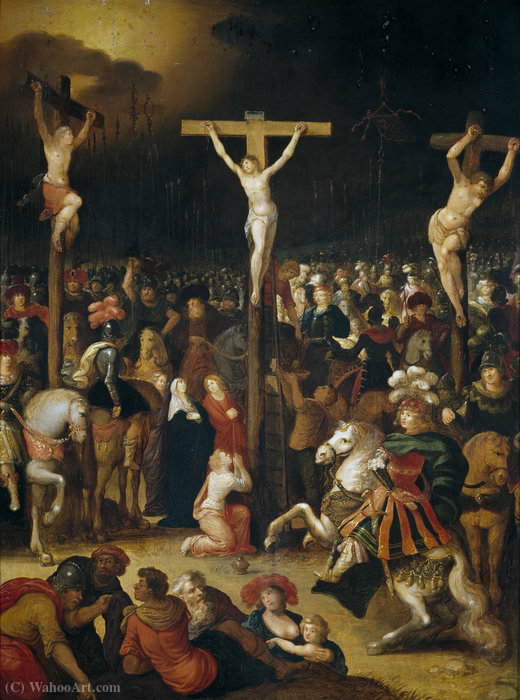
Crucifixion
 Read More
Hand Made Oil Reproduction
Hand-painted oil on canvas in your size and frame, made to order by our artists. ( Buy Print Buy Image)




































Pick from our preset sizes that match the artwork's original proportions.

You may enter your own dimensions to fit a specific frame or space. If your selected size does not match the original image's proportions, we will either crop the artwork or extend the painting with additional hand-painted elements. A digital mockup will be sent for your approval before production begins.
Please note that the on-screen preview does not reflect the actual cropping or extension. Only the mockup will accurately show the final composition.
While custom sizes are available, we recommend selecting a dimension from the predefined list to preserve the original proportions.
After order, ArtsDot.com team will email client for instructions and provide a mockup preview
Worldwide Delivery () in 3/4 weeks instead of standard 5 weeks. (17 August). No compromise on quality.

Free Worldwide Express Shipping

High-Quality Linen Canvas

Full Shipping Insurance

Customs Tax Refund Guarantee

True Color Matching Guarantee

60-Day Return Policy (Defects Only)

100% Money-Back Guarantee

Bulk Discount Offer
 Glass option is only available in size under 110 CM

Crucifixion
Reproduction Medium
Reproduction Size
-


Total Price
$ 263
Related Artworks
Artist Biography
Jan Porcellis: A Master of Maritime Splendor
Born around 1584 in Ghent, Jan Porcellis emerged as a pivotal figure in the burgeoning world of Dutch marine painting during the early 17th century. While his origins lie within the Flemish artistic tradition – a lineage deeply influenced by the rich tapestry of Antwerp’s art scene – Porcellis ultimately established himself as a leading artist in Holland, where he spent much of his career. His work stands apart not merely for its technical skill, but for its evocative portrayal of the sea and its relationship to human life, marking a significant transition within the genre away from earlier, more chaotic depictions towards a quieter, more contemplative approach.
Porcellis’s artistic journey began under the tutelage of various masters, though specific details remain somewhat elusive. He honed his craft in Antwerp before relocating to Holland, where he quickly gained recognition for his ability to capture the subtle nuances of light and atmosphere upon the water. His paintings are characterized by a remarkable attention to detail, particularly in the rendering of fabrics – silks, velvets, and laces – which were highly prized possessions within Jacobean society. These luxurious textiles, meticulously depicted with an almost obsessive precision, not only demonstrate Porcellis’s technical mastery but also offer a fascinating glimpse into the fashion and wealth of the era.
A defining element of Porcellis's oeuvre is his consistent focus on modest fishing vessels navigating choppy seas. These scenes, often featuring a lone boat battling against the elements, are imbued with a sense of quiet dignity and resilience. He eschewed grand battles at sea or dramatic storms, instead choosing to depict the everyday lives of fishermen and their connection to the ocean. This deliberate simplicity, combined with his masterful use of color and light, creates images that are both visually stunning and profoundly moving. His work reflects a shift in artistic sensibility, prioritizing observation and emotional resonance over elaborate spectacle.
Porcellis’s influence extends beyond his own paintings. He was a respected collector of oriental carpets, and these intricate textiles frequently appear within his compositions, adding layers of visual richness and cultural context. His ability to integrate these exotic objects into his maritime scenes demonstrates an awareness of global trade routes and the interconnectedness of European and Asian cultures. The Earls of Suffolk were among his most notable patrons, collecting a series of portraits that now reside at Kenwood House in London – a testament to Porcellis’s skill and popularity.
The Influence of Veronese and the Rise of Mannerism
Porcellis's artistic development was undoubtedly shaped by the prevailing trends of his time, particularly the influence of Paolo Veronese and the broader movement known as Mannerism. Veronese, a Venetian master renowned for his opulent compositions and dramatic use of color, provided a model for Porcellis’s penchant for grand scale and lavish detail. The sheer abundance of textures and embellishments in Porcellis's paintings echoes Veronese’s approach to depicting the material world – albeit with a distinctly Dutch sensibility.
Furthermore, Porcellis’s work aligns with the broader characteristics of Mannerism, an artistic style that emerged in Italy during the late 16th century. Mannerist painters often favored elongated figures, distorted perspectives, and complex compositions—elements that can be observed in Porcellis's portraits, particularly in their subtly exaggerated proportions and dynamic poses. Unlike the idealized forms of the High Renaissance, Mannerism embraced a more subjective and expressive approach to representation.
However, Porcellis’s style retains a unique character, distinct from both Veronese and the full-blown complexities of Mannerism. His paintings are grounded in a meticulous observation of reality, tempered by a sensitivity to light and atmosphere. He avoids the artificiality often associated with Mannerist art, instead creating images that feel remarkably authentic and immediate.
A Painter of Fabrics and Light
At the heart of Porcellis’s artistic practice lies an extraordinary command of color and texture. He possessed a remarkable ability to render the shimmering surfaces of fabrics – silks, velvets, laces, and brocades – with breathtaking realism. Each thread appears distinct, each fold carefully defined, creating a sense of tactile richness that draws the viewer into the scene. This meticulous attention to detail is not merely decorative; it serves to convey the status and wealth of the individuals depicted.
Equally important is Porcellis’s mastery of light. He skillfully manipulated the interplay of light and shadow to create a sense of depth and atmosphere, capturing the subtle shifts in color that occur as sunlight reflects off the water and illuminates the textures of the fabrics. His use of chiaroscuro—the dramatic contrast between light and dark—adds a powerful emotional dimension to his paintings, evoking both serenity and drama.
His seascapes are equally remarkable for their atmospheric effects. Porcellis’s ability to capture the subtle nuances of the sea – its shifting colors, its restless movement, its ever-changing reflections – is truly exceptional. He avoids the overly dramatic depictions of storms that were common in earlier marine paintings, instead choosing to portray the sea as a force of nature—a source of both beauty and danger.
Legacy and Historical Significance
Jan Porcellis’s contribution to the history of Dutch painting is considerable. He stands as one of the most important figures in the development of marine art, bridging the gap between earlier, more chaotic depictions and the later, more contemplative approach of artists such as Willem van de Velde the Younger. His paintings offer a valuable insight into the material culture and social customs of Jacobean England, revealing the importance of fashion, trade, and maritime activity.
Despite his considerable talent and popularity during his lifetime, Porcellis’s work was largely forgotten for centuries after his death in 1632. It wasn't until 1952 that James Lees-Milne rediscovered several of his portraits at Kenwood House, initiating a renewed interest in the artist’s oeuvre. Today, Porcellis’s paintings are recognized as masterpieces of Dutch art—testaments to his technical skill, artistic sensitivity, and profound understanding of the sea.
His legacy endures not only through the beauty of his individual works but also through their influence on subsequent generations of artists who followed in his footsteps. Porcellis’s focus on observation, detail, and emotional resonance continues to inspire painters today, solidifying his place as a pivotal figure in the history of art.
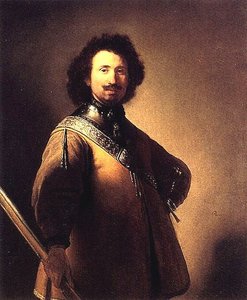
louis de caullery
1580 - 1621 , Netherlands
Quick Facts
- Artistic Movement Or Style: Jacobean portraiture
- Artists Who Influenced This Artist: ['None],\n "Artists or movements influenced by this artist": [None']
- Date Of Birth: Early 1580s
- Date Of Death: 1619
- Full Name: William Larkin
- Nationality: English
- Notable Artworks: ['Suffolk Collection portraits']
- Place Of Birth: London, England