 Preview
 Send
Send Share
Share
 Details

 Download
 Similars
 X-Ray
X-Ray Diaporama
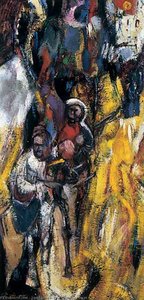
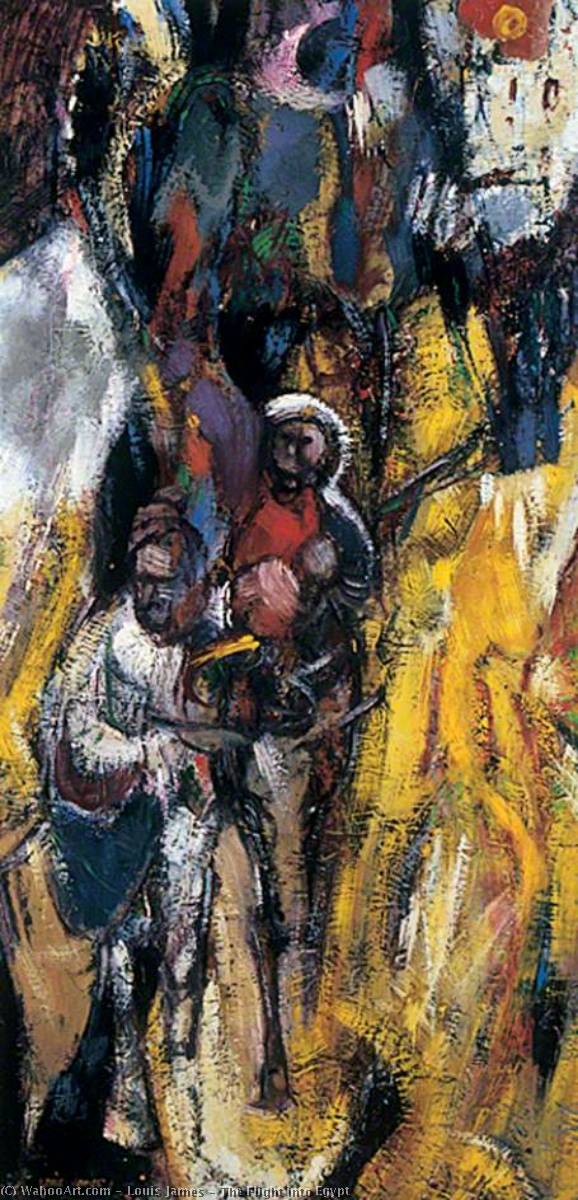
The Flight into Egypt
 102.0 x 51.0 cm
 Leeds Art Gallery
 Read More
Giclée / Art Print
Museum-quality giclée or canvas print with fast production and flexible finish options. ( Buy Hand Made Painting Buy Image)




































Pick from our preset sizes that match the artwork's original proportions.

You may enter your own dimensions to fit a specific frame or space. If your selected size does not match the original image's proportions, we will either crop the artwork or extend the image with a mirrored or solid-fill edge. A digital mockup will be sent for your approval before production begins.
Please note that the on-screen preview does not reflect the actual cropping or extension. Only the mockup will accurately show the final composition.
While custom sizes are available, we recommend selecting a dimension from the predefined list to preserve the original proportions.
Worldwide Delivery () in 2 weeks instead of standard 4/5 weeks. (17 August)

Free Worldwide Express Shipping

High-Quality Linen Canvas

Full Shipping Insurance

Customs Tax Refund Guarantee

True Color Matching Guarantee

60-Day Return Policy (Defects Only)

100% Money-Back Guarantee

Bulk Discount Offer
 Glass option is only available in size under 110 CM

The Flight into Egypt
Giclée / Art Print
Reproduction Size
-


Total Price
$ 63
Related Artworks

Artist Biography
A Life Immersed in Paint: The Journey of Louis James
Louis Robert James, born in Adelaide, Australia, in 1920 and passing away in 1996, was a painter whose life story is as compelling as the canvases he left behind. His artistic path wasn’t one of formal training but rather an organic unfolding shaped by wartime experiences, a deep engagement with both European modernism and the raw energy of Australian landscapes. Initially drawn to drawing at a young age—encouraged by his father's interest in illustration—James began contributing to local newspapers as a teenager. However, it was the tumultuous backdrop of World War II that truly ignited his passion for painting. Serving in the 2nd AIF, James witnessed events that would profoundly impact his artistic vision, leading him to begin painting seriously upon his return to Adelaide after enduring severe malaria during service in New Guinea.From Figurative Beginnings to Symbolic Abstraction
James quickly became a fixture within the Royal South Australian Society of Arts, gaining recognition for works like *Wounded Soldier*, which resonated with critics and signaled the emergence of a powerful new voice. His first solo exhibition in 1949 at John Martin’s Gallery marked a pivotal moment, propelling him towards a fifteen-year sojourn in Europe, primarily based in London. This period proved transformative. James immersed himself in the postwar art scene, becoming a member of the Artists International Association and exhibiting alongside the London Group. While initially supporting himself as a draftsman at the Geological Museum, he also honed his skills through restoration work, gilding, and even teaching drawing and textile history at Shoreditch Technical College. It was during this time that James began to move away from purely figurative representation, influenced by artists like Francis Bacon and historical masters such as William Blake and Samuel Palmer. He sought a new visual language—one that blended abstraction with figuration to explore deeper symbolic themes.The Influence of Reynolds and the Australian Landscape
A particularly significant relationship during his London years was his friendship with Alan Reynolds, another artist who profoundly shaped James’s development. Together, they painted in Hampstead, exchanging ideas and pushing each other creatively. This collaboration fostered a unique style characterized by bold lines, rich impasto, and a post-impressionistic sensibility. However, despite the vibrant energy of the European art world, James remained deeply connected to his Australian roots. His work increasingly reflected memories of the Gold Coast—its bustling streets and chaotic energy captured in paintings like *King of the Gold Coast* (1966). This piece exemplifies his technique of juxtaposing compacted areas of movement with open spaces, a hallmark that would define much of his later work.Return to Australia and Lasting Legacy
In 1964, James returned to Adelaide, eventually relocating to Sydney in 1965 where he took on a tutoring position at the University of New South Wales’s Architecture faculty. Throughout his career, James held an impressive forty-eight solo exhibitions and participated in nearly forty group shows. He received numerous awards, including the prestigious Sulman Prize twice, solidifying his reputation as one of Australia's leading artists. His work is now part of the permanent collections of major galleries across both Australia and the United Kingdom—most notably at the Tate Gallery in London and Oxford Colleges.A Unique Artistic Voice
Louis James’s art transcends simple categorization. He wasn’t solely an abstract painter, nor was he strictly a figurative one. His strength lay in his ability to synthesize these approaches, creating works that are both visually arresting and emotionally resonant. His canvases offer glimpses into the human condition—exploring themes of urban life, memory, and the search for meaning. He left behind a body of work that continues to captivate audiences with its unique blend of symbolism, abstraction, and a deeply personal artistic vision. His legacy is not just in the paintings themselves but also in his unwavering commitment to self-expression and his ability to find beauty and complexity within the everyday world.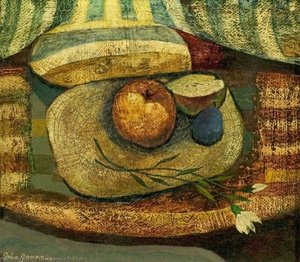
Quick Facts
- Artistic Movement Or Style: Abstract & Figurative Painting
- Artists Who Influenced This Artist:
- Alan Reynolds
- William Blake
- Date Of Birth: 1920
- Date Of Death: 1996
- Full Name: Louis Robert James
- Nationality: Australian
- Notable Artworks:
- Wounded Soldier
- King of the Gold Coast
- Place Of Birth: Adelaide, Australia