

 Preview
 Send
Send Share
Share
 Details

 Download
 Similars
 X-Ray
X-Ray Diaporama
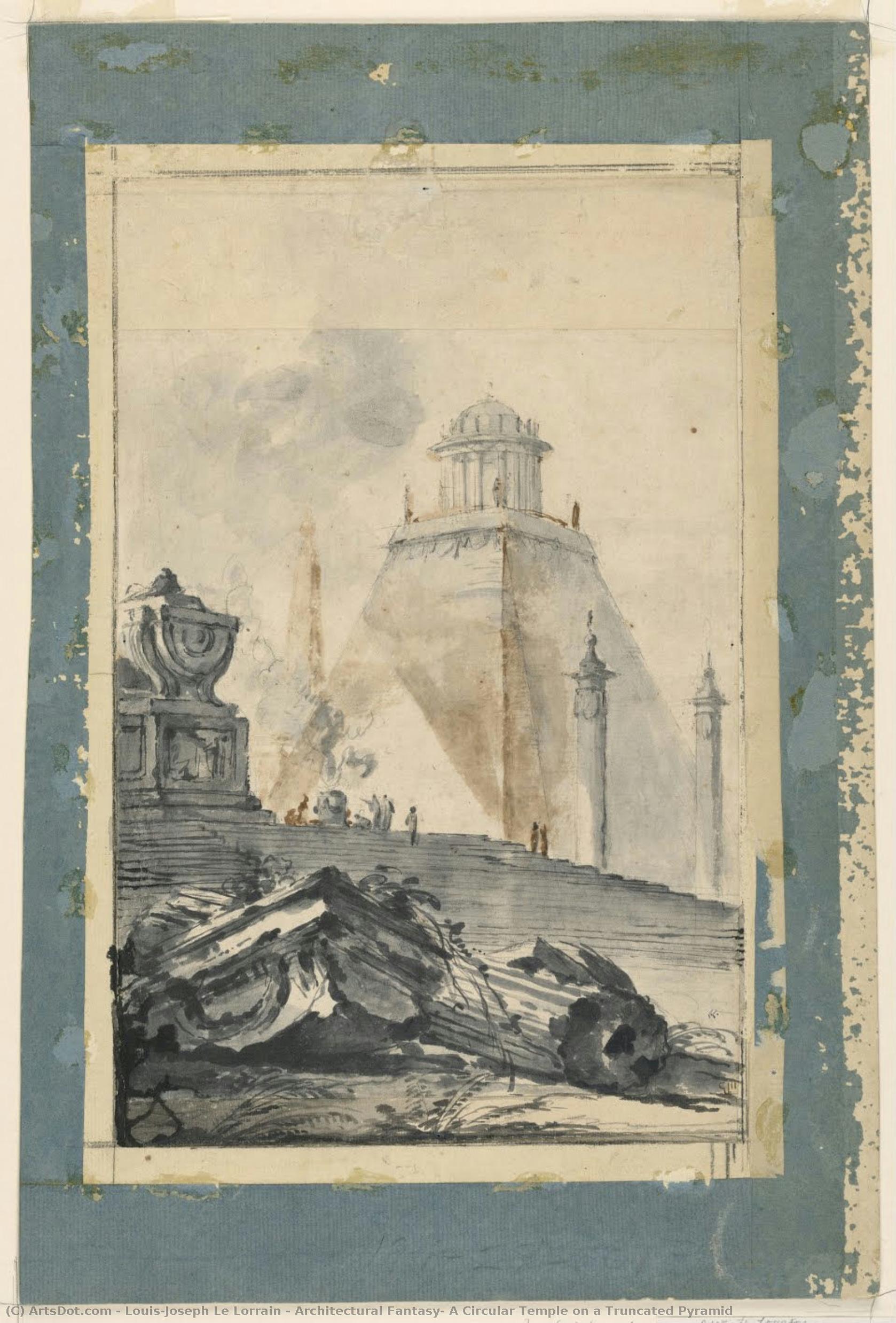
Architectural Fantasy: A Circular Temple on a Truncated Pyramid


 Read More
Purchase a high-resolution, enhanced digital image, far superior to the online preview.
Each file is meticulously prepared by our in-house specialists using advanced tools and expert manual retouching. We ensure every image has exceptional clarity, precise color accuracy, and fine detail.
The final file is delivered via email within 72 hours, optimized for immediate use in professional, editorial, and print environments. This is the same quality trusted by top-tier design studios, publishers, and galleries.
Digital Image
Download a high-resolution file for personal display, printing, and creative projects. ( Buy Print Buy Hand Made Painting)
Included in Every Digital Image Order
Expert Digital Delivery, Guaranteed
When you choose ArtsDot.com, you're not just getting an image - you're receiving a professionally enhanced digital artwork, crafted with precision and backed by a satisfaction guarantee. Here's everything that comes with your order, automatically:

Fast Email Delivery
Your high-resolution digital image file will be emailed to you within 72 hours of ordering - ready for immediate use.

AI-Enhanced Digital File
Your artwork is professionally optimized using advanced AI tools and manual editing, ensuring maximum detail, clarity, and color accuracy.

Free Lifetime Re-Delivery
Accidentally deleted or lost your file? No worries - we'll resend it to you anytime, free of charge.

No Import Fees - Ever
Enjoy your artwork instantly with zero customs, duties, or delivery fees - digital downloads are always tax-free.

Color Accuracy Guarantee
We ensure your digital image reflects the original colors as closely as possible using professional tools and color management.

60-Day Satisfaction Guarantee
If you're not satisfied with your digital image, we'll revise it or refund 100% within 60 days - no questions asked.

100% Money-Back Guarantee
Not satisfied? Get a full refund within 60 days of receiving your digital file - no questions asked.

Bulk Order Discounts
Buy 3 images, save 10% - Buy 5, save 15% - Buy 10+, save 20%. Great for creative projects, galleries, and agencies.
Related Artworks

Artist Biography
The Architect of Dreams: The Life and Legacy of Louis-Joseph Le Lorrain
In the luminous era of the Rococo, few artists possessed the ability to dissolve the boundaries between reality and imagination as masterfully as Louis-Joseph Le Lorrain. Born in Paris in 1715, Le Lorrain emerged from the intellectual cradle of the Enlightenment to become a singular figure in the French artistic landscape—a man who did not merely paint scenes, but constructed entire worlds. His career was defined by a profound duality; he was both a meticulous engraver capable of breathtaking precision and a painter of grand, atmospheric fantasies. Through his hands, the rigid structures of classical architecture were breathed into life, transformed into theatrical stages where mythology and dreamscape converged.
Le Lorrain’s artistic journey began under the disciplined guidance of Jacques Dumont, a renowned designer whose teachings provided the foundation for Le Loriente's exceptional draughtsmanship. This rigorous training prepared him for a transformative pilgrimage to Rome in 1736. It was within the eternal city that the seeds of his unique aesthetic were sown. Immersed in the grandeur of antiquity and the dramatic energy of the Baroque, he developed a fascination with the interplay of light, shadow, and monumental scale. The Roman influence instilled in him a lifelong devotion to classical motifs, particularly the use of putti and idealized figures, which he would later weave into his complex architectural tapestries.
A Mastery of Illusion and Ornamentation
Upon his return to Paris in 1740, Le Lorrain ascended rapidly through the prestigious ranks of the Académie Royale de peinture et de sculpture. He became a sought-after talent for decorative commissions that required a sophisticated understanding of spatial illusionism. His work often functioned as a bridge between different media; he possessed the rare skill to translate the sweeping grandeur of his murals and frescoes into the intimate, detailed language of printmaking. Using techniques such as acquaforte, he produced engravings that captured the same sense of awe found in his larger compositions, allowing his visions of ruined temples and celestial vistas to circulate widely across European aristocratic circles.
The hallmark of Le Lorrain’s style was an obsessive attention to ornamentation paired with a luminous, almost ethereal color palette. He excelled at creating capriccios—architectural fantasies that defied the laws of physics and history. In these works, one might find a decaying pyramid standing in silent dialogue with a classical circular temple, or a fountain framed by obelisks that seem to emerge from a misty, primordial past. His ability to manipulate linear perspective allowed him to guide the viewer's eye through labyrinthine corridors of stone and light, creating a sense of depth that felt both physically imposing and spiritually transcendent.
Historical Significance and the Twilight of a Visionary
Le Lorrain’s contributions extended far beyond the canvas and the copper plate. His involvement in high-profile decorative projects, such as the decoration of the Hall of Spectacles for Louis XV, cemented his reputation as a visionary capable of shaping the very atmosphere of royal splendor. While his work is often categorized within the Rococo, it also contains the burgeoning seeds of Neoclassicism, seen in his reverence for structural purity and classical myth. His influence even reached beyond French borders; during his time in St. Petersburg, Russia, his artistic presence contributed to the broader European dissemination of French aesthetic ideals.
Though his life was relatively short, ending in 1759, the impact of Louis-Joseph Le Lorrain remains etched in the history of 18th-century art. He left behind a legacy of wonder, teaching subsequent generations how to find beauty in the imagined ruin and majesty in the architectural dream. His work continues to captivate, serving as a poignant reminder of a period when art sought to transcend the mundane and invite the soul into a realm of eternal, magnificent fantasy.
Louis-Joseph Le Lorrain
1715 - 1759 , France
Quick Facts
- Artistic Movement Or Style: Rococo
- Date Of Birth: Paris, France (1715)
- Full Name: Louis-Joseph Le Lorrain
- Nationality: French
- Notable Artworks:
- Temple Of Venus
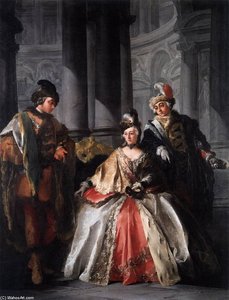
- Three Figures Dressed For A Masquerade
- Urn With Putti
- Place Of Birth: Paris

