 Preview
 Send
Send Share
Share
 Details

 Download
 Similars
 X-Ray
X-Ray Diaporama
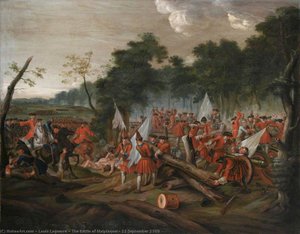
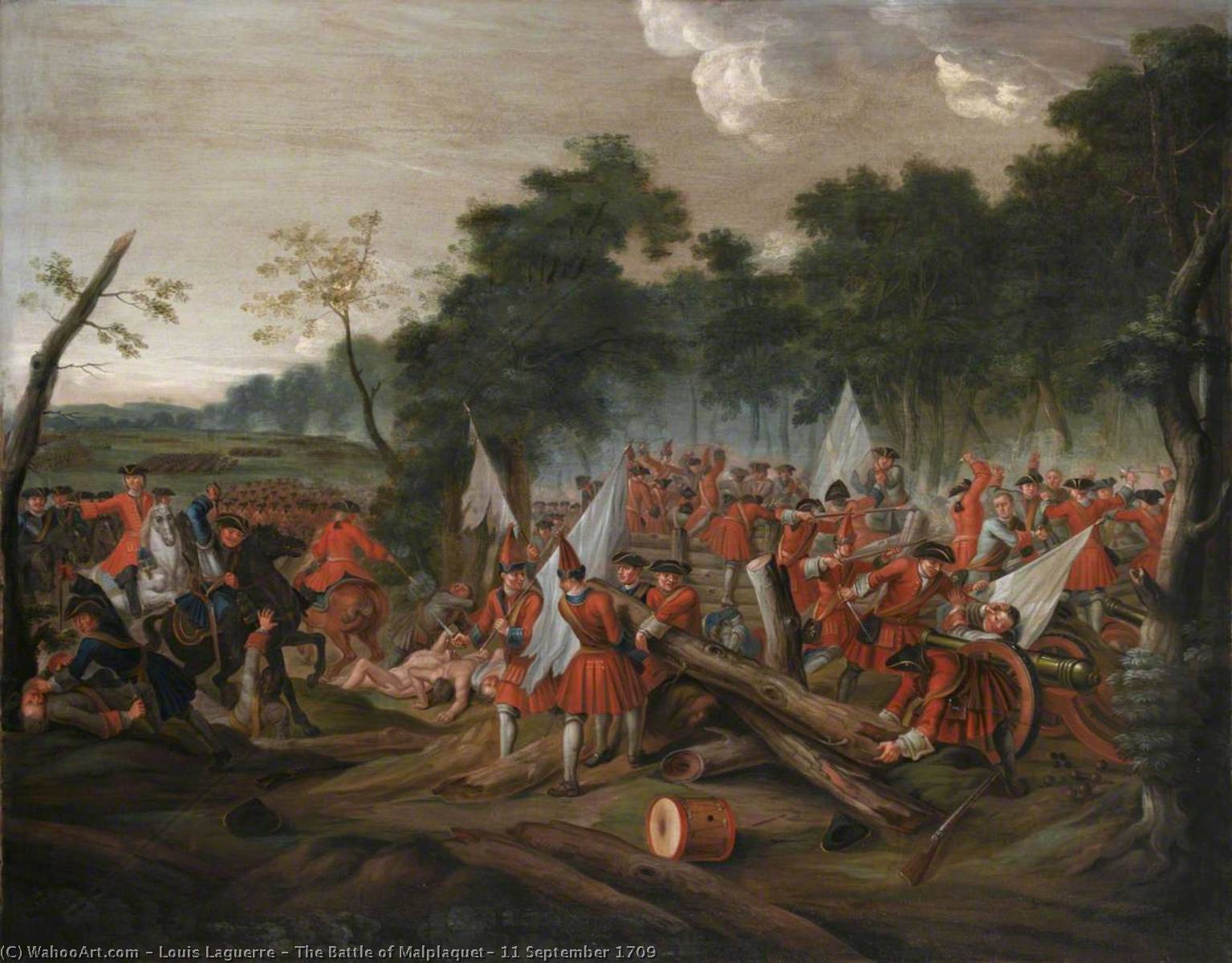
The Battle of Malplaquet, 11 September 1709
 1713
1713 107.0 x 136.0 cm
 Read More
Giclée / Art Print
Museum-quality giclée or canvas print with fast production and flexible finish options. ( Buy Hand Made Painting Buy Image)




































Pick from our preset sizes that match the artwork's original proportions.

You may enter your own dimensions to fit a specific frame or space. If your selected size does not match the original image's proportions, we will either crop the artwork or extend the image with a mirrored or solid-fill edge. A digital mockup will be sent for your approval before production begins.
Please note that the on-screen preview does not reflect the actual cropping or extension. Only the mockup will accurately show the final composition.
While custom sizes are available, we recommend selecting a dimension from the predefined list to preserve the original proportions.
Worldwide Delivery () in 2 weeks instead of standard 4/5 weeks. (31 August)

Free Worldwide Express Shipping

High-Quality Linen Canvas

Full Shipping Insurance

Customs Tax Refund Guarantee

True Color Matching Guarantee

60-Day Return Policy (Defects Only)

100% Money-Back Guarantee

Bulk Discount Offer
 Glass option is only available in size under 110 CM

The Battle of Malplaquet, 11 September 1709
Giclée / Art Print
Reproduction Size
-


Total Price
$ 63
Related Artworks









Artist Biography
The Painter of Grandeur: The Life and Legacy of Louis Laguerre
In the golden age of Baroque splendor, few artists captured the sheer opulence of aristocratic life as effectively as Louis Laguerre. Born in 1663 amidst the royal echoes of Versailles, Laguerre was a child of the French court's prestige. His lineage was one of service and proximity to power; his father held the esteemed position of Keeper of the Royal Menagerie to Louis XIV. This early immersion in the grandeur of the French monarchy provided more than just social standing—it instilled in him a profound understanding of royal iconography and the visual language of majesty that would later define his career in England.
Laguerre’s artistic journey began under the rigorous tutelage of Charles Le Brun at the prestigious Académie Royale de peinture et de sculpture in Paris. Under Le Brun, the master of French classicism, Laguerre mastered the technical precision and dramatic composition required for large-scale decorative works. However, his destiny lay beyond the borders of France. In 1683, Laguerre relocated to England, a move that would transform him from a talented student into one of the most sought-after decorative painters of the English nobility during the reign of William III.
A Master of the English Baroque Landscape
Upon his arrival in London, Laguerre did not work in isolation. He initially entered into a fruitful collaboration with Antonio Verrio, a titan of the decorative arts who had already established himself within the English landscape. Together, they embarked on ambitious projects that breathed life and myth into the ceilings and walls of England's most prestigious estates. Their joint efforts at landmarks such as St Bartholomew’s Hospital and Burghley House served as a crucible for Laguerre, allowing him to refine his ability to execute monumental narratives that integrated seamlessly with architectural grandeur.
As his reputation grew, so too did his independence and his competitive spirit. Laguerre emerged from Verrio's shadow to engage in a celebrated artistic rivalry with Sir James Thornhill. This was not merely a clash of personalities but a battle of styles within the realm of history painting. While Thornhill held significant influence, Laguerre distinguished himself through a particular finesse and a charismatic approach to subject matter. His ability to weave complex historical and religious narratives into the very fabric of a room made him the preferred choice for patrons looking to immortalize their triumphs and lineage.
Architectural Splendor and Lasting Significance
The true testament to Laguerre’s genius lies in the enduring physical remnants of his work across the English countryside. His brush touched some of the most iconic structures in Britain, creating immersive environments that continue to awe visitors today. His mastery is evident in the following notable locations:
- Blenheim Palace: Where he undertook the monumental task of decorating the Great Hall ceiling, a pinnacle of his career.
- Chatsworth House: Featuring exquisite sketches and works such as The Ascension and the Incredulity of Saint Thomas.
- Petworth House and Burghley House: Demonstrating his ability to adorn the ancestral seats of the highest nobility.
- Marlborough House and Fetcham Park House: Showcasing his versatility in both religious and secular decorative themes.
Laguerre’s subject matter often celebrated English victories, particularly those over the forces of Louis XIV, effectively using art as a tool of political and nationalistic expression. Through his delicate handling of light, movement, and classical myth, he helped shape the visual identity of the English Baroque. Though he passed away in 1721, the legacy of Louis Laguerre remains etched in the ceilings of Europe's greatest palaces, a permanent reminder of an artist who could turn mere plaster and pigment into windows of eternal glory.
louis laguerre
1663 - 1721
Quick Facts
- Artistic Movement Or Style: Baroque
- Artists Or Movements Influenced By This Artist: ['James Thornhill']
- Artists Who Influenced This Artist: ['Charles Le Brun']
- Date Of Birth: 1663
- Date Of Death: 1721
- Full Name: Louis Laguerre
- Nationality: French
- Notable Artworks:
- The Rape of Proserpine
- Christ healing the Sick
- Place Of Birth: Versailles, France