

 Preview
 Send
Send Share
Share
 Details

 Download
 Similars
 X-Ray
X-Ray Diaporama
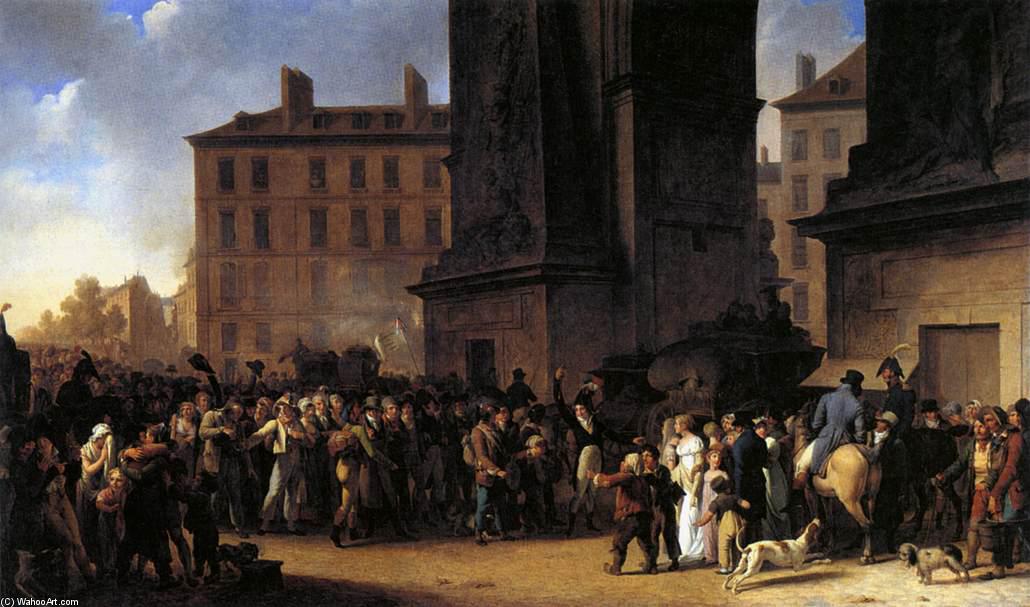
Departure of the Conscripts in 1807
 Acrylic On Canvas
- WallArt
- Romantic Realism
 1808
1808 85.0 x 138.0 cm
 Carnavalet Museum
 Read More
Purchase a high-resolution, enhanced digital image, far superior to the online preview.
Each file is meticulously prepared by our in-house specialists using advanced tools and expert manual retouching. We ensure every image has exceptional clarity, precise color accuracy, and fine detail.
The final file is delivered via email within 72 hours, optimized for immediate use in professional, editorial, and print environments. This is the same quality trusted by top-tier design studios, publishers, and galleries.
Digital Image
Download a high-resolution file for personal display, printing, and creative projects. ( Buy Print Buy Hand Made Painting)
Included in Every Digital Image Order
Expert Digital Delivery, Guaranteed
When you choose ArtsDot.com, you're not just getting an image - you're receiving a professionally enhanced digital artwork, crafted with precision and backed by a satisfaction guarantee. Here's everything that comes with your order, automatically:

Fast Email Delivery
Your high-resolution digital image file will be emailed to you within 72 hours of ordering - ready for immediate use.

AI-Enhanced Digital File
Your artwork is professionally optimized using advanced AI tools and manual editing, ensuring maximum detail, clarity, and color accuracy.

Free Lifetime Re-Delivery
Accidentally deleted or lost your file? No worries - we'll resend it to you anytime, free of charge.

No Import Fees - Ever
Enjoy your artwork instantly with zero customs, duties, or delivery fees - digital downloads are always tax-free.

Color Accuracy Guarantee
We ensure your digital image reflects the original colors as closely as possible using professional tools and color management.

60-Day Satisfaction Guarantee
If you're not satisfied with your digital image, we'll revise it or refund 100% within 60 days - no questions asked.

100% Money-Back Guarantee
Not satisfied? Get a full refund within 60 days of receiving your digital file - no questions asked.

Bulk Order Discounts
Buy 3 images, save 10% - Buy 5, save 15% - Buy 10+, save 20%. Great for creative projects, galleries, and agencies.
Collectible Description
Departure of the Conscripts in 1807: A Snapshot of Napoleonic Anxiety
The painting “Departure of the Conscripts in 1807” by Louis Léopold Boilly, completed in 1808, isn’t merely a depiction of a Parisian procession; it's a poignant reflection on the anxieties simmering beneath the surface of Napoleon Bonaparte’s reign. Exhibited at the Salon of that year alongside Gros’s monumental “Napoleon Crossing the Alps,” Boilly’s work deliberately contrasts with the grandeur of imperial ambition, focusing instead on the everyday realities faced by ordinary citizens – specifically, young men undergoing conscription amidst the ongoing Napoleonic Wars. This subtle divergence from overtly propagandistic art speaks volumes about Boilly's artistic sensibility and his astute observation of societal concerns.A Detailed Observation: Composition and Technique
Boilly’s masterful technique—characterized by meticulous detail and careful coloring—immediately draws the viewer into a bustling urban scene. The artist skillfully blended portraiture with genre painting, creating an immersive experience that captures the atmosphere of early 19th-century Paris. Notice how Boilly employs chiaroscuro – dramatic contrasts between light and shadow – to sculpt figures against the backdrop of buildings, enhancing depth and conveying emotion. The composition is dynamic, guiding the eye along a procession moving towards the right side of the canvas, mirroring the flow of movement within the crowd. This deliberate arrangement underscores the urgency of the moment depicted. Boilly’s palette leans heavily on earthy tones—ochres, browns, and muted reds—establishing a grounding presence that contrasts with the fleeting expressions of apprehension etched onto the faces of several participants.Historical Context: The Shadow of War
The painting's significance extends far beyond its aesthetic qualities; it encapsulates the pervasive fear surrounding Napoleon’s military campaigns. As France wrestled with the repercussions of Prussia’s defeat, Boilly portrays young men being assembled for conscription – a practice rife with abuses and fueled by anxieties about casualties. The inclusion of a blind man accompanied by his dog serves as a powerful symbol of vulnerability amidst the perceived bravado of the army. This juxtaposition highlights the artist's awareness of the psychological toll exacted by war on ordinary people, offering a nuanced commentary on the era’s social landscape.Symbolism and Emotional Resonance
Beyond its factual representation of conscription, “Departure of the Conscripts” resonates with deeper symbolic meanings. The figures themselves embody both youthful idealism and palpable apprehension—a dichotomy that encapsulates the broader uncertainty felt by France during Napoleon's rule. Boilly’s depiction isn’t celebratory; it’s imbued with a melancholic beauty that captures the bittersweet reality of life under imperial dominion. The painting invites contemplation on themes of duty, sacrifice, and the human cost of political ambition—themes that continue to resonate with audiences today.Conclusion: An Artistic Legacy
“Departure of the Conscripts” stands as a testament to Boilly’s artistic prowess and his ability to distill complex historical anxieties into a visually compelling narrative. Its enduring appeal lies in its understated elegance, combined with its profound insight into the human condition—a quality that secures its place among the most evocative representations of the Napoleonic era and cements Boilly's reputation as one of France’s foremost portraitists and genre painters.Related Artworks


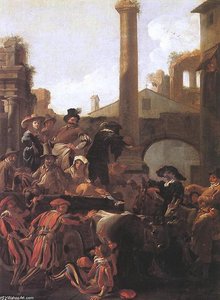
Artist Biography
Louis Léopold Boilly: A Life in Portraiture and Parisian Society
- Born: July 5, 1761, La Bassée, France
- Died: January 4, 1845, Paris, France
Early Life and Artistic Development
- Boilly's artistic journey began early; he produced works as young as twelve. Largely self-taught, his initial training included trompe-l’oeil painting under Dominique Doncre.
- His talent was recognized by the Augustinians of Douai in 1774, leading to an invitation from the Bishop of Arras. This period saw him create over three hundred small portrait paintings.
- Early works often featured amorous and moralizing subjects, demonstrating a developing skill in capturing likenesses and details.
Artistic Style and Key Works
- Style: Boilly's style is characterized by meticulous detail, careful coloring, and a focus on depicting everyday life within the French middle class. He skillfully blended portraiture with genre scenes.
- Evolution: After 1794, his compositions became more crowded, reflecting the bustling social scene of Paris. His portraits gained widespread acclaim, with over 5,000 painted throughout his career.
- Notable Works:
- The Suitor's Gift – An early work showcasing amorous themes and meticulous detail.
- Triumph of Marat – A patriotic piece created to avoid condemnation during the Reign of Terror.
- The Arrival of a Mail-Coach in the Courtyard of the Messageries – A vibrant depiction of Parisian life and transportation.
- Optical Illusions: Boilly was fascinated by optics, as demonstrated in works like *Un Trompe-l'œil*, which introduced the term to describe his technique of creating realistic imagery that mimics three-dimensional objects.
Recognition and Legacy
- Salon Success: Boilly received a medal from the Paris Salon in 1804, solidifying his reputation as a skilled artist.
- Honors: He was decorated as a Chevalier of the Légion d'Honneur in 1833, recognizing his contributions to French art.
- Family Influence: His son, Alphonse Boilly, became a professional engraver and apprenticed in New York with Asher Brown Durand.
- Historical Significance: Boilly’s work provides invaluable insights into the social customs, fashion, and daily life of the French middle class during a period of significant political upheaval. He is remembered as one of France's most celebrated portraitists and genre painters.
Museum Holdings
- Musée des Beaux Arts, Lille: Holds Triumph of Marat among other works.
- Louvre Museum: Features selections from Boilly’s extensive oeuvre.
- National Gallery of Art (Washington D.C.): Possesses several paintings including *Self-Portrait*, *Les Amateurs de Tableaux* and *The Public in the Salon of the Louvre, Viewing the Painting of the "Sacre"*.
- Getty Museum: Holds a collection of Boilly's works.
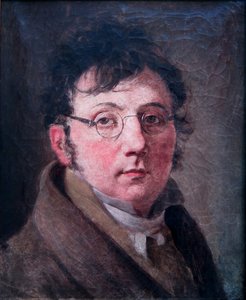
Louis Léopold Boilly
1761 - 1845 , France
Quick Facts
- Artistic Movement Or Style: Genre painting, Portraiture
- Artists Who Influenced This Artist:
- Gabriel Metsu
- Willem van Mieris
- Gerard ter Borch
- Date Of Birth: July 5, 1761
- Date Of Death: January 4, 1845
- Full Name: Louis Léopold Boilly
- Nationality: French
- Notable Artworks:
- The Suitor's Gift
- Triumph of Marat
- Arrival of a Mail-Coach
- Place Of Birth: La Bassée, France

