 Preview
 Send
Send Share
Share
 Details

 Download
 Similars
 X-Ray
X-Ray Diaporama
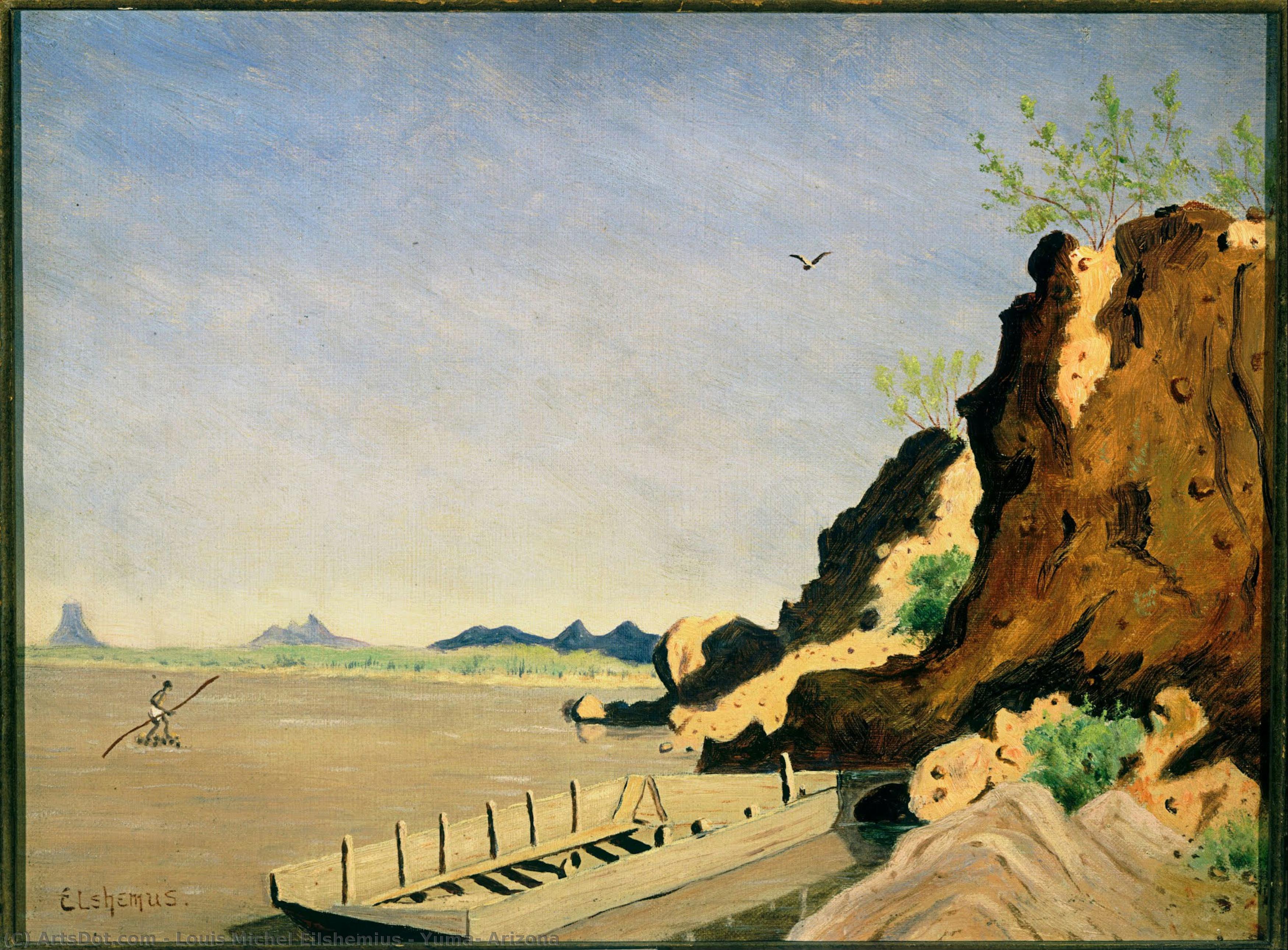
Yuma, Arizona


 Read More
Hand Made Oil Reproduction
Hand-painted oil on canvas in your size and frame, made to order by our artists. ( Buy Print Buy Image)




P118B $10

P118H $10

P118W $10

P438Z $10

P508JH $12

P508YH $12

P805H $10

P805Z $10

P919BZ $10

P919G $10

P919XJ $10

P959ZH $10

P968JZ $12

W106C $8

W218G $10

W218JH $8

W218Y $10

W307PJ $10

W316G $10

W316PJ $8

W316Y $10

W398PJ $8

W4111J $10

W500HY $15

W500JH $15

W692G $12

W849H $8

W940BG $15

W953PJ $8




Pick from our preset sizes that match the artwork's original proportions.

You may enter your own dimensions to fit a specific frame or space. If your selected size does not match the original image's proportions, we will either crop the artwork or extend the painting with additional hand-painted elements. A digital mockup will be sent for your approval before production begins.
Please note that the on-screen preview does not reflect the actual cropping or extension. Only the mockup will accurately show the final composition.
While custom sizes are available, we recommend selecting a dimension from the predefined list to preserve the original proportions.
After order, ArtsDot.com team will email client for instructions and provide a mockup preview
Worldwide Delivery () in 3/4 weeks instead of standard 5 weeks. (17 August). No compromise on quality.

Free Worldwide Express Shipping

High-Quality Linen Canvas

Full Shipping Insurance

Customs Tax Refund Guarantee

True Color Matching Guarantee

60-Day Return Policy (Defects Only)

100% Money-Back Guarantee

Bulk Discount Offer
 Glass option is only available in size under 110 CM

Yuma, Arizona
Reproduction Medium
Reproduction Size
-


Total Price
$ 263
Artwork Description
A Visionary Glimpse of the American West
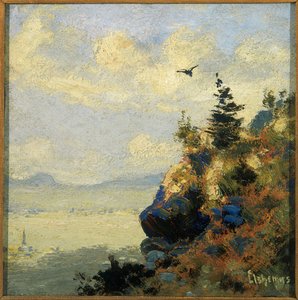
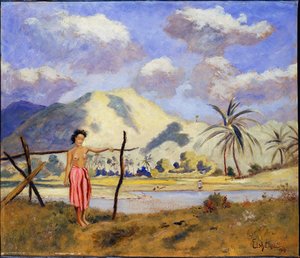
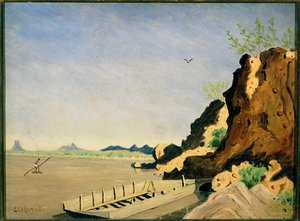
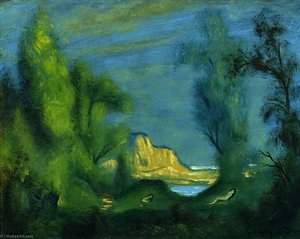
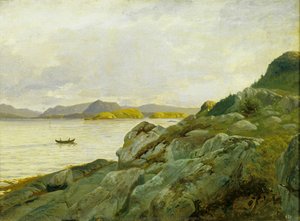
In his evocative 1890 masterpiece, Yuma, Arizona, Louis Michel Eilshemius invites the viewer into a serene, sun-drenched moment captured at the edge of the American frontier. The painting presents a breathtaking landscape where the rugged majesty of distant mountains meets the tranquil shores of a riverside scene. At first glance, the composition captures a quintessential slice of life; a small boat rests upon the shore, while birds dance through the sky and perch upon weathered rocks, adding a sense of rhythmic movement to the stillness. The presence of figures scattered throughout the landscape suggests a harmonious coexistence between humanity and the untamed natural world, transforming a simple geographical location into a stage for quiet, pastoral joy.
Eilshemisus, an artist often celebrated as a visionary outsider, imbues this work with a dreamlike quality that transcends mere topographical accuracy. While his early training drew from the atmospheric traditions of the Barbizon school and masters like Corot, Yuma, Arizona showcases a burgeoning personal language. The technique relies on a delicate balance of light and texture, where the hazy silhouettes of the mountains provide a monumental backdrop to the more intimate, detailed activities occurring near the water's edge. There is an unmistakable softness to the atmosphere, a quality that suggests the heat of the Arizona sun filtered through a nostalgic, almost memory-like lens.
Symbolism and the Spirit of the Era
Beyond its surface beauty, the painting serves as a profound meditation on peace and presence. The birds in flight and the figures engaged in leisure act as symbols of vitality and the enduring spirit of exploration. In the late 19th century, as the American West was being integrated into the national consciousness, works like this offered more than just scenery; they provided an emotional anchor to a rapidly changing world. The stillness of the boat and the grounded nature of the figures suggest a moment of respite, a sanctuary found within the vastness of the desert landscape. For the collector, this piece offers a window into a period of profound transition, capturing the romanticism of a frontier that felt both infinite and intimately reachable.
An Elegant Addition to Sophisticated Interiors
For interior designers and art enthusiasts alike, Yuma, Arizona represents a versatile and soulful acquisition. Its palette of earthy tones, sky blues, and sun-bleached neutrals allows it to integrate seamlessly into various decor styles, from classic traditionalism to modern rustic aesthetics. The painting’s ability to evoke a sense of calm and expansive light makes it an ideal focal point for a study, a living room, or a sunlit gallery space. Owning a high-quality reproduction of this Eilshemius work is not merely about displaying a landscape; it is about bringing a piece of American art history into the home—a piece that commands attention through its quiet dignity and invites endless contemplation of the beauty found in nature's most tranquil corners.
Related Artworks
Artist Biography
A Visionary Outsider: The Enigmatic World of Louis Michel Eilshemius
Born into affluence in 1864 near Newark, New Jersey, Louis Michel Eilshemius remains a compelling and often perplexing figure in the landscape of American art. His life was a curious blend of rigorous academic training and an utterly untamed artistic spirit—a dichotomy that resulted in works both hauntingly beautiful and deliberately unsettling. Though born into privilege, Eilshemius’s path wasn't one of easy acceptance within the established art world; instead, he carved out his own unique niche, becoming a celebrated outsider whose vision was truly ahead of its time. He received a comprehensive education, studying in Europe and briefly attending Cornell University before dedicating himself to art at the Art Students League of New York. This formal grounding is evident in his early landscapes, which initially echoed the Barbizon school and artists like Corot, George Inness, and Albert Pinkham Ryder—but even then, a nascent individuality began to glimmer beneath the surface. These initial works, while technically proficient, failed to garner significant attention, setting the stage for a dramatic shift in style that would define his legacy.The Evolution of a Unique Aesthetic
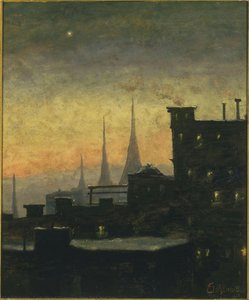
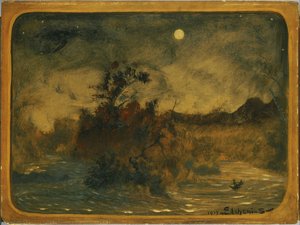
Around 1910, Eilshemius’s artistic voice underwent a profound transformation. He began to reject conventional techniques, embracing a coarser, more direct approach. A pivotal change was his preference for painting on cardboard rather than canvas—a deliberate choice that contributed to the raw, unrefined quality of his work. This period marked the emergence of his signature style: moonlit landscapes populated by voluptuous nymphs and figures rendered with an almost childlike naiveté. These weren’t classical depictions of mythological beings; they were dreamlike visions imbued with a strange, unsettling energy. The nudes themselves often possessed exaggerated smiles, adding to the disconcerting effect. His paintings of New York rooftops, equally captivating, are characterized by sinuous “frames” he painted directly onto the canvas, further emphasizing their otherworldly quality. This period also saw Eilshemius’s increasingly eccentric behavior; frustrated with a lack of recognition, he even briefly signed his work as "Elshemus," believing his name was too long to be remembered!Recognition and Rediscovery
Despite facing widespread critical bewilderment during his lifetime, Eilshemius found an unlikely champion in Marcel Duchamp. Duchamp recognized the unique power of Eilshemius’s work and invited him to exhibit in Paris in 1917—a gesture that brought some international attention but also sparked further controversy. The Parisian reception was mixed, yet it planted a seed for future appreciation. For years, Eilshemius remained largely overlooked, struggling with financial hardship and declining mental health. He continued to paint, write, compose music, and publish his own eccentric manifestos, all while battling obscurity. It wasn’t until after his death in 1941, at Bellevue Hospital, that a broader audience began to recognize the brilliance of his vision. The rediscovery of Eilshemius was gradual but significant, fueled by scholars and collectors who appreciated his originality and his rejection of artistic norms.Legacy and Lasting Influence
Today, Louis Michel Eilshemius is celebrated as a pivotal figure in American modernism—a precursor to both Naive art and the visionary landscapes that would emerge later in the 20th century. His work can be found in prominent collections such as The Phillips Collection in Washington, D.C., and the Neuberger Museum of Art in New York State, which houses a substantial body of his paintings donated by Roy Neuberger. Eilshemius’s influence extends beyond his aesthetic innovations. He embodies the spirit of artistic independence—a refusal to compromise one's vision for the sake of acceptance. His story serves as a reminder that true originality often exists on the fringes, and that sometimes it takes time for the world to catch up with a visionary artist. He was an artist who dared to be different, and in doing so, left an indelible mark on the history of American art.Key Works & Collections
- Nude in Landscape (1900): A captivating oil painting held within the Smithsonian collection, showcasing his romantic style and unique brushwork.
- Nude in Forest (1916): An evocative masterpiece blending fantasy and realism, exemplifying American modernism.
- Pale Blue Landscape: A serene oil painting that beautifully blends romanticism with personal symbolism.
- The Phillips Collection (Washington, D.C.): Features several of Eilshemius’s most notable works.
- Neuberger Museum of Art (New York State): Houses a large and significant collection donated by Roy Neuberger.
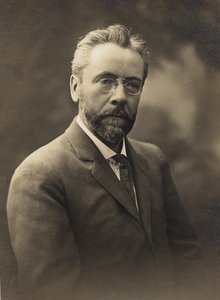
Louis Michel Eilshemius
1864 - 1941 , United States of America
Quick Facts
- Artistic Movement Or Style: Naive art, Modernism
- Artists Or Movements Influenced By This Artist: ['Marcel Duchamp']
- Artists Who Influenced This Artist:
- Corot
- George Inness
- Albert Pinkham Ryder
- Date Of Birth: February 4, 1864
- Date Of Death: December 29, 1941
- Full Name: Louis Michel Eilshemius
- Nationality: American
- Notable Artworks:
- Nude in Landscape
- Nude in Forest
- Pale Blue Landscape
- Street in Village near Biskra
- Place Of Birth: Newark, USA
Related Articles

Beyond the Horizon: 10 Landscape Masterpieces for Your Home Decor
Journey through 10 breathtaking landscape paintings by Monet, Van Gogh & more! Explore iconic artworks, artistic techniques & find inspiration for your home decor. Museum-quality reproductions at ArtsDot.com. Discover all masterpieces on ArtsDot.com

John Constable's Masterpieces: Explore 25 Iconic Landscapes for Your Home
Journey through John Constable's 25 most celebrated landscapes. Explore Romanticism, Dedham Vale & his masterful use of light in iconic paintings like 'Hay Wain'. Find museum-quality art reproductions and elevate your home decor on ArtsDot.com.
Serene Visions: Exploring Themes of Tranquility in Art History & Contemporary Practice
Explore the history of serene landscape art & discover artists who evoke tranquility. Find the perfect calming artwork for your home with expert guidance from ArtsDot.

Evocations of Place: A Historical Journey Through Landscape Art
Explore the rich history of landscape art with ArtsDot. Discover renowned artists, movements like Impressionism & Romanticism, and expert guidance for collecting timeless pieces. Find your perfect serene escape today!

Romantic Landscapes: 10 Masterpieces for Your Home | ArtsDot
Journey through 10 Romantic landscape masterpieces by Friedrich, Turner & Cole. Explore emotional art, sublime nature scenes & iconic 19th-century paintings. Find museum-quality reproductions for your home at ArtsDot.com – discover the full collection online!