

 Preview
 Send
Send Share
Share
 Details

 Download
 Similars
 X-Ray
X-Ray Diaporama
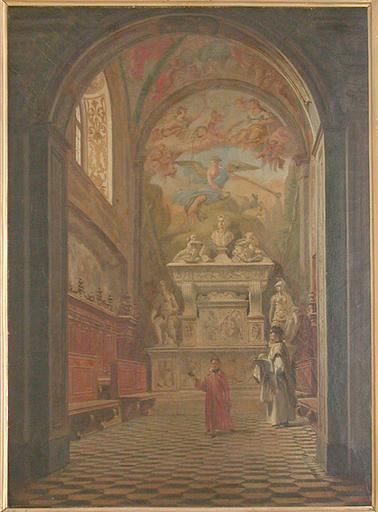
INTERIEUR D'EGLISE (TOMBEAU DE SANNAZAR A NAPLES)
 Read More
Purchase a high-resolution, enhanced digital image, far superior to the online preview.
Each file is meticulously prepared by our in-house specialists using advanced tools and expert manual retouching. We ensure every image has exceptional clarity, precise color accuracy, and fine detail.
The final file is delivered via email within 72 hours, optimized for immediate use in professional, editorial, and print environments. This is the same quality trusted by top-tier design studios, publishers, and galleries.
Digital Image
Download a high-resolution file for personal display, printing, and creative projects. ( Buy Print Buy Hand Made Painting)
Included in Every Digital Image Order
Expert Digital Delivery, Guaranteed
When you choose ArtsDot.com, you're not just getting an image - you're receiving a professionally enhanced digital artwork, crafted with precision and backed by a satisfaction guarantee. Here's everything that comes with your order, automatically:

Fast Email Delivery
Your high-resolution digital image file will be emailed to you within 72 hours of ordering - ready for immediate use.

AI-Enhanced Digital File
Your artwork is professionally optimized using advanced AI tools and manual editing, ensuring maximum detail, clarity, and color accuracy.

Free Lifetime Re-Delivery
Accidentally deleted or lost your file? No worries - we'll resend it to you anytime, free of charge.

No Import Fees - Ever
Enjoy your artwork instantly with zero customs, duties, or delivery fees - digital downloads are always tax-free.

Color Accuracy Guarantee
We ensure your digital image reflects the original colors as closely as possible using professional tools and color management.

60-Day Satisfaction Guarantee
If you're not satisfied with your digital image, we'll revise it or refund 100% within 60 days - no questions asked.

100% Money-Back Guarantee
Not satisfied? Get a full refund within 60 days of receiving your digital file - no questions asked.

Bulk Order Discounts
Buy 3 images, save 10% - Buy 5, save 15% - Buy 10+, save 20%. Great for creative projects, galleries, and agencies.
Related Artworks









Artist Biography
Louis Nicolas Lemasle: A French Painter Bridging Observation and Artistic Vision
Louis Nicolas Lemasle (1788-1876) stands as a quietly significant figure in 19th-century French art, a painter whose career unfolded largely outside the limelight of the grand salons but nonetheless produced a body of work characterized by meticulous observation, historical subject matter, and a subtle yet compelling artistic voice. While not widely celebrated today, Lemasle’s paintings—particularly his portraits and depictions of historical events—offer a valuable window into the visual culture of his era, reflecting both the academic traditions of French art and the burgeoning interest in scientific illustration that characterized the period.
Born in Aubenas, Ardèche, France, in 1788, Lemasle’s early life remains somewhat shrouded in obscurity. Records suggest he received a basic education, likely within the framework provided by the Jesuit order to which he later dedicated himself. This initial training—focused on grammar and philosophy—contrasted sharply with the artistic pursuits that would ultimately define his career. Despite lacking formal instruction in painting, Lemasle’s innate curiosity and dedication led him to request a position as a missionary in New France – a bold move for an individual without prior artistic experience. His application resonated with the Jesuit mission's desire to document and convert indigenous populations, combining religious zeal with scientific inquiry.
A Missionary’s Eye: Lemasle in New France
Arriving in Quebec in 1811, Lemasle quickly immersed himself in the realities of colonial life. He spent eleven years diligently documenting the landscape, flora, fauna, and indigenous peoples of North America – a task that demanded not only linguistic skill but also keen observational abilities. His work for the *Codex Canadensis*, a richly illustrated manuscript intended to serve as a guide for missionaries, is perhaps his most enduring legacy. This ambitious project showcased Lemasle’s talent for rendering natural forms with remarkable accuracy and detail, blending artistic representation with scientific observation. Unlike many of his contemporaries who prioritized idealized depictions, Lemasle's illustrations often captured the raw beauty and inherent strangeness of the New World environment.
Beyond his botanical and zoological studies, Lemasle also produced portraits of indigenous individuals, offering a rare glimpse into their appearance and attire. These paintings are notable for their respectfulness and avoidance of stereotypical representations—a testament to Lemasle’s commitment to portraying his subjects with dignity and honesty. His artistic approach was influenced by the prevailing academic style of the time, evident in his careful attention to anatomy, perspective, and composition, yet tempered by a distinctly personal vision.
The Pantheon and Beyond: Portraits and Historical Scenes
Upon returning to France in 1823, Lemasle continued to work as a painter, primarily focusing on historical portraits and scenes. He gained recognition for his meticulous recreations of significant events, often commissioned by the government or wealthy patrons. A particularly notable example is his depiction of “The Execution of Louis XVI,” a powerful and emotionally resonant painting that captured the gravity of the moment with stark realism. His work in this genre demonstrates a mastery of historical research and an ability to convey complex narratives through visual imagery.
Another significant commission involved illustrating the Pantheon in Paris, specifically depicting scenes within its grand halls. These paintings—including those showcasing the likenesses of prominent figures like Nicolas Poussin—highlighted Lemasle’s skill in capturing architectural detail and conveying a sense of historical grandeur. His work at the Pantheon further cemented his reputation as a skilled artist capable of executing complex commissions with precision and artistry.
Legacy and Influence
Louis Nicolas Lemasle's artistic legacy is one of quiet significance. He was not a revolutionary figure, nor did he achieve widespread fame during his lifetime. However, his meticulous observation, commitment to historical accuracy, and respectful portrayal of indigenous cultures offer a valuable counterpoint to the more idealized representations prevalent in 19th-century art. His work at the Saint-Nicolas du Chardonnet church, with its religious paintings, demonstrates an ongoing engagement with traditional artistic themes. Lemasle’s legacy resides not in grand pronouncements or revolutionary innovations but in his steadfast dedication to his craft and his ability to capture the essence of a bygone era through the lens of a missionary's eye.
His contributions are further reflected in works like “The Small Owl” and “Osteology and myology of the lips,” showcasing his scientific approach alongside artistic skill. These pieces, along with his depictions at the Pantheon, provide a tangible connection to a pivotal period in French art history—a time of exploration, transformation, and evolving artistic sensibilities.
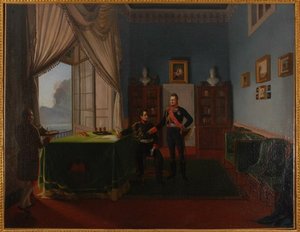
louis nicolas lemasle
1788 - 1876
Quick Facts
- Artistic Movement Or Style: Historical portraits, Religious scenes
- Date Of Birth: 1788
- Date Of Death: 1876
- Full Name: Louis Nicolas Lemasle
- Nationality: French
- Notable Artworks:
- The Execution of Louis XVI
- Osteology and myology of the lips
- Place Of Birth: France

