 Preview
 Send
Send Share
Share
 Details

 Download
 Similars
 X-Ray
X-Ray Diaporama
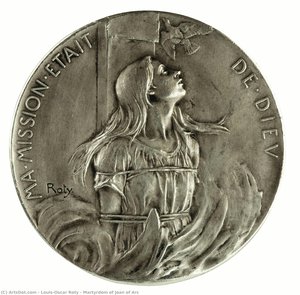
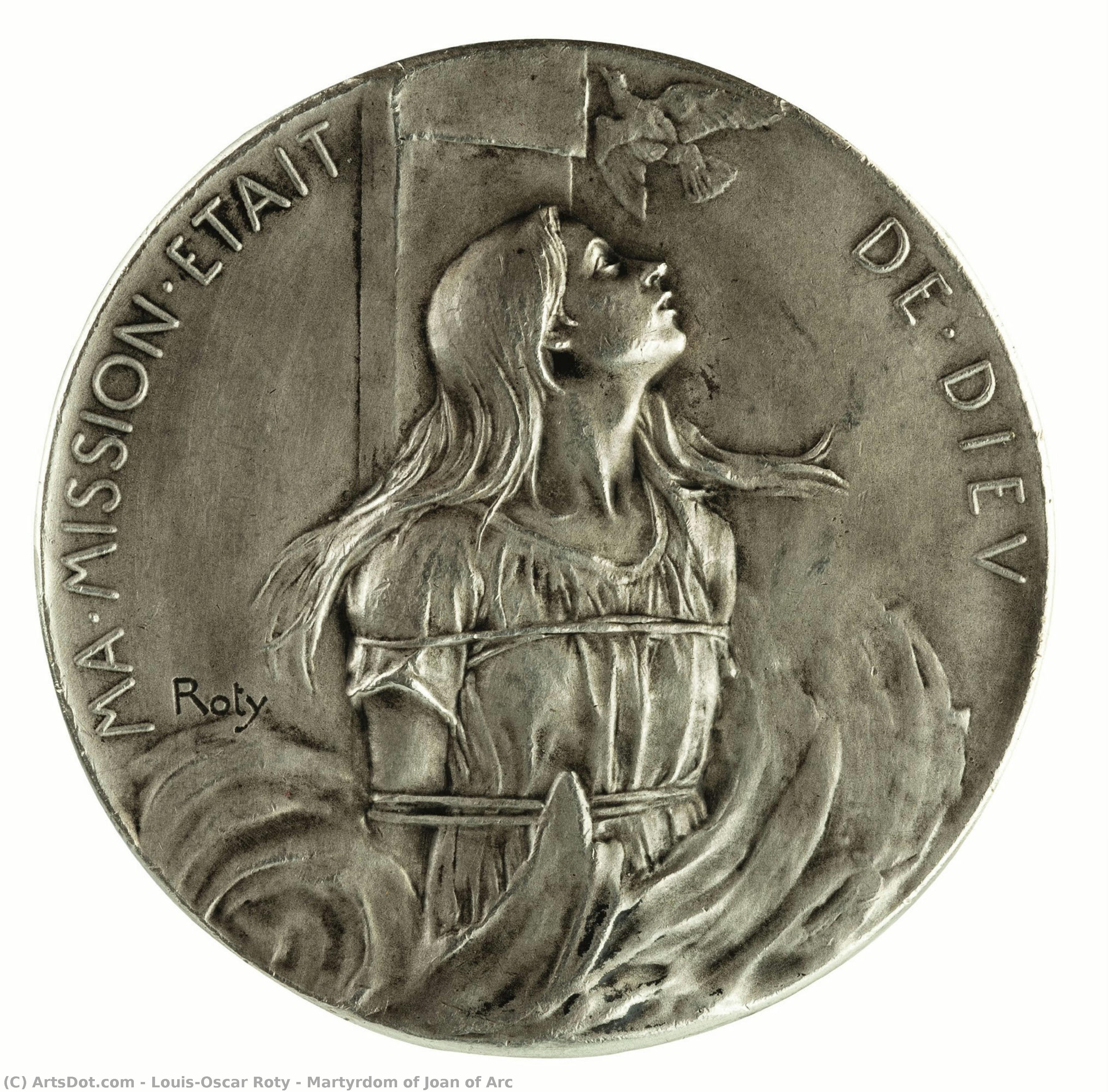
Martyrdom of Joan of Arc

 Read More
Giclée / Art Print
Museum-quality giclée or canvas print with fast production and flexible finish options. ( Buy Hand Made Painting Buy Image)




































Pick from our preset sizes that match the artwork's original proportions.

You may enter your own dimensions to fit a specific frame or space. If your selected size does not match the original image's proportions, we will either crop the artwork or extend the image with a mirrored or solid-fill edge. A digital mockup will be sent for your approval before production begins.
Please note that the on-screen preview does not reflect the actual cropping or extension. Only the mockup will accurately show the final composition.
While custom sizes are available, we recommend selecting a dimension from the predefined list to preserve the original proportions.
Worldwide Delivery () in 2 weeks instead of standard 4/5 weeks. (28 August)

Free Worldwide Express Shipping

High-Quality Linen Canvas

Full Shipping Insurance

Customs Tax Refund Guarantee

True Color Matching Guarantee

60-Day Return Policy (Defects Only)

100% Money-Back Guarantee

Bulk Discount Offer
 Glass option is only available in size under 110 CM

Martyrdom of Joan of Arc
Giclée / Art Print
Reproduction Size
-


Total Price
$ 63
Related Artworks




Artist Biography
Louis-Oscar Roty: A Master of Art Nouveau Medallic Art
Louis-Oscar Roty (1846-1911), often known simply as Oscar Roty, was a highly celebrated French artist and one of the most influential medallists of the Art Nouveau period. Born in Paris on June 11, 1846, he passed away in 1911, leaving behind a legacy of graceful designs and innovative medallic artistry that significantly impacted European art at the close of the 19th century.
Early Life & Artistic Development
Roty’s artistic journey began with studies in painting and sculpture. He received instruction from prominent artists such as Lecoq de Boisbaudran, Augustin-Alexandre Dumont, and Hubert Ponscarme, who served as a crucial mentor. Early in his career, he demonstrated a willingness to break from tradition, notably abandoning the conventional medal rim in 1867 with his design for a medal of Naudet. This marked a shift towards integrating the background and graphics directly into the sculptural form, foreshadowing his later innovations.
The Art Nouveau Medallist & Key Achievements
Roty’s career flourished within the burgeoning Art Nouveau movement. He was instrumental in revitalizing medallic art, alongside figures like Champlain and Alexandre Charpentier. His introduction of the Renaissance plaquette form further elevated the medal's status as a significant work of art, moving beyond mere commemorative objects. Roty designed hundreds of art medals, each celebrated for its elegant designs and technical mastery. Key achievements include:
- Prix de Rome: Awarded in 1882, marking a turning point in his career.
- Grand Prix at the Exposition Universelle (1889): A testament to his growing recognition on an international stage.
- Officer of the Legion of Honor (1889) & Commander (1900): Demonstrating official state acknowledgement of his artistic contributions.
- Professor at the Académie des Beaux-Arts (1888): Solidifying his position as a leading figure in French art education.
- The "Semeuse" Design: Perhaps his most enduring legacy, Roty’s depiction of “the sower” became iconic, gracing French silver coins and stamps, instantly recognizable across the nation and beyond.
Influences & Historical Significance
Roty's work was influenced by the Art Nouveau aesthetic, characterized by its flowing lines, organic forms, and emphasis on decorative beauty. He drew inspiration from Renaissance medal design, particularly in his adoption of the plaquette form. His historical significance lies in his role as a pioneer in modern medallic art. He moved away from purely commemorative designs towards creating miniature sculptures that were aesthetically pleasing and artistically significant in their own right. Roty’s influence extended throughout Europe; his works are housed in nearly all major European museums, attesting to the widespread recognition of his talent. His ability to blend artistic innovation with technical skill cemented his place as a leading figure in 19th-century art.
Later Life & Legacy
Roty married Marie Boulanger, daughter of wrought iron craftsman Pierre Boulanger, in 1878. He continued to receive accolades throughout his career, including the Medal of Honor at the Salon in 1905. His legacy continues through the Musée Oscar Roty in Jargeau, France, which houses a significant collection of his medals and plaquettes. The Kunsthalle Hamburg also holds a large number of his works. Dr. George F. Kunz recognized his contributions to the Medallic Arts. Louis-Oscar Roty remains celebrated as a master craftsman who elevated medallic art to new heights of artistic expression.
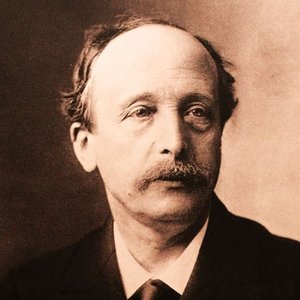
Louis-Oscar Roty
1846 - 1911 , France
Quick Facts
- Artistic Movement Or Style: Art Nouveau
- Artists Or Movements Influenced By This Artist:
- Champlain
- Alexandre Charpentier
- Artists Who Influenced This Artist:
- Lecoq de Boisbaudran
- Augustin-Alexandre Dumont
- Hubert Ponscarme
- Date Of Birth: June 11, 1846
- Date Of Death: March 23, 1911
- Full Name: Louis-Oscar Roty
- Nationality: French
- Notable Artworks:
- Martyrdom of Joan of Arc
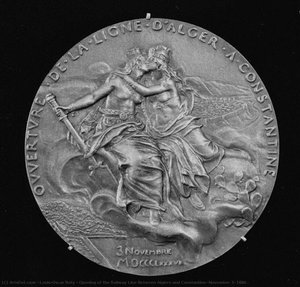
- Opening of the Railway Line...
- Semeuse design on coins/stamps
- Place Of Birth: Paris, France