

 Preview
 Send
Send Share
Share
 Details

 Download
 Similars
 X-Ray
X-Ray Diaporama
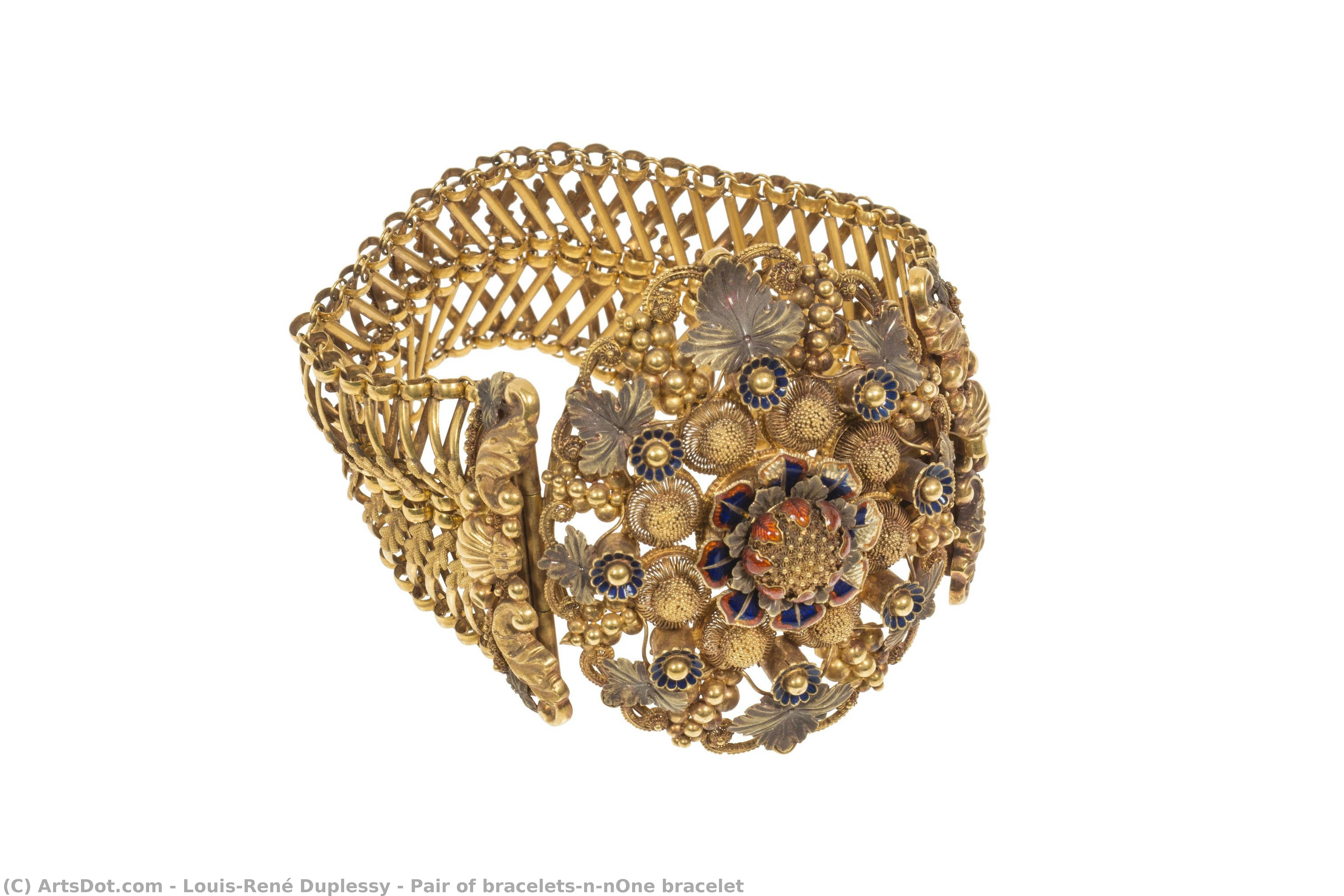
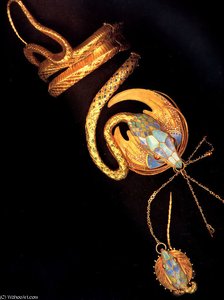
Pair of bracelets\n\nOne bracelet


 Read More
Purchase a high-resolution, enhanced digital image, far superior to the online preview.
Each file is meticulously prepared by our in-house specialists using advanced tools and expert manual retouching. We ensure every image has exceptional clarity, precise color accuracy, and fine detail.
The final file is delivered via email within 72 hours, optimized for immediate use in professional, editorial, and print environments. This is the same quality trusted by top-tier design studios, publishers, and galleries.
Digital Image
Download a high-resolution file for personal display, printing, and creative projects. ( Buy Print Buy Hand Made Painting)
Included in Every Digital Image Order
Expert Digital Delivery, Guaranteed
When you choose ArtsDot.com, you're not just getting an image - you're receiving a professionally enhanced digital artwork, crafted with precision and backed by a satisfaction guarantee. Here's everything that comes with your order, automatically:

Fast Email Delivery
Your high-resolution digital image file will be emailed to you within 72 hours of ordering - ready for immediate use.

AI-Enhanced Digital File
Your artwork is professionally optimized using advanced AI tools and manual editing, ensuring maximum detail, clarity, and color accuracy.

Free Lifetime Re-Delivery
Accidentally deleted or lost your file? No worries - we'll resend it to you anytime, free of charge.

No Import Fees - Ever
Enjoy your artwork instantly with zero customs, duties, or delivery fees - digital downloads are always tax-free.

Color Accuracy Guarantee
We ensure your digital image reflects the original colors as closely as possible using professional tools and color management.

60-Day Satisfaction Guarantee
If you're not satisfied with your digital image, we'll revise it or refund 100% within 60 days - no questions asked.

100% Money-Back Guarantee
Not satisfied? Get a full refund within 60 days of receiving your digital file - no questions asked.

Bulk Order Discounts
Buy 3 images, save 10% - Buy 5, save 15% - Buy 10+, save 20%. Great for creative projects, galleries, and agencies.
Related Artworks
Artist Biography
The Crucible of New York: Francis Bacon and the 1950s
The decade of the 1950s witnessed a seismic shift in the landscape of Western art, largely spearheaded by a group of American painters who challenged established conventions and forged a distinctly modern aesthetic. Among these figures, Francis Bacon stands as a towering, often unsettling, presence – an artist whose work resonated with both profound psychological depth and visceral physicality. His journey through this pivotal era reveals not just artistic evolution but also a complex interplay of personal experience, historical context, and the burgeoning anxieties of post-war America.
Bacon’s early years were marked by a quiet, almost melancholic existence in London, shaped by his father's untimely death and a family life that offered little emotional warmth. This backdrop profoundly influenced his artistic sensibility, fostering a preoccupation with themes of isolation, vulnerability, and the darker aspects of human nature. The decade began with a transatlantic voyage to South Africa in 1951 and 1952, a period during which he was deeply affected by the raw beauty and untamed wilderness of the landscape – an experience that would later manifest in paintings like *Study of a Figure in a Landscape*, 1952. His fascination with ancient Egyptian art, fueled by a brief stopover in Cairo, further informed his artistic vision, imbuing his work with a sense of timelessness and a recognition of the enduring power of symbolic imagery.
The mid-1950s saw Bacon grappling with a period of intense personal turmoil, marked by a passionate but destructive relationship with Peter Lacy. This tumultuous affair, characterized by obsessive desire and mutual torment, became a central source of inspiration for his art. His studio life during this time was nomadic, shifting between borrowed spaces and temporary arrangements – a reflection of the instability that permeated his personal existence. The period also witnessed the emergence of a series of intensely reductive portraits, notably *Man in Blue I-VII*, 1954, based on a model encountered at the Imperial Hotel, Henley-on-Thames. These paintings, with their stark simplicity and unsettling intensity, demonstrated Bacon’s ability to distill human form into its most essential elements – a skill that would become increasingly refined throughout his career.
The Embrace of the Nude and the Influence of Muybridge
As the 1950s progressed, Bacon began to explore the nude with renewed vigor, moving beyond mere representation towards a more psychologically charged depiction. *Two Figures*, 1953, and *Two Figures in the Grass*, 1954, are prime examples of this shift – paintings that capture not just the physical form but also the underlying tension and eroticism inherent in human interaction. These works were directly influenced by Eadweard Muybridge’s groundbreaking photographs of the human figure in motion, particularly *The Human Figure in Motion* (1901), which Bacon regarded as an indispensable visual dictionary. He meticulously studied Muybridge's sequential images, dissecting and reassembling them to create his own interpretations – a process that revealed a deep fascination with movement, anatomy, and the complexities of human sexuality.
The wrestlers depicted in *Two Figures* were not simply anatomical studies; they embodied a symbolic language of power, vulnerability, and struggle. Bacon was acutely aware of the ambiguity between the movements of wrestling and romantic love – a recognition rooted in his own turbulent personal life. His exploration of the nude, therefore, transcends mere aesthetic representation, becoming a vehicle for examining themes of desire, control, and the darker impulses of human nature.
A Shift Towards Abstraction and the Echoes of Van Gogh
By 1957, Bacon’s artistic practice underwent a significant transformation. His paintings became characterized by a coarser application of paint, bolder colors, and a heightened sense of immediacy – a shift that was dramatically showcased in his exhibition at the Hanover Gallery in March of that year. The six paintings presented were directly inspired by Vincent van Gogh's *The Painter on the Road to Tarascon* (1888), a work destroyed during World War II, and included a painting completed the previous year. This deliberate engagement with Van Gogh’s expressive brushwork signaled a move towards a more visceral and emotionally charged style.
The subsequent three paintings were executed with remarkable speed to meet the demands of the exhibition deadline, while the remaining two were added later. This accelerated process, driven by necessity, inadvertently contributed to Bacon's evolving technique – a coarsening of his application of paint that nonetheless retained its expressive power. The influence of Van Gogh is palpable in the dynamic brushstrokes and vibrant colors, suggesting a desire to capture not just the subject matter but also the artist’s own emotional state.
International Recognition and Lasting Legacy
The late 1950s marked a turning point in Bacon's career. He achieved international recognition with exhibitions in New York (1953) and Paris (1957), solidifying his position as a leading figure in the European avant-garde. His association with influential critics like Clement Greenberg and patrons such as the Sainsbury family further enhanced his reputation. Despite his continued engagement with the vibrant art scene of London, Bacon spent several years living in Tangier, Morocco, forging connections with artists like Allen Ginsberg and William Burroughs – a period that ultimately yielded little tangible artistic output.
Francis Bacon’s work remains profoundly unsettling yet undeniably compelling. His paintings are not merely representations of the external world but rather explorations of the human psyche—a testament to his ability to capture the raw, often painful, realities of existence. His legacy as one of the most significant and influential artists of the 20th century is firmly established, a testament to his courage, originality, and unwavering commitment to confronting the darker aspects of the human condition.
louis-rené duplessy
1950 - 2021 , Canada
Quick Facts
- Artistic Movement Or Style: Expressionism
- Artists Or Movements Influenced By This Artist: ['Abstract Expressionism']
- Artists Who Influenced This Artist:
- Eadweard Muybridge
- Van Gogh
- Date Of Death: 2021
- Full Name: Francis Bacon
- Nationality: British
- Notable Artworks:
- Study of a Figure in a Landscape
- Man in Blue I-VII
- Two Figures
- Two Figures in the Grass
- Place Of Birth: Dublin, Ireland

