 Preview
 Send
Send Share
Share
 Details

 Download
 Similars
 X-Ray
X-Ray Diaporama
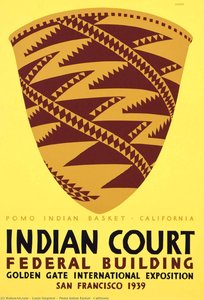
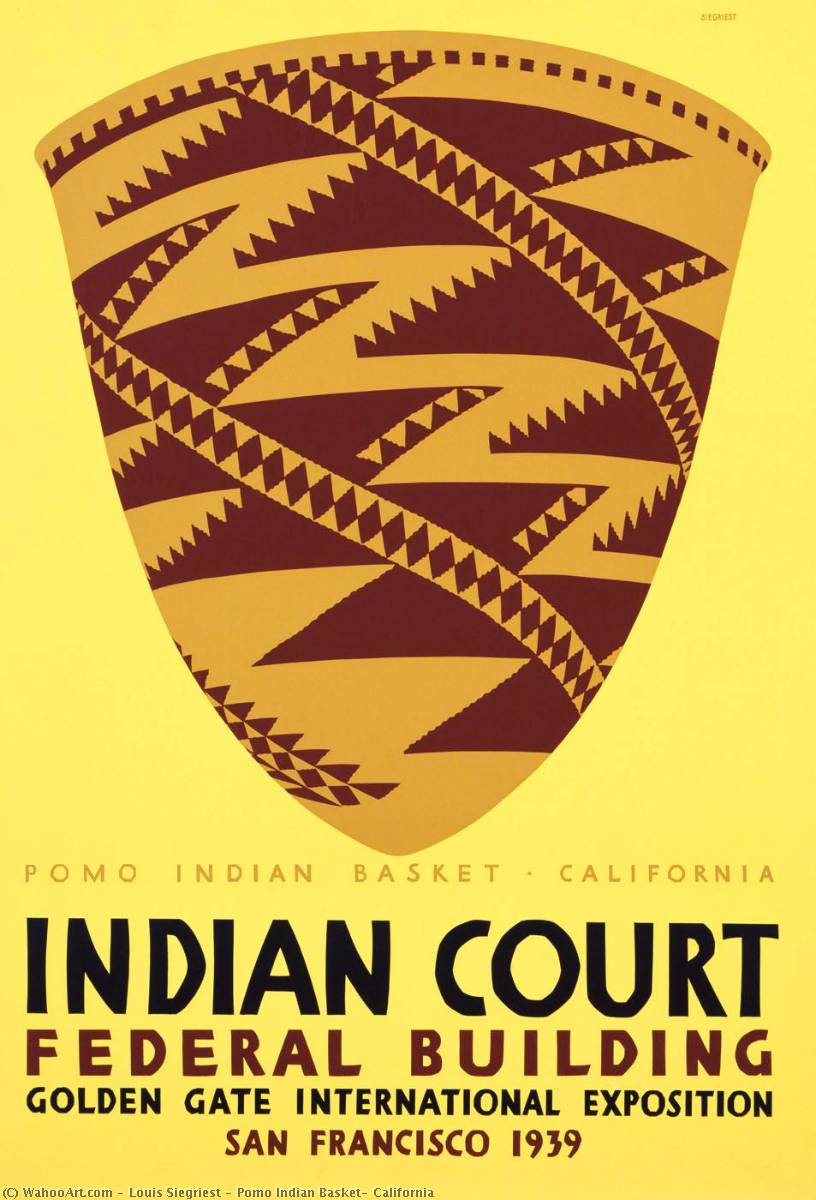
Pomo Indian Basket, California
 1939
1939 86.0 x 59.0 cm
 Read More
Giclée / Art Print
Museum-quality giclée or canvas print with fast production and flexible finish options. ( Buy Hand Made Painting Buy Image)




































Pick from our preset sizes that match the artwork's original proportions.

You may enter your own dimensions to fit a specific frame or space. If your selected size does not match the original image's proportions, we will either crop the artwork or extend the image with a mirrored or solid-fill edge. A digital mockup will be sent for your approval before production begins.
Please note that the on-screen preview does not reflect the actual cropping or extension. Only the mockup will accurately show the final composition.
While custom sizes are available, we recommend selecting a dimension from the predefined list to preserve the original proportions.
Worldwide Delivery () in 2 weeks instead of standard 4/5 weeks. (26 August)

Free Worldwide Express Shipping

High-Quality Linen Canvas

Full Shipping Insurance

Customs Tax Refund Guarantee

True Color Matching Guarantee

60-Day Return Policy (Defects Only)

100% Money-Back Guarantee

Bulk Discount Offer
 Glass option is only available in size under 110 CM

Pomo Indian Basket, California
Giclée / Art Print
Reproduction Size
-


Total Price
$ 63
Related Artworks




Artist Biography
The Visionary Tapestry of Louis Siegriest
Louis Bassi Siegriest was far more than a mere chronicler of the American West; he was a weaver of myth, a painter who sought to bridge the gap between the tangible landscape and the spiritual echoes of the past. Born in Oakland, California, in 1899, his artistic journey began with the light-drenched traditions of Impressionism, yet it would eventually evolve into a profound exploration of Abstract Expressionism. His life was a continuous dialogue between the rugged reality of the High Desert and the ancient, symbolic languages of the indigenous peoples who once called it home. Through his brush, the dusty plains of Nevada and the intricate patterns of Native American culture were transformed into a vibrant, modern tapestry of color and meaning.
Siegriest’s early years in California provided the foundation for a career defined by technical mastery and intellectual curiosity. Under the guidance of Frank Van Sloun at the Mark Hopkins School, he developed a keen eye for detail, honing his skills alongside other luminaries who would later define the California modernist movement. This formative period was further enriched by his time in New York City, where he studied under the legendary Robert Henri at the Art Students League. Immersed in the burgeoning avant-garde atmosphere of the city, Siegriest absorbed the energy of a new era, learning to use bold brushstrokes and expressive palettes to capture the raw essence of human experience—a technique that would remain a cornerstone of his work even as his subject matter shifted toward the symbolic.
A Convergence of Landscape and Legend
The mid-1940s marked a pivotal chapter in Siegriest’s life when he established a studio in Virginia City, Nevada. The stark, majestic beauty of the Nevada landscape acted as a powerful catalyst for his creative evolution. It was here that his fascination with Native American mythology began to intertwine with his depictions of the natural world. He became deeply enamored with the spiritual resonance of the land, finding inspiration in the hunting rituals, shamanistic practices, and intricate designs of tribes such as the Navajo, Pueblo, and Haida. His work from this era does not merely depict scenes; it attempts to evoke the very soul of these ancient traditions.
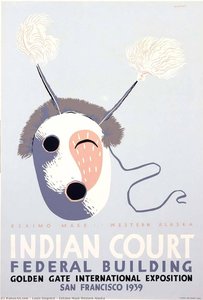
Siegriest’s unique ability to blend meticulous observation with symbolic representation earned him a distinguished place among the Society of Six, an influential group of California artists dedicated to a modern, distinctly Western aesthetic. His compositions often featured a striking duality: the physical reality of a desert landscape juxtaposed with the ethereal presence of cultural motifs. Whether through the delicate textures of a Pomo Indian basket or the powerful imagery found in an Eskimo mask, Siegriest utilized his art to pay homage to the enduring legacy of indigenous craftsmanship and storytelling.
Legacy of the Modern Mythmaker
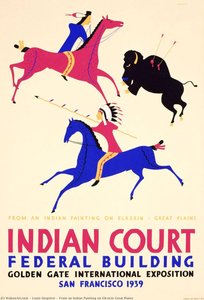
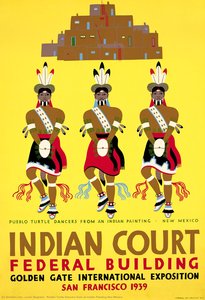
As his career progressed, Siegriest’s mastery extended into various mediums, including the delicate art of screenprinting. Works such as "From an Indian Painting on Elkskin Great Plains" demonstrate his skill in utilizing modern printing techniques to celebrate traditional motifs, creating a bridge between ancient aesthetics and contemporary art forms. His ability to translate the complex patterns of tribal designs into the language of modernism allowed him to reach a broader audience, ensuring that the cultural heritage he so admired remained vibrant and visible within the canon of American art.
The historical significance of Louis Siegriest lies in his role as a cultural mediator. He did not simply observe the West; he interpreted it through a lens of deep respect and artistic innovation. His life’s work remains a testament to the power of art to preserve memory and honor the sacred. Through his eyes, we see a world where the landscape is alive with spirit, and where every line and color tells a story of a civilization deeply rooted in the earth. His legacy continues to inspire those who seek to find the extraordinary within the ordinary, and the eternal within the ephemeral.
louis siegriest
1899 - 1989
Quick Facts
- Artistic Movement Or Style: Modernist Landscape Painter
- Artists Or Movements Influenced By This Artist: ['Zuloaga']
- Artists Who Influenced This Artist:
- Frank Van Sloun
- Robert Henri
- Date Of Birth: 1899
- Date Of Death: 1989
- Full Name: Louis Bassi Siegriest
- Nationality: American
- Notable Artworks: ['Virginia City, Nevada']
- Place Of Birth: Oakland, California