 Preview
 Send
Send Share
Share
 Details

 Download
 Similars
 X-Ray
X-Ray Diaporama
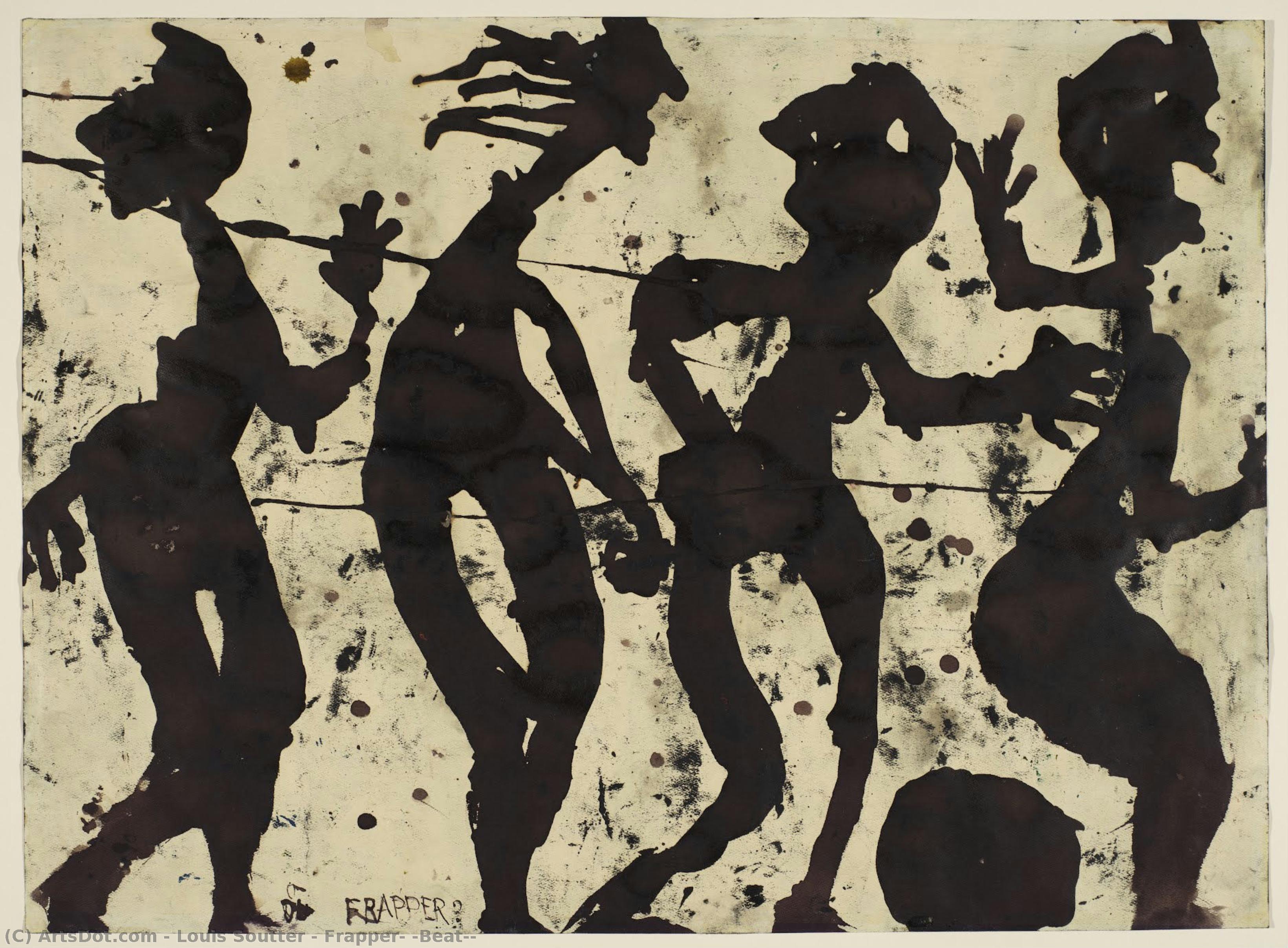
Frapper? (Beat?)


 Read More
Hand Made Oil Reproduction
Hand-painted oil on canvas in your size and frame, made to order by our artists. ( Buy Print Buy Image)




































Pick from our preset sizes that match the artwork's original proportions.

You may enter your own dimensions to fit a specific frame or space. If your selected size does not match the original image's proportions, we will either crop the artwork or extend the painting with additional hand-painted elements. A digital mockup will be sent for your approval before production begins.
Please note that the on-screen preview does not reflect the actual cropping or extension. Only the mockup will accurately show the final composition.
While custom sizes are available, we recommend selecting a dimension from the predefined list to preserve the original proportions.
After order, ArtsDot.com team will email client for instructions and provide a mockup preview
Worldwide Delivery () in 3/4 weeks instead of standard 5 weeks. (17 August). No compromise on quality.

Free Worldwide Express Shipping

High-Quality Linen Canvas

Full Shipping Insurance

Customs Tax Refund Guarantee

True Color Matching Guarantee

60-Day Return Policy (Defects Only)

100% Money-Back Guarantee

Bulk Discount Offer
 Glass option is only available in size under 110 CM

Frapper? (Beat?)
Reproduction Medium
Reproduction Size
-


Total Price
$ 263
Artwork Description
The Rhythmic Shadows of Louis Soutter
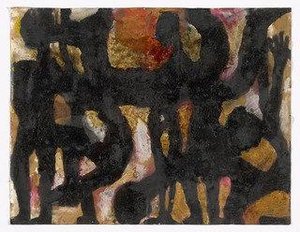
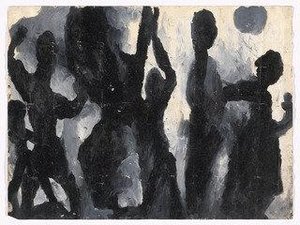
In the twilight of his life, amidst the quiet seclusion of a Swiss hospice, Louis Soutter channeled a lifetime of musicality and psychological depth into the hauntingly beautiful work Frapper? (Beat?). Created in 1942, this evocative drawing serves as a profound window into the soul of an artist who found his most potent voice through the raw, uninhibited language of Art Brut. The piece presents a rhythmic procession of five silhouettes, arranged with a deliberate, almost musical cadence across the paper. Each figure, though stripped of fine detail, possesses a distinct presence and posture, suggesting a silent choreography that resonates with the title's percussive inquiry. It is a work that does not merely depict figures; it captures the very pulse of human existence through shadow and form.
The technique employed by Soutter in this 1942 masterpiece is a masterclass in economy and emotional weight. Utilizing a stark, monochromatic palette, the artist relies on the interplay between light and dark to breathe life into his subjects. The silhouettes are not mere voids; they are textured, expressive shapes that seem to vibrate with an internal energy. There is a tactile quality to the linework that suggests the artist's background in engineering and architecture—a structural precision that provides a skeletal strength to the more fluid, ghostly forms. This tension between rigid structure and ethereal movement creates a visual rhythm that mirrors the "beat" suggested by the title, inviting the viewer to listen with their eyes.
Beyond its formal qualities, Frapper? (Beat?) carries a heavy symbolic resonance. The arrangement of the figures—some isolated, others clustered in pairs—evokes themes of companionship and solitude, of the collective human experience versus the individual struggle. As an artist who navigated significant mental health challenges, Soutter’s use of masks and silhouettes can be seen as a metaphor for the layers of identity we present to the world. The piece captures a sense of existential questioning, asking whether there is a rhythm to our lives or if we are simply drifting shadows in a larger, unseen composition. It is this profound emotional depth that makes the work so captivating for collectors and historians alike.
For the discerning collector or interior designer, a high-quality reproduction of this work offers more than just decoration; it provides a focal point of intellectual and emotional gravity. The starkness of the black and white composition allows it to integrate seamlessly into modern, minimalist, or even classical settings, adding a layer of sophisticated mystery to any space. Whether placed in a quiet study or a grand gallery, Frapper? (Beat?) acts as a conversation piece that invites contemplation on the nature of movement, memory, and the enduring power of the human spirit. To possess such a work is to hold a fragment of the Art Brut legacy, bringing the hauntingly beautiful vision of Louis Soutter into the contemporary home.
Related Artworks
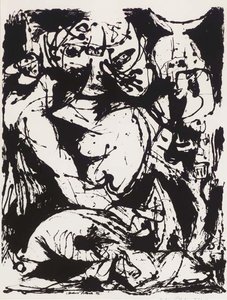
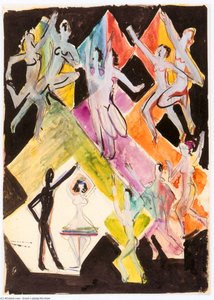
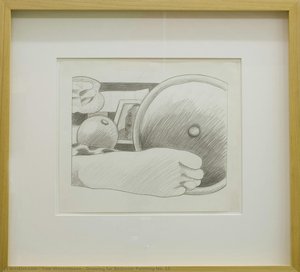
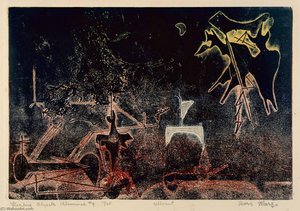
Artist Biography
Louis Soutter: The Silent Mask Maker
Louis Soutter (1871 – 1942) was a Swiss artist whose singular vision—characterized by hauntingly expressive “masks”—earned him belated recognition as a pivotal figure in the Art Brut movement. Born in Lausanne, Switzerland, Soutter’s life unfolded amidst a backdrop of intellectual curiosity and personal struggle, shaping his artistic output into a deeply introspective exploration of human emotion and psychological complexity. Despite facing significant mental health challenges throughout his adult years, Soutter persevered in pursuing his creative passions, leaving behind an astonishing body of work that continues to fascinate scholars and artists alike.Early Life & Education
Soutter’s formative years were marked by a fascination with engineering and architecture—disciplines he pursued diligently at Lausanne Polytechnic. However, it was music that truly captivated him; he mastered the violin in Brussels, honing his skills under renowned pedagogue Eugène Ysaÿe, whose influence profoundly shaped Soutter's musical sensibilities. Simultaneously, he cultivated an interest in painting, studying primarily in Lausanne and Paris, absorbing stylistic cues from Impressionism and Post-Impressionism. These diverse influences would coalesce into a distinctive artistic style—one defined by meticulous detail and symbolic imagery.The Emergence of “Masks”
Soutter’s artistic breakthrough arrived in the early 1920s when he began producing his iconic “masks”—large, intricately rendered drawings featuring stylized faces that conveyed profound psychological states. These masks weren't mere representations; they were embodiments of inner turmoil and contemplation, imbued with a palpable sense of sorrow and vulnerability. Soutter’s technique—characterized by painstaking layering of graphite and pastel—created surfaces rich in texture and tonal variation, mirroring the emotional depth of his subjects. The masks became his signature motif, appearing repeatedly throughout his oeuvre and establishing him as an unparalleled innovator within the burgeoning Art Brut movement.Influences & Artistic Development
Soutter’s artistic trajectory was significantly impacted by encounters with fellow artists who championed his work—most notably Roberto Matta (1911-2002), Julian Schnabel, Arnulf Rainer and Elmar Trenkwalder. These collaborations fostered a dialogue about the expressive potential of unconventional materials and techniques, propelling Soutter’s artistic exploration into uncharted territory. His unwavering dedication to his craft persisted despite institutionalization in 1922 and subsequent relocation to Ballaigues, where he continued to produce drawings until his death in 1942.Legacy & Recognition
Though largely unrecognized during his lifetime, Soutter's work gained considerable acclaim posthumously—primarily due to the efforts of his cousin Le Corbusier who championed Soutter’s artistic vision and brought him to the attention of contemporary artists. Critics lauded Soutter’s masterful use of drawing as a medium for conveying psychological experience, recognizing him as a visionary artist whose oeuvre transcends conventional stylistic boundaries. Today, Louis Soutter stands as an exemplar of Art Brut—a testament to the transformative power of creativity born outside the confines of academic art institutions and a poignant reminder that profound artistic expression can emerge from unexpected sources.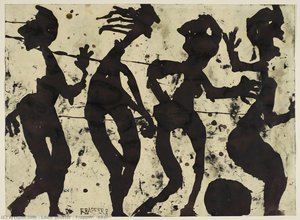
louis soutter
1871 - 1942
Quick Facts
- Artistic Movement Or Style: Art Brut
- Artists Or Movements Influenced By This Artist: ['Roberto Matta']
- Artists Who Influenced This Artist: ['']
- Date Of Birth: 1871
- Date Of Death: 1942
- Full Name: Louis Adolphe Soutter
- Nationality: Swiss
- Notable Artworks: ['Masks']
- Place Of Birth: Lausanne, Switzerland
Related Articles

White on Canvas: 10 Masterpieces & Timeless Elegance for Your Home Decor
Explore 10 iconic white paintings by Monet, Whistler & Rothko! Discover the stories behind these serene masterpieces and their impact on art history. Find museum-quality reproductions for your home decor at .

Dark Masterpieces: 10 Iconic Paintings Dominated by Black Tones |
Explore 10 iconic paintings dominated by black tones, from Rembrandt’s chiaroscuro to Goya's dark expressions. Discover the stories behind these masterpieces & find museum-quality art reproductions for your home at .
Lamp Black & Masterpieces: 10 Paintings That Define Shadow & Light |
Delve into the captivating world of 'Lamp Black' tones with 10 iconic paintings by masters like Rembrandt & Caravaggio. Explore Baroque chiaroscuro, dramatic lighting & shadow in art history. Find museum-quality reproductions at

Monochrome Visions: Exploring the Aesthetic & Historical Significance of Black & White Photography
Explore the rich history & artistic power of black and white photography. From early techniques to iconic masters like Ansel Adams, discover why monochrome continues to captivate art lovers today. Expert insights for collectors.

Mars Black Masterpieces: 10 Iconic Paintings & Timeless Art Decor Ideas
Delve into the power of 'Mars Black' with 10 iconic paintings by masters like Rembrandt & Caravaggio. Explore dramatic chiaroscuro, gothic art, and timeless beauty. Find museum-quality reproductions & elevate your home decor on .