

 Preview
 Send
Send Share
Share
 Details

 Download
 Similars
 X-Ray
X-Ray Diaporama
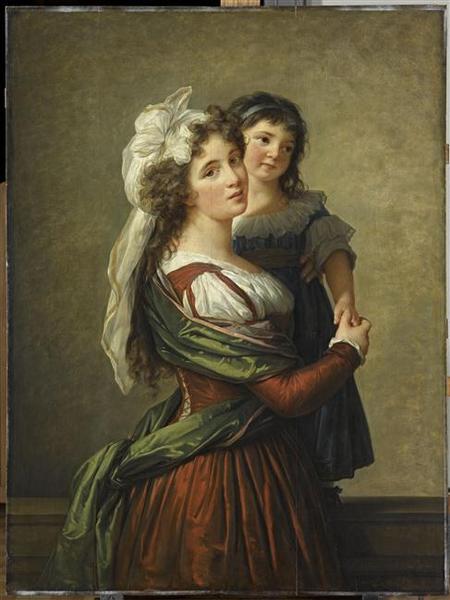
MADAME ROUSSEAU ET SA FILLE


 Read More
Purchase a high-resolution, enhanced digital image, far superior to the online preview.
Each file is meticulously prepared by our in-house specialists using advanced tools and expert manual retouching. We ensure every image has exceptional clarity, precise color accuracy, and fine detail.
The final file is delivered via email within 72 hours, optimized for immediate use in professional, editorial, and print environments. This is the same quality trusted by top-tier design studios, publishers, and galleries.
Digital Image
Download a high-resolution file for personal display, printing, and creative projects. ( Buy Print Buy Hand Made Painting)
Included in Every Digital Image Order
Expert Digital Delivery, Guaranteed
When you choose ArtsDot.com, you're not just getting an image - you're receiving a professionally enhanced digital artwork, crafted with precision and backed by a satisfaction guarantee. Here's everything that comes with your order, automatically:

Fast Email Delivery
Your high-resolution digital image file will be emailed to you within 72 hours of ordering - ready for immediate use.

AI-Enhanced Digital File
Your artwork is professionally optimized using advanced AI tools and manual editing, ensuring maximum detail, clarity, and color accuracy.

Free Lifetime Re-Delivery
Accidentally deleted or lost your file? No worries - we'll resend it to you anytime, free of charge.

No Import Fees - Ever
Enjoy your artwork instantly with zero customs, duties, or delivery fees - digital downloads are always tax-free.

Color Accuracy Guarantee
We ensure your digital image reflects the original colors as closely as possible using professional tools and color management.

60-Day Satisfaction Guarantee
If you're not satisfied with your digital image, we'll revise it or refund 100% within 60 days - no questions asked.

100% Money-Back Guarantee
Not satisfied? Get a full refund within 60 days of receiving your digital file - no questions asked.

Bulk Order Discounts
Buy 3 images, save 10% - Buy 5, save 15% - Buy 10+, save 20%. Great for creative projects, galleries, and agencies.
Collectible Description
A Moment Preserved in Rococo Elegance
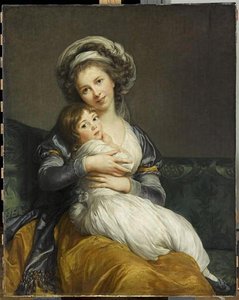
Louise Élisabeth Vigée Le Brun’s “Madame Rousseau et Sa Fille” transcends mere portraiture; it embodies the very spirit of the late 18th century, specifically capturing the refined sensibilities of the Rococo movement while hinting at the burgeoning influence of Neoclassicism. Painted in 1789, this artwork depicts Madame Rousseau and her daughter, a tender tableau that speaks volumes about familial affection and societal ideals during Marie Antoinette’s reign.
Composition & Visual Harmony
The canvas is dominated by a vertical orientation, prioritizing the central figures—Madame Rousseau and her child—creating an immediate sense of intimacy. Vigée Le Brun skillfully arranges them in front of a subtly blurred background, suggesting an interior space bathed in diffused natural light. This deliberate compositional choice emphasizes connection and reinforces the artwork’s emotional core.
Color Palette & Artistic Texture
The color palette leans heavily into muted earth tones—creams, reds, and greens—accentuated by delicate highlights of white within Madame Rousseau's headscarf and shirt. Vigée Le Brun achieves remarkable textural depth through meticulous brushwork. The fabric appears soft and draped, mirroring the elegance of the era, while subtle variations in skin tone convey a sense of realism without sacrificing beauty. Glazing techniques contribute to luminous effects, enhancing the overall impression of serenity.
Style & Technique: Rococo Refinement
Vigée Le Brun’s masterful technique exemplifies the Rococo style—characterized by flowing lines and graceful curves—a reaction against the rigid formality of Neoclassicism. The artist utilizes gentle contours to depict the figures' forms, emphasizing elegance and grace. Brushstrokes are blended seamlessly, creating a smooth surface that reflects the prevailing aesthetic values of the time. This meticulous attention to detail underscores Vigée Le Brun’s commitment to capturing not just appearance but also emotional nuance.
Symbolism & Emotional Resonance
"Madame Rousseau et Sa Fille" resonates deeply with themes of maternal love and familial devotion. Madame Rousseau's gaze conveys protectiveness and affection, mirroring the artwork’s broader symbolic significance—a celebration of domestic harmony and idealized beauty. The piece serves as a poignant reminder of a bygone era, inviting viewers to contemplate the enduring power of human connection and artistic excellence.
Related Artworks
Artist Biography
A Life Painted in Elegance: The World of Louise Élisabeth Vigée Le Brun
Louise Élisabeth Vigée Le Brun, a name synonymous with the grace and refinement of 18th-century French portraiture, was more than just a painter; she was a chronicler of an era, a master of capturing not merely likeness but also the very essence of her sitters. Born in Paris in 1755, her artistic journey began within a family already steeped in the world of art. Her father, Louis Vigée, a successful pastel portraitist, recognized and nurtured her talent from a remarkably young age, providing early instruction that would lay the foundation for a dazzling career. This familial encouragement was crucial, especially after his untimely death when she was just twelve, prompting her mother to seek further training for Louise with established artists like Blaise Bocquet, Pierre Davesne, and Gabriel Briard. These formative years instilled in her not only technical skill but also an appreciation for the nuances of light, color, and composition that would become hallmarks of her style. Even as a young woman, Vigée Le Brun was already earning a living through her art, demonstrating a precocious talent and unwavering dedication to her craft.
Royal Favor and Artistic Flourishing
The turning point in Vigée Le Brun’s career arrived with her commission to paint Marie Antoinette in 1778. This wasn't simply an artistic opportunity; it was an entry into the very heart of French society, a world of opulent courts and discerning patrons. The Queen, initially hesitant about sitting for a portrait, quickly warmed to Vigée Le Brun’s ability to portray her with both dignity and approachability – a delicate balance that few artists could achieve. This commission led to a cascade of further royal portraits, establishing Vigée Le Brun as the official portraitist to Marie Antoinette and solidifying her position within the French aristocracy. Her studio became a hub for the elite, attracting members of high society eager to be immortalized on canvas. She possessed an extraordinary gift for capturing not only physical resemblance but also the personality and social standing of her subjects. This talent, combined with her innate charm and diplomatic skills, allowed her to navigate the complex world of courtly patronage with remarkable success. Her style during this period blended elements of Rococo’s playful elegance with a growing Neoclassical sensibility, resulting in portraits that were both fashionable and timeless.
A Style Defined by Grace and Naturalism
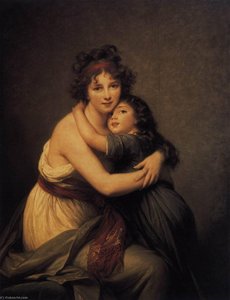
Vigée Le Brun's artistic approach was characterized by a remarkable ability to infuse her portraits with life and emotion. She moved away from the stiff formality of earlier portraiture, opting instead for more natural poses and expressions. Her brushwork was fluid and delicate, creating a sense of softness and luminosity in her paintings. She paid meticulous attention to detail, particularly in the rendering of fabrics, jewelry, and hairstyles – elements that conveyed status and refinement. While influenced by Rococo’s emphasis on pastel shades and decorative flourishes, she also embraced Neoclassical principles of clarity and balance, resulting in a unique style that was both elegant and sophisticated. Notable works like *Self-Portrait with Her Daughter, Julie*, demonstrate her mastery of capturing intimate moments and conveying maternal affection. The numerous portraits of Marie Antoinette, including the iconic depiction of the Queen holding a rose, showcase her ability to portray royalty with both grandeur and humanity. Beyond portraiture, Vigée Le Brun also explored landscape and genre scenes, demonstrating her versatility as an artist.
Exile, Resilience, and Lasting Legacy
The French Revolution irrevocably altered the course of Vigée Le Brun’s life. As a close associate of the royal family, she faced increasing scrutiny and ultimately fled France in 1789 to avoid persecution. This marked the beginning of a period of exile that would take her across Europe – to Russia, Italy, England, Switzerland, and beyond. Despite the upheaval, she continued to paint, finding patronage among European aristocrats and establishing herself as an internationally renowned artist. Her travels broadened her artistic horizons, exposing her to different styles and techniques. Upon returning to France in 1809, she resumed her career, though the political climate had changed dramatically. She published her memoirs, *Souvenirs*, offering a fascinating glimpse into the art world of her time and providing invaluable insights into her life and experiences. Vigée Le Brun’s legacy extends far beyond her technical skill; she was a pioneer for women in the arts, achieving remarkable success in a field dominated by men. Her paintings remain celebrated for their beauty, elegance, and historical significance, offering a captivating window into the world of 18th-century France and solidifying her place as one of history’s most accomplished portraitists. Her ability to capture not just appearances but also the inner lives of her sitters ensures that her work continues to resonate with audiences today.
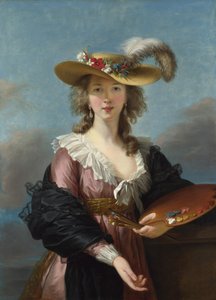
Louise Élisabeth Vigée Le Brun
1755 - 1842 , France
Quick Facts
- Artistic Movement Or Style: Rococo & Neoclassical
- Artists Who Influenced This Artist:
- Rubens
- Van Dyke
- Rembrandt
- Date Of Birth: April 16, 1755
- Date Of Death: 1842
- Full Name: Louise Élisabeth Vigée Le Brun
- Nationality: French
- Notable Artworks:
- Self-Portrait with Julie
- Portraits of Marie Antoinette
- Queen in Rose Dress
- Place Of Birth: Paris, France

