 Preview
 Send
Send Share
Share
 Details

 Download
 Similars
 X-Ray
X-Ray Diaporama
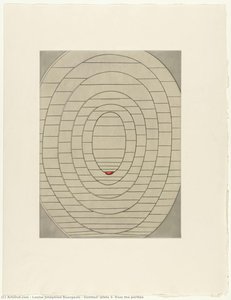
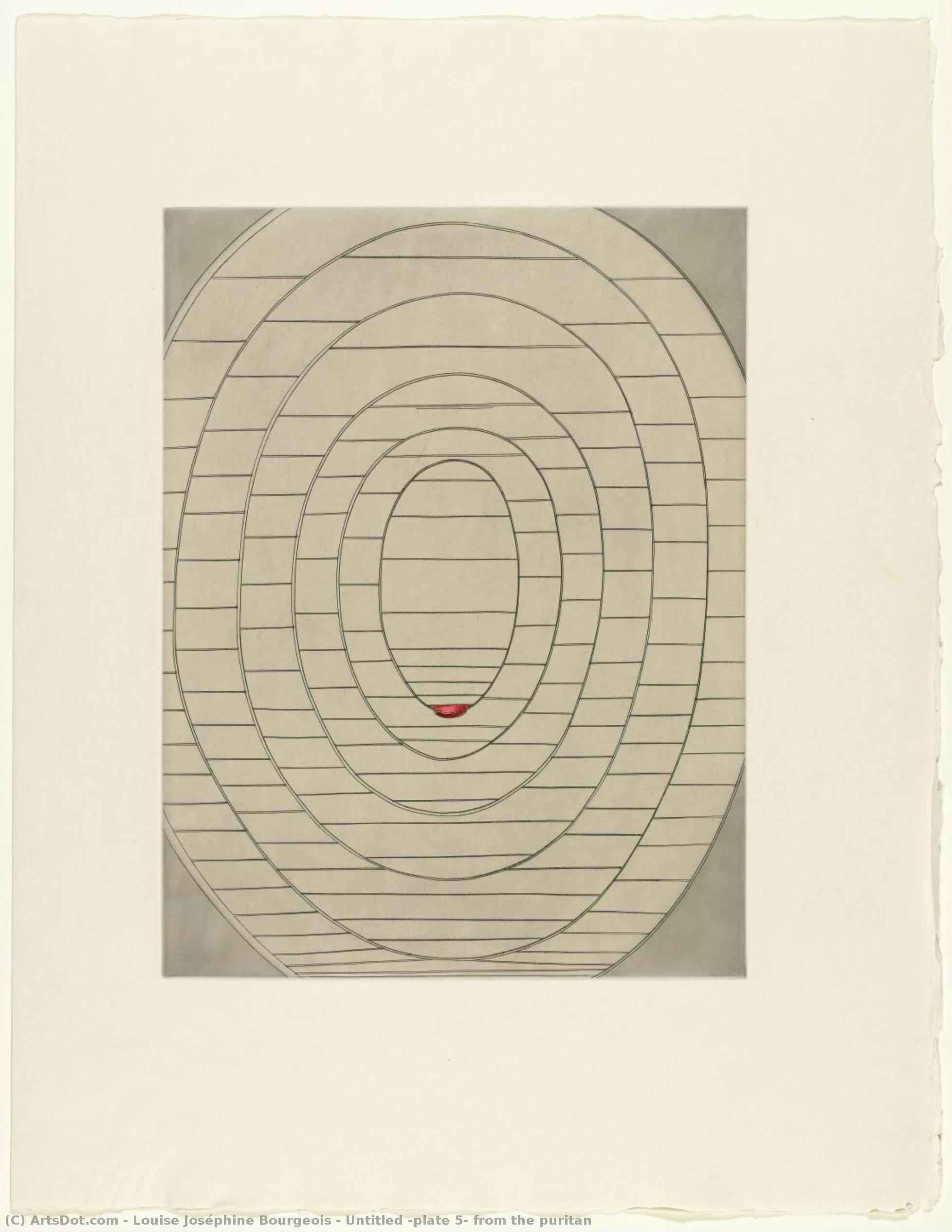
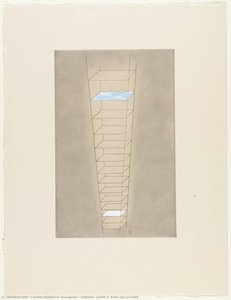
Untitled (plate 5) from the puritan
 Graphite
- Contemporary Minimalism
 1993
1993 500.0 x 658.0 cm
 MOMA - Museum of Modern Art
 Read More
Hand Made Oil Reproduction
Hand-painted oil on canvas in your size and frame, made to order by our artists. ( Buy Print Buy Image)




P118B $10

P118H $10

P118W $10

P438Z $10

P508JH $12

P508YH $12

P805H $10

P805Z $10

P919BZ $10

P919G $10

P919XJ $10

P959ZH $10

P968JZ $12

W106C $8

W218G $10

W218JH $8

W218Y $10

W307PJ $10

W316G $10

W316PJ $8

W316Y $10

W398PJ $8

W4111J $10

W500HY $15

W500JH $15

W692G $12

W849H $8

W940BG $15

W953PJ $8




Pick from our preset sizes that match the artwork's original proportions.

You may enter your own dimensions to fit a specific frame or space. If your selected size does not match the original image's proportions, we will either crop the artwork or extend the painting with additional hand-painted elements. A digital mockup will be sent for your approval before production begins.
Please note that the on-screen preview does not reflect the actual cropping or extension. Only the mockup will accurately show the final composition.
While custom sizes are available, we recommend selecting a dimension from the predefined list to preserve the original proportions.
After order, ArtsDot.com team will email client for instructions and provide a mockup preview
Worldwide Delivery () in 3/4 weeks instead of standard 5 weeks. (30 August). No compromise on quality.

Free Worldwide Express Shipping

High-Quality Linen Canvas

Full Shipping Insurance

Customs Tax Refund Guarantee

True Color Matching Guarantee

60-Day Return Policy (Defects Only)

100% Money-Back Guarantee

Bulk Discount Offer
 Glass option is only available in size under 110 CM

Untitled (plate 5) from the puritan
Reproduction Medium
Reproduction Size
-


Total Price
$ 263
Louise Bourgeois’ “Untitled (Plate 5) from The Puritan”: A Meditation on Loss and Resilience
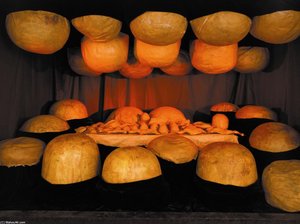
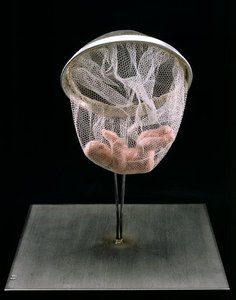
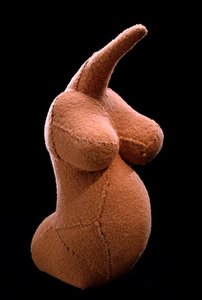
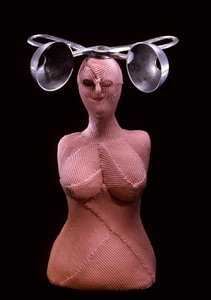
The photograph captures Louise Joséphine Bourgeois' "Untitled (Plate 5) from The Puritan," a seminal work embodying the artist’s signature exploration of psychological landscapes and confronting themes of trauma with unwavering honesty. Executed in 1993, this piece transcends mere visual representation; it speaks to a deeper resonance within the viewer, inviting contemplation on vulnerability and the enduring power of memory. The artwork itself is deceptively simple—a monochrome circle overlaid upon concentric circles, punctuated by a single scarlet dot at its core. This stark geometric composition immediately establishes a sense of contained space, mirroring perhaps the artist’s own internal experience following her mother's passing. Bourgeois meticulously crafted this piece using drawing techniques on paper, utilizing graphite and ink to achieve remarkable precision and tonal subtlety. The deliberate flatness of the surface contributes to the artwork’s contemplative mood, emphasizing the immediacy of feeling rather than striving for illusionistic depth. Bourgeois’ artistic journey began amidst a familial upheaval—the devastating loss of her mother profoundly impacted her formative years. This experience fueled an ongoing preoccupation with themes of maternal figures and unresolved grief, which permeate throughout her oeuvre. “The Puritan,” like many of Bourgeois' sculptures and drawings, operates on multiple levels, inviting interpretations concerning the subconscious mind and confronting anxieties surrounding abandonment. The circle represents wholeness and unity—a yearning for completeness that contrasts sharply with the fractured experience of loss. Furthermore, the deliberate use of black and white amplifies the emotional impact of the piece. Color is eschewed in favor of tonal gradation, allowing viewers to focus on the subtle nuances of texture and form. This minimalist aesthetic aligns perfectly with Bourgeois’ broader artistic philosophy—a rejection of decorative excess in favor of conveying profound psychological truths. The scarlet dot, positioned at the center, serves as a potent symbol of focal point, perhaps representing an insistent memory or an emotional core that refuses to be silenced. It is simultaneously vulnerable and defiant, mirroring the artist's own resilience in confronting difficult emotions. The artwork’s enduring appeal lies not only in its formal elegance but also in its ability to tap into universal human experiences—the complexities of familial relationships and the inescapable influence of formative traumas. “Untitled (Plate 5) from The Puritan” stands as a testament to Bourgeois' unwavering dedication to translating inner turmoil into artistic expression, cementing her place as one of the most significant voices in contemporary art history. Its quiet contemplation invites viewers to consider their own relationship with loss and remembrance—a timeless meditation on the human condition.Related Artworks
Artist Biography
A Life Sculpted by Memory: The World of Louise Bourgeois
Louise Joséphine Bourgeois, a name synonymous with emotionally charged sculpture and deeply personal artistic exploration, stands as one of the most influential figures in 20th and 21st-century art. Born in Paris in 1911 into a family steeped in the tradition of tapestry restoration, her life was a complex interplay of intellectual rigor, familial trauma, and an unwavering commitment to translating inner experience into tangible form. The scent of dye and the intricate patterns of woven threads were early companions, shaping an aesthetic sensibility that would later manifest in her innovative use of materials – from bronze and marble to fabric, latex, and found objects. Her childhood, however, was far from idyllic. The long illness and eventual death of her mother when Bourgeois was eleven cast a shadow over her life, instilling a profound sense of loss and abandonment that became a recurring motif in her work. This early grief, coupled with the discovery of her father’s infidelity, fueled a lifelong exploration of themes surrounding motherhood, sexuality, memory, and the complexities of human relationships. Initially drawn to mathematics at the Sorbonne – a pursuit she valued for its inherent order and logic – Bourgeois soon abandoned this path following her mother's death, turning instead to the more fluid and expressive world of art. She studied at prestigious institutions like the École des Beaux-Arts and École du Louvre, but also sought guidance in independent academies, absorbing diverse artistic approaches that would inform her unique vision.From Abstraction to Introspection: The Evolution of an Artistic Voice
Bourgeois’s arrival in New York City in 1938, following her marriage to art historian Robert Goldwater, marked a pivotal moment in her artistic development. Immersed in the vibrant art scene of post-war America, she became associated with the Abstract Expressionist movement, yet always maintained a distinct and intensely personal voice. While sharing their emphasis on emotional intensity, Bourgeois diverged from pure abstraction, infusing her work with symbolic imagery and autobiographical references. The 1940s and 50s saw her experimenting with various mediums, gradually gravitating towards sculpture as the most effective means of expressing her inner world. Her early sculptures, often constructed from found objects and wood, were imbued with a sense of fragility and vulnerability, hinting at the psychological tensions that lay beneath the surface. As she moved through the decades, Surrealism’s exploration of the unconscious profoundly influenced her work, allowing her to delve into dreams, anxieties, and repressed memories. Later, embracing feminist perspectives, Bourgeois fearlessly addressed themes of female identity, sexuality, and the often-silenced experiences of women. This willingness to confront taboo subjects and challenge societal norms cemented her position as a pioneering figure in feminist art. Her artistic style defied easy categorization, blending elements of Surrealism, Abstract Expressionism, and Feminist art with a uniquely personal vocabulary characterized by raw emotion, symbolic imagery, and unsettling forms.Recurring Themes: A Landscape of the Psyche
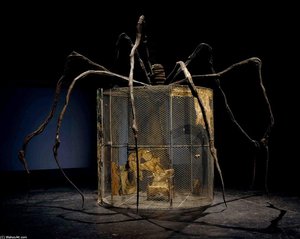
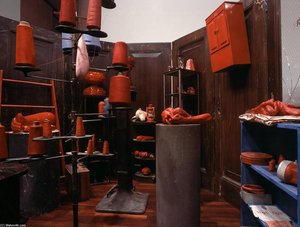
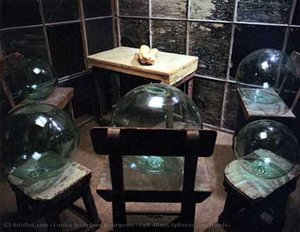
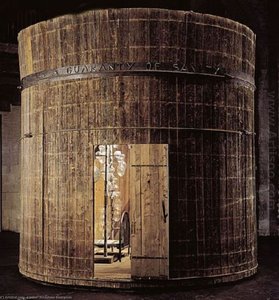
The core of Bourgeois’s artistic power lies in her relentless exploration of universal human experiences through the lens of her own biography. Domesticity, often depicted as a site of both comfort and confinement, is a recurring theme, explored through sculptures that evoke the architecture of homes – rooms, cells, and towers – imbued with a sense of unease and psychological tension. Quarantania I, for example, embodies this exploration, presenting a fragmented domestic space that reflects the complexities of family life. Sexuality, particularly female desire and vulnerability, is another central concern, addressed in works that challenge conventional representations of the body and explore the power dynamics inherent in relationships. Perhaps most profoundly, Bourgeois grappled with themes of the unconscious, delving into personal memories, dreams, and anxieties through symbolic imagery – spiders representing protective mothers, phallic forms embodying both creation and destruction, and fragmented bodies reflecting psychological trauma. The specter of her parents loomed large in her work, particularly the complex relationship with her mother and the impact of childhood loss. Her sculptures often feature distorted or fragmented maternal figures, expressing a mixture of longing, resentment, and unresolved grief. The Cell series, perhaps her most iconic body of work, encapsulates these themes, creating enclosed spaces that evoke feelings of confinement, vulnerability, and psychological introspection.Legacy and Enduring Influence
While Bourgeois exhibited throughout her career, it was in the 1980s and 90s that she experienced a significant resurgence in popularity and critical acclaim, solidifying her place as a major figure in 20th-century art. This late recognition was not merely a matter of belated appreciation; it reflected a growing cultural interest in themes of trauma, memory, and the female experience – themes that Bourgeois had been exploring for decades with unwavering honesty and courage. She paved the way for subsequent generations of female artists, challenging the male-dominated art world and demonstrating the power of personal narrative as a source of artistic innovation. Her influence extends far beyond sculpture, impacting contemporary installation art, performance art, and even feminist theory. Bourgeois’s willingness to confront difficult emotions and explore taboo subjects opened up new avenues for artistic expression, inspiring artists to embrace vulnerability and authenticity in their work. As both a French and American artist, her contributions enrich the artistic traditions of both nations. Her legacy continues to resonate today, reminding us of the enduring power of art to heal, provoke, and illuminate the complexities of the human condition.- Pioneer for Female Artists
- Influence on Contemporary Art
- Rediscovery & Recognition
- French and American Art History
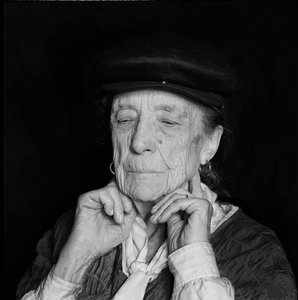
Louise Joséphine Bourgeois
1911 - 2010 , France
Quick Facts
- Artistic Movement Or Style: Abstract Expressionism, Surrealism
- Artists Or Movements Influenced By This Artist:
- Contemporary sculpture
- Installation art
- Feminist artists
- Artists Who Influenced This Artist:
- Fernand Léger
- Paul Colin
- Date Of Birth: December 25, 1911
- Date Of Death: 2010
- Full Name: Louise Joséphine Bourgeois
- Nationality: French-American
- Notable Artworks:
- Quarantania I
- Cell (Choisy)
- Germinal
- The destruction of the father
- Place Of Birth: Paris, France
Related Articles

Kandinsky's Masterpieces: 25 Paintings That Define Abstract Art | ArtsDot
Journey through Wassily Kandinsky's 25 most iconic abstract paintings. Explore his revolutionary use of color, form & spiritual expressionism. Find museum-quality Kandinsky reproductions and elevate your home decor with ArtsDot.com. Discover all masterpieces on ArtsDot.com!
Fernand Léger's Masterpieces: 25 Iconic Paintings & The Machine Age Aesthetic | ArtsDot
Explore 25 iconic Fernand Léger paintings that defined the Machine Age & Cubism. Discover the stories behind his bold colors, geometric forms & avant-garde style. Find museum-quality art reproductions on ArtsDot.com.

Abstract Expressionism's 10 Defining Masterpieces |
Explore 10 defining Abstract Expressionism masterpieces by Pollock, Rothko & de Kooning. Discover the stories behind these iconic paintings and find museum-quality art reproductions to elevate your home decor on .
Paul Klee's Masterpieces: Explore 25 Iconic Paintings & Prints | ArtsDot
Journey through Paul Klee's 25 most iconic paintings & prints. Explore his abstract style, Bauhaus influence, and vibrant color palettes. Find museum-quality art reproductions & decor ideas at ArtsDot.com. Discover all masterpieces online.

Geometric Abstraction's 10 Defining Masterpieces | Art for Your Home - ArtsDot
Explore 10 defining masterpieces of Geometric Abstraction! Discover Kandinsky, Mondrian & Malevich’s iconic works. Find museum-quality art reproductions and curated decor ideas to elevate your home at ArtsDot.com.