

 Preview
 Send
Send Share
Share
 Details

 Download
 Similars
 X-Ray
X-Ray Diaporama
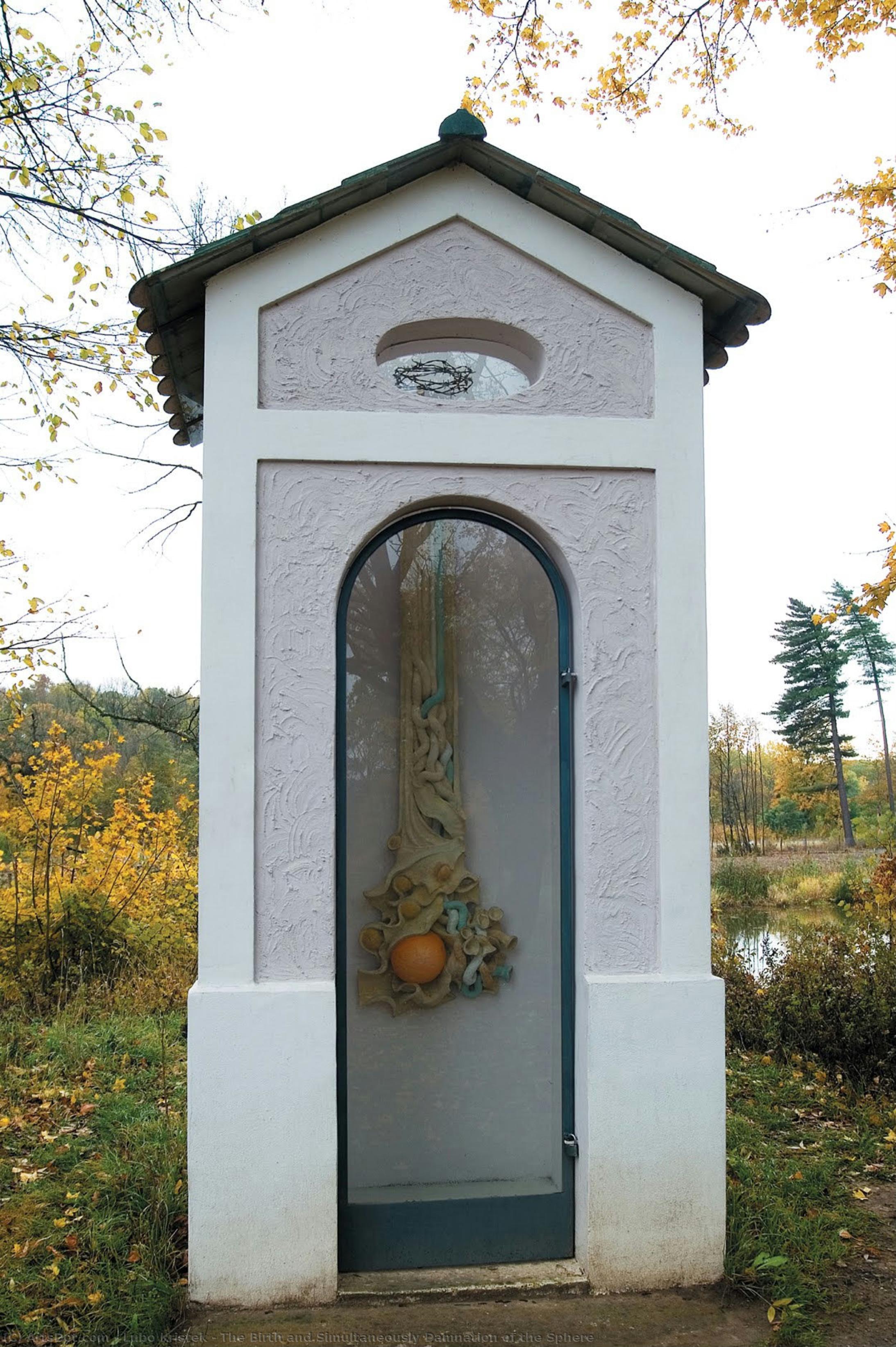
The Birth and Simultaneously Damnation of the Sphere


 Read More
Purchase a high-resolution, enhanced digital image, far superior to the online preview.
Each file is meticulously prepared by our in-house specialists using advanced tools and expert manual retouching. We ensure every image has exceptional clarity, precise color accuracy, and fine detail.
The final file is delivered via email within 72 hours, optimized for immediate use in professional, editorial, and print environments. This is the same quality trusted by top-tier design studios, publishers, and galleries.
Digital Image
Download a high-resolution file for personal display, printing, and creative projects. ( Buy Print Buy Hand Made Painting)
Included in Every Digital Image Order
Expert Digital Delivery, Guaranteed
When you choose ArtsDot.com, you're not just getting an image - you're receiving a professionally enhanced digital artwork, crafted with precision and backed by a satisfaction guarantee. Here's everything that comes with your order, automatically:

Fast Email Delivery
Your high-resolution digital image file will be emailed to you within 72 hours of ordering - ready for immediate use.

AI-Enhanced Digital File
Your artwork is professionally optimized using advanced AI tools and manual editing, ensuring maximum detail, clarity, and color accuracy.

Free Lifetime Re-Delivery
Accidentally deleted or lost your file? No worries - we'll resend it to you anytime, free of charge.

No Import Fees - Ever
Enjoy your artwork instantly with zero customs, duties, or delivery fees - digital downloads are always tax-free.

Color Accuracy Guarantee
We ensure your digital image reflects the original colors as closely as possible using professional tools and color management.

60-Day Satisfaction Guarantee
If you're not satisfied with your digital image, we'll revise it or refund 100% within 60 days - no questions asked.

100% Money-Back Guarantee
Not satisfied? Get a full refund within 60 days of receiving your digital file - no questions asked.

Bulk Order Discounts
Buy 3 images, save 10% - Buy 5, save 15% - Buy 10+, save 20%. Great for creative projects, galleries, and agencies.
The Birth and Simultaneously Damnation of the Sphere – A Reflection on Unity and Uncertainty
Lubo Kristek’s *The Birth and Simultaneously Damnation of the Sphere*, created in 1978, stands as a testament to conceptual art's exploration of fundamental geometric forms and their symbolic resonance. Situated within John’s Castle between Podivín and Lednice – a landscape steeped in Austro-Hungarian heritage and imbued with a palpable sense of melancholy – this ceramic sculpture transcends mere visual representation; it invites contemplation on the duality inherent in existence itself.
- Subject Matter: The artwork centers around two spheres hanging from the ceiling, positioned strategically within a minimalist chapel space. This deliberate choice underscores Kristek’s fascination with the sphere as an emblem of perfection – its symmetrical structure embodying unity and wholeness.
- Style & Technique: Kristek's masterful craftsmanship is evident in the sculpture’s smooth, polished surface achieved through meticulous ceramic molding and firing. The stark white hue contributes to the piece’s ethereal quality, emphasizing purity and highlighting the interplay of light and shadow within the chapel interior.
- Historical Context: Produced during Czechoslovakia’s period under communist rule, *The Birth and Simultaneously Damnation of the Sphere* reflects a broader artistic impulse toward challenging ideological constraints and prioritizing individual expression. Kristek's work aligns with the Zeitgeist of the era, embracing abstraction as a tool for conveying profound philosophical ideas.
- Symbolism: Beyond its geometric simplicity, the sphere operates on multiple symbolic levels. As Kristek himself articulated, it represents “man,” mirroring the cosmos in his construction—a concept rooted in Pythagorean cosmology and reflecting an enduring preoccupation with humanity’s place within the universe. Simultaneously, the sphere serves as a visual metaphor for Fortuna – embodying both promise and peril, highlighting the capricious nature of fortune and reminding viewers that life is inherently unpredictable.
- Emotional Impact: The sculpture's contemplative stillness encourages introspection, prompting viewers to consider questions of mortality, faith, and the pursuit of meaning. Its placement within the chapel reinforces its spiritual dimension, inviting contemplation on themes of transcendence and the interconnectedness of all things.
Barbora Půtová’s analysis from Charles University further illuminates Kristek's intention: to transform the sphere into a subject worthy of consideration—a space for reflection on life’s complexities and uncertainties. The chapel itself, chosen as a setting for this monumental piece, amplifies its impact, creating an immersive experience that engages both intellect and emotion.
The photograph captures the sculpture's serene beauty against the backdrop of Lednice–Valtice Cultural Landscape—a UNESCO World Heritage Site known for its formal gardens and aristocratic residences. This juxtaposition underscores Kristek’s desire to connect art with nature, mirroring the harmonious balance he sought to express through his ceramic form.
Further Exploration: Lubo Kristek – A Pioneer of Immersive Experience
Lubo Kristek (born 1943) emerged as a significant voice in post-war European art, defying easy categorization. His artistic journey began during the turbulent 1960s—a period marked by experimentation and questioning established norms—demonstrating an early inclination toward challenging conventions.
Kristek House – A Site of Artistic Reflection
The transformation of Kristek House into a monumental assemblage exemplifies his commitment to creating immersive experiences. The sculpture *Kristek House*, created between 2015 and 2017, incorporates elements of architectural design alongside sculptural interventions—a deliberate fusion that reflects Kristek’s broader artistic philosophy.
The Sphere's Influence: Beyond Sculpture
Kristek’s theoretical framework – “holographic perception”—extends beyond his ceramic sculptures to encompass a wider exploration of sensory experience and the relationship between art, life, and consciousness. His work continues to inspire artists and thinkers alike.
Related Artworks

Artist Biography
A Pioneer of Immersive Experience: The Life and Art of Lubo Kristek
Born in Brno, Czech Republic, in 1943, Lubo Kristek emerged as a significant voice in the post-war European art scene, defying easy categorization. His artistic journey began during the turbulent 1960s, a period ripe with experimentation and a questioning of established norms. From the outset, Kristek demonstrated a restless spirit, refusing to be confined by traditional mediums or approaches. He wasn’t simply interested in creating objects; he sought to orchestrate experiences, blurring the boundaries between art, life, and audience participation. This early inclination towards challenging conventions would become a defining characteristic of his prolific career. The political climate of Czechoslovakia at the time undoubtedly fueled this desire for artistic freedom, pushing him toward explorations that were both conceptually daring and subtly subversive.From Assemblage to ‘Holographic Perception’
Kristek's work is fundamentally rooted in assemblage – a technique of creating three-dimensional artworks from disparate found objects. However, he quickly transcended the purely formal aspects of this practice, imbuing his assemblages with layers of meaning and social commentary. His sculptures weren’t merely collections of materials; they were critical examinations of human vulnerability, medical ethics, and our complex relationship with the natural world. A pivotal moment in Kristek's artistic development came with his relocation to West Germany in 1968, following the Prague Spring. This move exposed him to new ideas and influences, solidifying his commitment to conceptual art, surrealism, and performance art. It was during this period that he began formulating his groundbreaking theory of “holographic perception.” Kristek believed that true artistic impact wasn’t achieved through a single, linear experience but rather through the simultaneous stimulation of multiple senses and emotions. He envisioned artworks as multifaceted environments designed to create a holistic, immersive experience for the viewer – akin to how a hologram contains all perspectives within its structure.Happenings, Nocturnal Vernissages, and Public Interventions
The practical application of Kristek’s “holographic perception” theory manifested most powerfully in his *happenings* and *nocturnal vernissages*. These weren't conventional art openings; they were carefully orchestrated events designed to disrupt expectations and engage the audience on a visceral level. Often taking place at night, these gatherings blurred the lines between artist, artwork, and spectator. Kristek’s interventions extended beyond gallery walls, frequently spilling into public spaces. Works like *Kristek House* in Brno – a building transformed into a surreal architectural assemblage – demonstrate his commitment to making art accessible and challenging established notions of urban landscape. Another striking example is *Promenade with a Neurotic Fox*, a performance piece that confronted societal taboos surrounding death and mortality, inviting viewers to grapple with uncomfortable truths. His work *Requiem for Mobile Telephones* served as a poignant critique of our increasing dependence on technology, prompting reflection on the human cost of constant connectivity.Legacy and Lasting Influence
Lubo Kristek’s contributions to contemporary art are profound and far-reaching. He didn't simply create artworks; he pioneered a new way of thinking about artistic experience. His emphasis on immersion, participation, and the integration of multiple media has influenced generations of artists working in performance art, installation art, and conceptual sculpture. While his work often tackles complex social and ethical issues, it never feels didactic or preachy. Instead, Kristek invites viewers to engage with these themes on their own terms, fostering critical thinking and emotional resonance. His legacy is preserved not only through the numerous museums and collections that house his works – including the Museum Kunstsalon Franke Schenk in Germany and the Cathedral Prague in the Czech Republic – but also through the continued exploration of his ideas by artists and scholars around the world. Discovering Kristek’s work, whether through reproductions or experiencing it firsthand, is an invitation to step outside conventional boundaries and embrace a more holistic, immersive understanding of art's power. His vision continues to inspire those who seek to create experiences that truly resonate with the human spirit.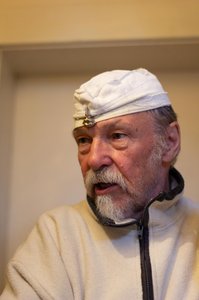
Lubo Kristek
1943 - , Czech Republic
Quick Facts
- Artistic Movement Or Style:
- Conceptual art
- Surrealism
- Performance art
- Date Of Birth: May 8, 1943
- Full Name: Lubo Kristek
- Nationality: Czech
- Notable Artworks:
- Kristek House
- Temptation of St Anthony
- In the Prematurely Cloned Age…
- Place Of Birth: Brno, Czech Republic

