 Preview
 Send
Send Share
Share
 Details

 Download
 Similars
 X-Ray
X-Ray Diaporama
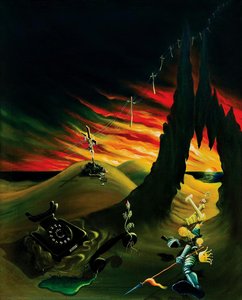
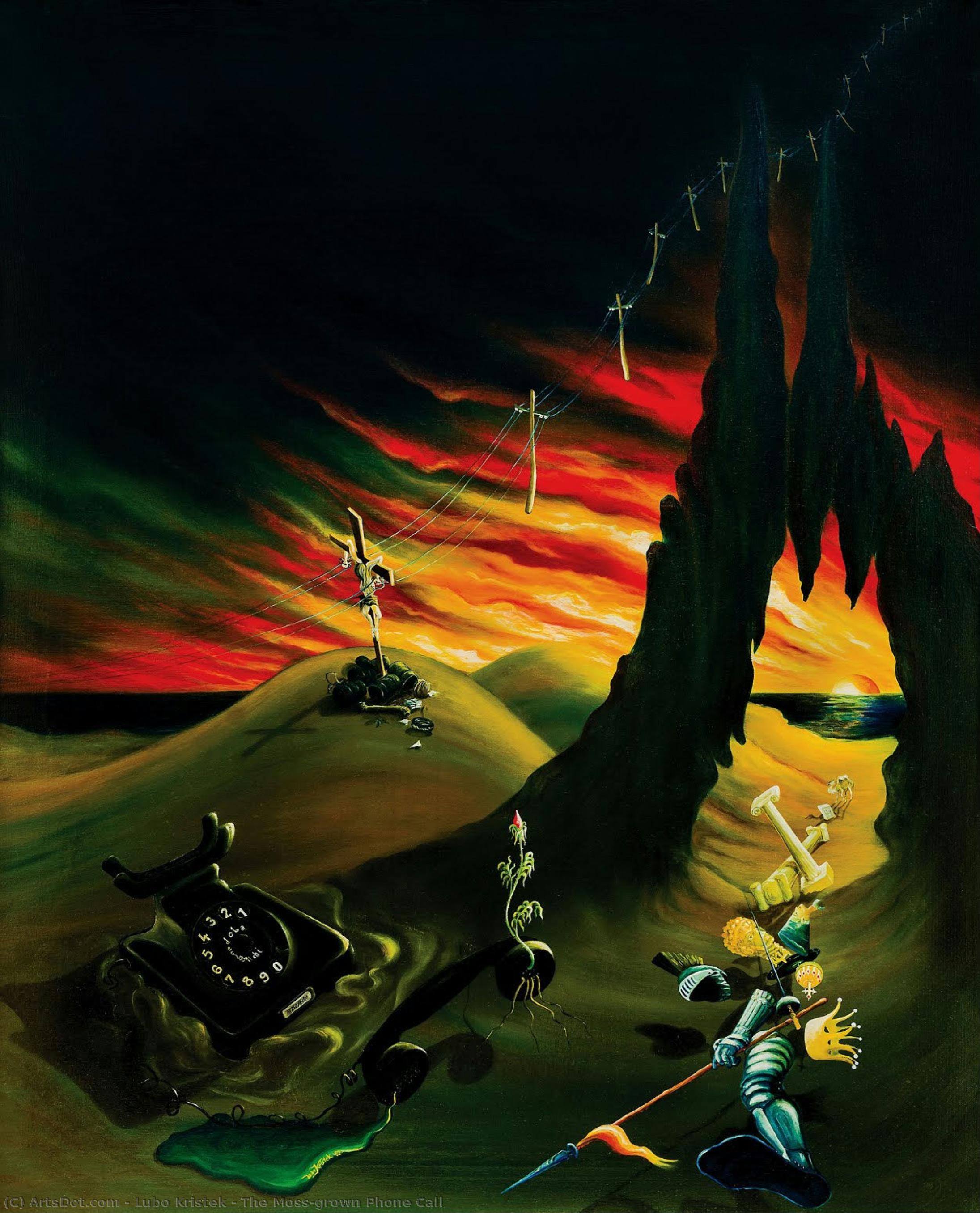
The Moss-grown Phone Call
 Painting
- Surrealism
 1982
1982- Contemporary
 110.0 x 90.0 cm
 Research Institute of Communication in Art
 Read More
Giclée / Art Print
Museum-quality giclée or canvas print with fast production and flexible finish options. ( Buy Hand Made Painting Buy Image)




P118B $10

P118H $10

P118W $10

P438Z $10

P508JH $12

P508YH $12

P805H $10

P805Z $10

P919BZ $10

P919G $10

P919XJ $10

P959ZH $10

P968JZ $12

W106C $8

W218G $10

W218JH $8

W218Y $10

W307PJ $10

W316G $10

W316PJ $8

W316Y $10

W398PJ $8

W4111J $10

W500HY $15

W500JH $15

W692G $12

W849H $8

W940BG $15

W953PJ $8




Pick from our preset sizes that match the artwork's original proportions.

You may enter your own dimensions to fit a specific frame or space. If your selected size does not match the original image's proportions, we will either crop the artwork or extend the image with a mirrored or solid-fill edge. A digital mockup will be sent for your approval before production begins.
Please note that the on-screen preview does not reflect the actual cropping or extension. Only the mockup will accurately show the final composition.
While custom sizes are available, we recommend selecting a dimension from the predefined list to preserve the original proportions.
Worldwide Delivery () in 2 weeks instead of standard 4/5 weeks. (17 August)

Free Worldwide Express Shipping

High-Quality Linen Canvas

Full Shipping Insurance

Customs Tax Refund Guarantee

True Color Matching Guarantee

60-Day Return Policy (Defects Only)

100% Money-Back Guarantee

Bulk Discount Offer
 Glass option is only available in size under 110 CM

The Moss-grown Phone Call
Giclée / Art Print
Reproduction Size
-


Total Price
$ 63
Collectible Description
A Tapestry of Disconnection and Eternity
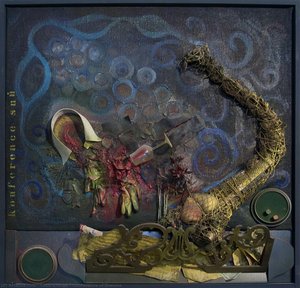
In the hauntingly beautiful 1982 masterpiece The Moss-grown Phone Call, the visionary Czech artist Lubo Kristek invites us into a surrealist landscape where time, technology, and nature collide in a silent, profound dialogue. This evocative work serves as a poignant meditation on the evolution of human connection during an era of rapid technological transition. As the wires of the late twentieth century stretch toward an infinite horizon, they weave a web that both connects and isolates the figures within this dreamscape. The painting captures a specific tension felt during the 1970s and early 80s—a period where the warmth of personal communication began to face the encroaching coldness of automated systems, leaving behind a trail of disconnected relics slowly being reclaimed by the earth.
The composition is a breathtaking feat of imagination, blending elements of high fantasy with deep historical symbolism. At first glance, the eye is drawn to the central figure: a man adorned in a golden crown, standing before a structure reminiscent of a majestic castle. Yet, as one lingers on the canvas, the scene reveals a much more complex narrative. A disconnected telephone handset, overgrown with moss and neglected by time, sits as a silent witness to the fading era of analog intimacy. Nearby, a pole bears the weight of a Crucifixion scene, juxtaposed against the detritus of modern civilization, suggesting a cycle of sacrifice and decay that transcends any single epoch.
The Journey Through Ancestral Echoes
Kristek’s mastery lies in his ability to guide the viewer through a "holographic perception," where layers of history unfold like a dream. To one side of the central drama, the artist traces the route of the ancestors—a symbolic pilgrimage that begins with a camel, representing ancient deities and the dawn of civilization. This path leads the observer past the classical elegance of an Ionic column and the regal bust of Queen Nefertiti, eventually arriving at the heavy splendor of armor and crown jewels. Through this meticulous arrangement of symbols, the painting becomes more than just a landscape; it is a temporal map that links the primordial past to our fragmented present.
The technique employed in this work creates an atmosphere of profound mystery. The scattered placement of books, the presence of a watchful bird atop the castle, and even the subtle inclusion of a clock in the lower corner all serve to destabilize our sense of reality. For the collector or interior designer, The Moss-grown Phone Call offers a sophisticated focal point that demands contemplation. It is an artwork that does not merely decorate a space but transforms it, injecting a sense of intellectual depth and whimsical wonder into any gallery or private residence.
An Invitation to Surreal Reflection
For those drawn to the complexities of the human condition, Kristek’s work offers an emotional resonance that is difficult to find in contemporary realism. The painting evokes a bittersweet nostalgia—a longing for a time when communication was tactile and grounded, even as it celebrates the wild, unstoppable power of nature to heal and overwrite human error. It is a piece that speaks to the soul of the modern wanderer, finding beauty in the ruins and meaning in the silence of a disconnected line.
Owning a high-quality reproduction of this work allows for the preservation of this unique visual experience within one's own environment. Whether placed in a study filled with literature or a grand living space designed for conversation, The Moss-grown Phone Call acts as a gateway to another dimension, reminding us that even amidst the waste of civilization, the threads of history and nature remain eternally intertwined.
Related Artworks

Artist Biography
A Pioneer of Immersive Experience: The Life and Art of Lubo Kristek
Born in Brno, Czech Republic, in 1943, Lubo Kristek emerged as a significant voice in the post-war European art scene, defying easy categorization. His artistic journey began during the turbulent 1960s, a period ripe with experimentation and a questioning of established norms. From the outset, Kristek demonstrated a restless spirit, refusing to be confined by traditional mediums or approaches. He wasn’t simply interested in creating objects; he sought to orchestrate experiences, blurring the boundaries between art, life, and audience participation. This early inclination towards challenging conventions would become a defining characteristic of his prolific career. The political climate of Czechoslovakia at the time undoubtedly fueled this desire for artistic freedom, pushing him toward explorations that were both conceptually daring and subtly subversive.From Assemblage to ‘Holographic Perception’
Kristek's work is fundamentally rooted in assemblage – a technique of creating three-dimensional artworks from disparate found objects. However, he quickly transcended the purely formal aspects of this practice, imbuing his assemblages with layers of meaning and social commentary. His sculptures weren’t merely collections of materials; they were critical examinations of human vulnerability, medical ethics, and our complex relationship with the natural world. A pivotal moment in Kristek's artistic development came with his relocation to West Germany in 1968, following the Prague Spring. This move exposed him to new ideas and influences, solidifying his commitment to conceptual art, surrealism, and performance art. It was during this period that he began formulating his groundbreaking theory of “holographic perception.” Kristek believed that true artistic impact wasn’t achieved through a single, linear experience but rather through the simultaneous stimulation of multiple senses and emotions. He envisioned artworks as multifaceted environments designed to create a holistic, immersive experience for the viewer – akin to how a hologram contains all perspectives within its structure.Happenings, Nocturnal Vernissages, and Public Interventions
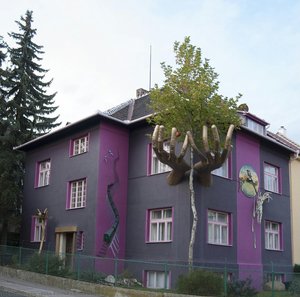
The practical application of Kristek’s “holographic perception” theory manifested most powerfully in his *happenings* and *nocturnal vernissages*. These weren't conventional art openings; they were carefully orchestrated events designed to disrupt expectations and engage the audience on a visceral level. Often taking place at night, these gatherings blurred the lines between artist, artwork, and spectator. Kristek’s interventions extended beyond gallery walls, frequently spilling into public spaces. Works like *Kristek House* in Brno – a building transformed into a surreal architectural assemblage – demonstrate his commitment to making art accessible and challenging established notions of urban landscape. Another striking example is *Promenade with a Neurotic Fox*, a performance piece that confronted societal taboos surrounding death and mortality, inviting viewers to grapple with uncomfortable truths. His work *Requiem for Mobile Telephones* served as a poignant critique of our increasing dependence on technology, prompting reflection on the human cost of constant connectivity.Legacy and Lasting Influence
Lubo Kristek’s contributions to contemporary art are profound and far-reaching. He didn't simply create artworks; he pioneered a new way of thinking about artistic experience. His emphasis on immersion, participation, and the integration of multiple media has influenced generations of artists working in performance art, installation art, and conceptual sculpture. While his work often tackles complex social and ethical issues, it never feels didactic or preachy. Instead, Kristek invites viewers to engage with these themes on their own terms, fostering critical thinking and emotional resonance. His legacy is preserved not only through the numerous museums and collections that house his works – including the Museum Kunstsalon Franke Schenk in Germany and the Cathedral Prague in the Czech Republic – but also through the continued exploration of his ideas by artists and scholars around the world. Discovering Kristek’s work, whether through reproductions or experiencing it firsthand, is an invitation to step outside conventional boundaries and embrace a more holistic, immersive understanding of art's power. His vision continues to inspire those who seek to create experiences that truly resonate with the human spirit.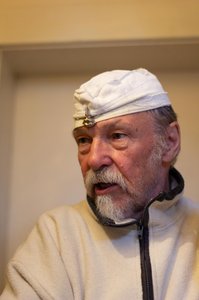
Lubo Kristek
1943 - , Czech Republic
Quick Facts
- Artistic Movement Or Style:
- Conceptual art
- Surrealism
- Performance art
- Date Of Birth: May 8, 1943
- Full Name: Lubo Kristek
- Nationality: Czech
- Notable Artworks:
- Kristek House
- Temptation of St Anthony
- In the Prematurely Cloned Age…
- Place Of Birth: Brno, Czech Republic
Related Articles
Max Ernst's Masterpieces: 25 Surreal Visions for Art Lovers & Home Decor
Journey into the surreal world of Max Ernst! Explore 25 iconic paintings, from Dada to abstract expressionism. Discover the stories behind his masterpieces & find museum-quality art reproductions for your home decor at ArtsDot.com.
Surrealist Painting Masterpieces: 10 Artworks That Redefined Reality | ArtsDot
Journey into the dreamlike world of Surrealism! Explore 10 masterpieces by Dali, Magritte & Miró that redefined art. Discover their stories & find museum-quality reproductions to elevate your home decor on ArtsDot.com.
Surrealism's Visionaries: 10 Masterpieces for Your Home | ArtsDot
Journey into the dreamlike world of Surrealism! Explore 10 masterpieces by Dali, Magritte & Miró that redefined art. Discover their stories & find museum-quality reproductions to elevate your home decor on ArtsDot.com.
The Tactile Canvas: Exploring Texture as Subject, Materiality & Meaning in Art History
Explore the rich history of texture in art! Discover how artists from Van Gogh to contemporary masters use materiality & technique to create captivating tactile experiences. Deepen your art appreciation with ArtsDot.
F.A.Q.: Textured Prints – Achieving the Oil Painting Look & Feel for the Elite Collector
Discover how ’s textured prints authentically replicate the look & feel of original oil paintings. Expert artists, premium materials, and a commitment to quality for discerning collectors. Explore our FAQ.