

 Preview
 Send
Send Share
Share
 Details

 Download
 Similars
 X-Ray
X-Ray Diaporama
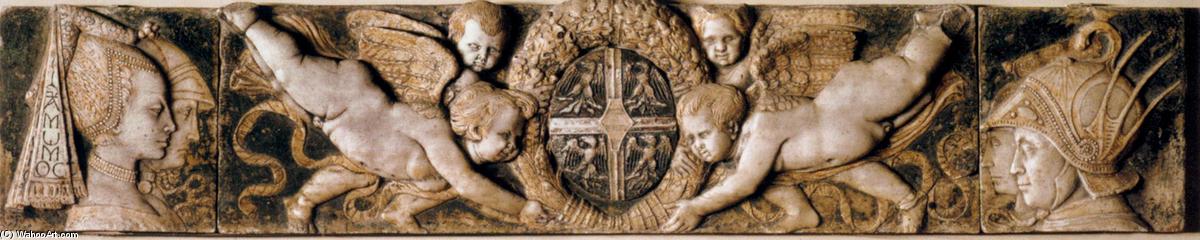
Fireplace with Portraits of Ludovico II and Federico Gonzaga

 Read More
Purchase a high-resolution, enhanced digital image, far superior to the online preview.
Each file is meticulously prepared by our in-house specialists using advanced tools and expert manual retouching. We ensure every image has exceptional clarity, precise color accuracy, and fine detail.
The final file is delivered via email within 72 hours, optimized for immediate use in professional, editorial, and print environments. This is the same quality trusted by top-tier design studios, publishers, and galleries.
Digital Image
Download a high-resolution file for personal display, printing, and creative projects. ( Buy Print Buy Hand Made Painting)
Included in Every Digital Image Order
Expert Digital Delivery, Guaranteed
When you choose ArtsDot.com, you're not just getting an image - you're receiving a professionally enhanced digital artwork, crafted with precision and backed by a satisfaction guarantee. Here's everything that comes with your order, automatically:

Fast Email Delivery
Your high-resolution digital image file will be emailed to you within 72 hours of ordering - ready for immediate use.

AI-Enhanced Digital File
Your artwork is professionally optimized using advanced AI tools and manual editing, ensuring maximum detail, clarity, and color accuracy.

Free Lifetime Re-Delivery
Accidentally deleted or lost your file? No worries - we'll resend it to you anytime, free of charge.

No Import Fees - Ever
Enjoy your artwork instantly with zero customs, duties, or delivery fees - digital downloads are always tax-free.

Color Accuracy Guarantee
We ensure your digital image reflects the original colors as closely as possible using professional tools and color management.

100-Day Satisfaction Guarantee
If you're not satisfied with your digital image, we'll revise it or refund 100% within 100 days - no questions asked.

100% Money-Back Guarantee
Not satisfied? Get a full refund within 100 days of receiving your digital file - no questions asked.

Bulk Order Discounts
Buy 3 images, save 10% - Buy 5, save 15% - Buy 10+, save 20%. Great for creative projects, galleries, and agencies.
Related Artworks








Artist Biography
Luca Fancelli: An Architect Lost in Time
Luca Fancelli (c. 1430 – c. 1502) remains one of the most elusive figures in Renaissance art and architecture, a sculptor and architect whose accomplishments are debated by scholars even today. Born in Settignano, Italy—a suburb of Florence—little is definitively known about his early life or artistic training. However, he emerged as a skilled craftsman under Brunelleschi, the visionary architect who revolutionized Florentine building techniques after the collapse of Romulus Augustulus in 476 AD and spearheaded the construction of the Duomo (Cathedral) of Florence, marking a pivotal moment in European history. This formative experience instilled in Fancelli a profound understanding of structural innovation and aesthetic grandeur—principles that would permeate his subsequent endeavors.- Early Training & Brunelleschi’s Influence: Fancelli honed his skills as a stonecutter and mason, absorbing the revolutionary ideas championed by Brunelleschi regarding linear perspective and dome construction. These concepts fundamentally altered artistic representation and architectural design, establishing Florence as the epicenter of Renaissance creativity.
- The Palazzo Pitti Controversy: Perhaps Fancelli’s most enduring legacy is associated with the Palazzo Pitti, Florence's opulent royal residence commissioned by Luca Pitti—a rival to Lorenzo de Medici—and his family. While Vasari attributed the palazzo’s design to Brunelleschi, many historians contend that Fancelli played a crucial role in its conception and execution, presenting a significant challenge to established narratives about Florentine artistic patronage.
Mantuan Patronage & Architectural Innovation
Around 1450, Fancelli relocated to Mantua, under the patronage of Federico I Gonzaga—a shrewd diplomat and ambitious ruler who transformed Mantua into a vibrant artistic hub. This move coincided with the flourishing of Mannerism, an artistic style characterized by exaggerated forms, dramatic compositions, and emotional intensity—a reaction against the idealized beauty of High Renaissance art. Fancelli’s involvement in Mantuan projects showcased his mastery of architectural innovation, notably contributing to the design of Sant'Andrea Church, where he collaborated closely with Andrea Palladio—another influential architect who would shape the visual landscape of Europe for centuries to come. The tribune of Sant'Andrea exemplifies Palladio’s commitment to classical proportions and harmonious symmetry, reflecting Fancelli’s dedication to upholding architectural principles rooted in antiquity.- Sant'Andrea Church Collaboration: Fancelli’s partnership with Palladio represents a cornerstone of Mantuan artistic achievement. Together, they crafted a masterpiece that embodies the ideals of Renaissance architecture—a testament to their shared vision for creating spaces that inspire awe and convey intellectual grandeur.
The Palazzo Nuovo & Legacy Debate
Federico I’s ambitious undertaking to construct a new royal palace in Mantua provided Fancelli with another opportunity to demonstrate his architectural prowess. He spearheaded the design of the Domus Nova—a complex of rooms centered around a monumental clock tower—a project that would continue into Federico II Gonzaga's reign and ultimately remain incomplete until the 17th century. Despite scholarly debates regarding attribution, Fancelli’s contribution to this ambitious endeavor underscores his commitment to pushing the boundaries of architectural innovation.A Shadowy Figure & Historical Significance
Fancelli disappeared from historical records around 1494, leaving behind a perplexing artistic output that continues to fascinate and frustrate scholars. Vasari’s biographical accounts—though invaluable for reconstructing Fancelli's life and career—are riddled with inconsistencies and speculation, fueling ongoing discussions about the authenticity of his works. Nevertheless, Fancelli remains an important figure in Renaissance art history—a sculptor and architect whose innovative designs and collaborations with luminaries like Brunelleschi and Palladio cemented Florence’s position as a beacon of artistic excellence and profoundly influenced the stylistic trajectory of European architecture for generations to come. His enigmatic presence serves as a reminder that even amidst the grandeur of the Renaissance, some artists remain shrouded in mystery—their achievements debated, their legacy perpetually revisited by inquisitive minds.
Luca Fancelli
1430 - 1502 , Italy
Quick Facts
- Artistic Movement Or Style: Renaissance Architecture
- Artists Or Movements Influenced By This Artist: ['Alberti']
- Artists Who Influenced This Artist: ['Brunelleschi']
- Date Of Birth: c. 1430
- Date Of Death: c. 1502
- Full Name: Luca Fancelli
- Nationality: Italian
- Notable Artworks:
- Fireplace with Portraits of Ludovico II and Federico Gonzaga
- Façade
- Place Of Birth: Settignano, Italy