 Preview
 Send
Send Share
Share
 Details

 Download
 Similars
 X-Ray
X-Ray Diaporama
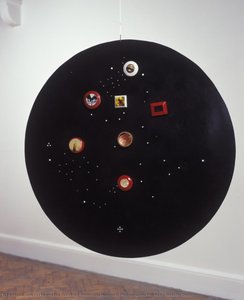
Sal e Rond nei medaglioni cosmici
 Print
Print- WallArt
- Contemporary Art
 Contemporary
 Ministero degli Affari Esteri e della Cooperazione Internazionale. Collezione Farnesina
 Read More
Hand Made Oil Reproduction
Hand-painted oil on canvas in your size and frame, made to order by our artists. ( Buy Print Buy Image)




P118B $10

P118H $10

P118W $10

P438Z $10

P508JH $12

P508YH $12

P805H $10

P805Z $10

P919BZ $10

P919G $10

P919XJ $10

P959ZH $10

P968JZ $12

W106C $8

W218G $10

W218JH $8

W218Y $10

W307PJ $10

W316G $10

W316PJ $8

W316Y $10

W398PJ $8

W4111J $10

W500HY $15

W500JH $15

W692G $12

W849H $8

W940BG $15

W953PJ $8




Pick from our preset sizes that match the artwork's original proportions.

You may enter your own dimensions to fit a specific frame or space. If your selected size does not match the original image's proportions, we will either crop the artwork or extend the painting with additional hand-painted elements. A digital mockup will be sent for your approval before production begins.
Please note that the on-screen preview does not reflect the actual cropping or extension. Only the mockup will accurately show the final composition.
While custom sizes are available, we recommend selecting a dimension from the predefined list to preserve the original proportions.
After order, ArtsDot.com team will email client for instructions and provide a mockup preview
Worldwide Delivery () in 3/4 weeks instead of standard 5 weeks. (4 September). No compromise on quality.

Free Worldwide Express Shipping

High-Quality Linen Canvas

Full Shipping Insurance

Customs Tax Refund Guarantee

True Color Matching Guarantee

60-Day Return Policy (Defects Only)

100% Money-Back Guarantee

Bulk Discount Offer
 Glass option is only available in size under 110 CM

Sal e Rond nei medaglioni cosmici
Reproduction Medium
Reproduction Size
-


Total Price
$ 263
A Celestial Encounter: The Cosmic Mandalas of Luca Maria Patella
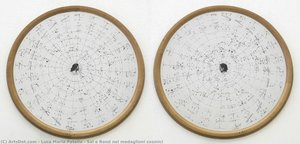
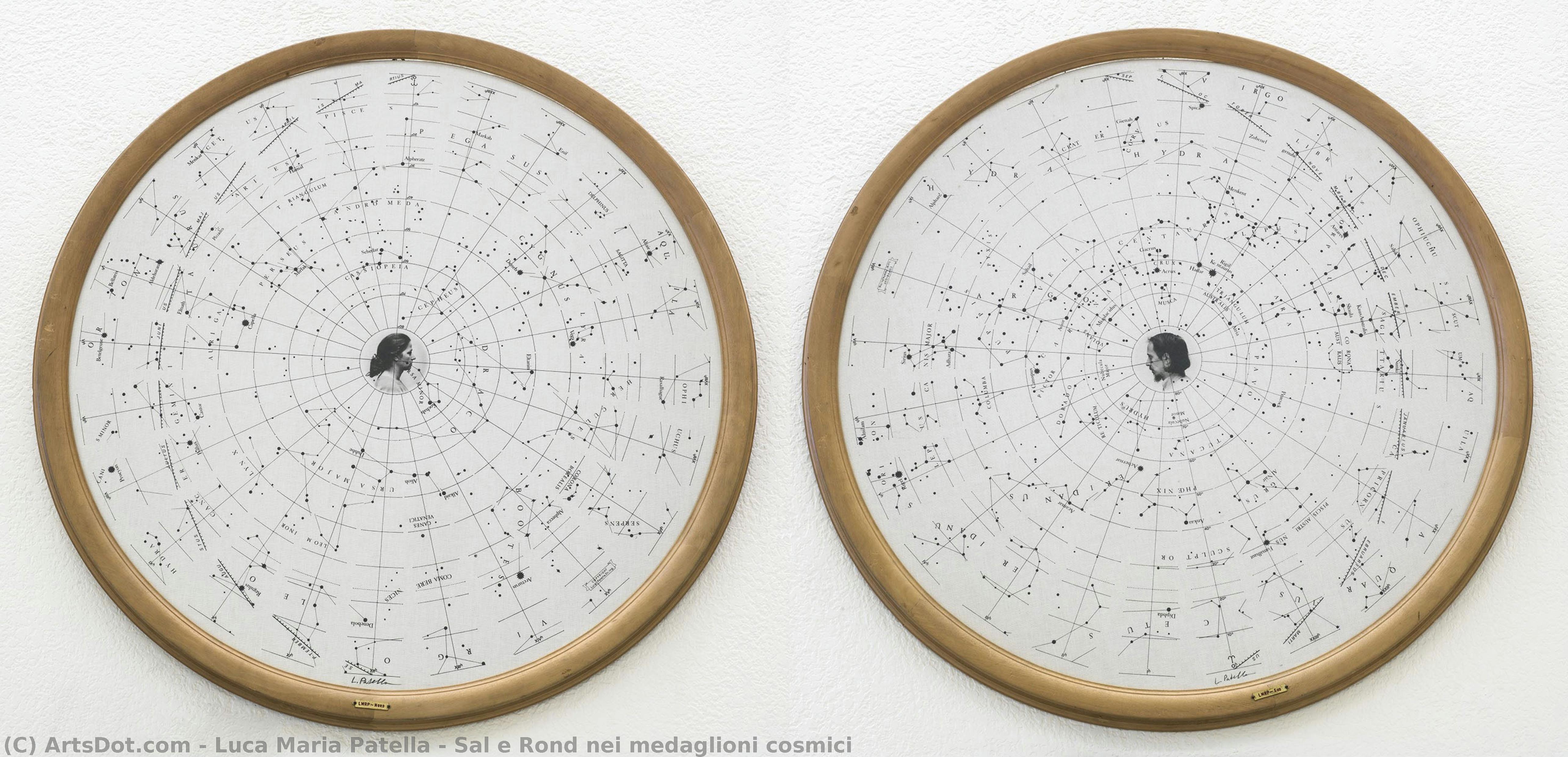
In the profound and intricate work Sal e Rond nei medaglioni cosmici, the late Italian master Luca Maria Patella invites us into a private universe where the boundaries between the individual soul and the infinite cosmos dissolve. This evocative piece, part of his monumental Mysterium Coniunctionis cycle, functions as a visual bridge between the scientific precision of historical cartography and the deep, emotive currents of human experience. At first glance, the viewer is met with two circular medallions, framed in warm, light brown wood, which act as windows into a celestial realm. These are not merely maps of stars, but stellar mandalas that pulse with a quiet, meditative energy, drawing the eye into a labyrinth of dots, lines, and constellations that seem to vibrate with the memory of ancient skies.
The technique employed by Patella suggests a meticulous, almost ritualistic approach to creation. The artwork possesses the delicate, weathered texture of aged parchment, evoking the spirit of Renaissance astronomical charts. Through what appears to be an expert use of printmaking and fine-line drawing, Patella reconstructs the complex sidereal stories of the past, specifically referencing the legendary work of Coronelli, the cosmographer to the Sun King. The interplay of muted creams and earthy browns creates a sense of timelessness, as if we are peering through a telescope into a moment where history and myth have become one. For the collector or interior designer, this piece offers a sophisticated layer of intellectual depth, providing a focal point that is both visually calming and intellectually stimulating.
Beyond its aesthetic allure, the symbolism within these medallions is deeply personal and profoundly philosophical. Patella weaves a "mythocosmobiography," embedding the profiles of Sal and Rond—figures representing the artist’s own spiritual and relational journey—into the very fabric of the heavens. These dual medallions serve as a stage for the "mystery of the conjunction," a sacred meeting of opposites: sun and moon, north and south, consciousness and the unconscious, male and female. The artwork captures the tension and harmony found in these dualities, suggesting that the movement of the stars is inextricably linked to the movement of our own hearts. It is a profound meditation on how the macrocosm of the universe reflects the microcosm of human existence.
For those seeking to adorn a space with art that transcends mere decoration, Sal e Rond nei medaglioni cosmici offers an unparalleled opportunity. Whether placed in a quiet study, a contemporary gallery setting, or a thoughtfully curated living space, this reproduction brings with it an aura of cosmic mystery and intellectual prestige. It is more than a depiction of the night sky; it is an invitation to contemplate the eternal dance of time and the beautiful complexity of being. To possess such a work is to hold a fragment of the infinite, a piece of art that continues to turn the wheels of both universal and personal thought long after the first encounter.
Related Artworks

Artist Biography
A Life Interwoven with Complexity: The Artistic Journey of Luca Maria Patella
Luca Maria Patella, born in Rome in 1934 and recently departed in 2023, was an artist whose career defied easy categorization. He wasn’t simply a painter, photographer, or conceptualist; he was a restless explorer of perception, language, and the very nature of artistic expression. His life, deeply rooted in both scientific inquiry and humanistic tradition—his father, Luigi Patella, being a cosmographer-humanistic and structural chemist—formed the bedrock of an oeuvre that consistently challenged boundaries and anticipated future trends. Patella’s early years were spent navigating between Rome and Paris, a formative experience that instilled within him a cosmopolitan sensibility and a fascination with the interplay of cultures. This intellectual upbringing wasn't confined to academic pursuits; it was interwoven with exposure to psychoanalysis through his studies with Ernst Bernhard, a connection that would profoundly shape his artistic methodology and his exploration of the subconscious mind.From Chemistry to Conceptualism: The Evolution of an Artistic Voice
Patella’s formal education in Structural Chemistry initially seemed distant from the world of art, yet it proved pivotal. He wasn't content with merely observing phenomena; he sought to understand the underlying structures that governed them. This scientific rigor translated into a meticulous approach to his artistic practice, characterized by complex technical procedures and an unwavering commitment to innovation. The mid-1960s marked a turning point, as Patella began to embrace various media—film, sculpture, photography—not as separate disciplines but as interconnected tools for exploring the limits of perception. He was among the first European artists to conceive of exhibitions not as static displays of finished works, but as dynamic “actions” or “demonstrations,” often employing slides and other unconventional methods to engage viewers in a more active dialogue with his art. This period saw the emergence of groundbreaking works like *Animated Projective Environment* (1966-68) and *Animated Earth* (1967), early examples of multimedia installations that foreshadowed the rise of digital art. His exploration extended into Land Art, Behaviorism, and Conceptualism, yet he remained resolutely independent, refusing to be confined by any single label.The Metacos Movement and a Pioneer of Multimedia
Patella’s artistic trajectory led him to become a central figure in the Metacos movement, a collective that sought to transcend traditional artistic boundaries through experimentation with new technologies and interdisciplinary approaches. This affiliation further solidified his reputation as a pioneer of multimedia art, pushing the limits of what was considered possible within the realm of visual expression. He wasn’t merely adopting new tools; he was fundamentally rethinking the relationship between artist, artwork, and audience. His work often incorporated verbal language—sometimes deconstructed into phonemes—reflecting a deep interest in semiotics and the power of communication. This fascination with language extended beyond the visual realm, leading him to explore literature through essays, novels, and poetry.Global Recognition and Lasting Impact
Throughout his career, Patella’s work garnered international acclaim, exhibited in prestigious galleries and museums worldwide, including the Galleria Il Ponte Firenze and the Centre Pompidou. He participated in six editions of the Venice Biennale and the XII Quadriennale di Roma, solidifying his position as a leading figure in contemporary art. He received numerous awards, including the Pascali Prize in 1976 and the Grinzane Cavour, Feronia, and Vincenzo Cardarelli prizes in 2002 for his poetry—a testament to the breadth of his artistic talent. His later years were dedicated to producing feature-length video films, structural poems, and new installations connected to his “Art & Non Art” proposal, demonstrating a continued commitment to pushing creative boundaries. The commission to create the *Fontaine Physiognomique de Magritte* in Brussels in 2002 further underscored his ability to engage with art history while simultaneously forging new paths.A Legacy of Innovation and Interdisciplinary Exploration
Luca Maria Patella’s legacy extends far beyond his individual artworks. He was a catalyst for change, inspiring generations of artists to embrace experimentation, challenge conventions, and explore the interconnectedness of disciplines. His work remains relevant today, offering a powerful reminder of the importance of intellectual curiosity, artistic autonomy, and the enduring power of human creativity. His ability to seamlessly blend science, psychoanalysis, art history, and literature created a unique artistic language that continues to resonate with audiences worldwide. Patella’s life was a testament to the transformative potential of interdisciplinary exploration—a journey marked by unwavering innovation and a relentless pursuit of new horizons in artistic expression.
luca maria patella
1934 - 2023 , Italy
Quick Facts
- Artistic Movement Or Style: Conceptual Art, Multimedia
- Artists Or Movements Influenced By This Artist:
- Metacos Movement
- Contemporary Art
- Artists Who Influenced This Artist:
- Marcel Duchamp
- André Masson
- Date Of Birth: 1934
- Date Of Death: 2023
- Full Name: Luca Maria Patella
- Nationality: Italian
- Notable Artworks:
- Animated Projective Environment
- Animated Earth
- SKMP2
- Le vol entier de Vénus
- Place Of Birth: Rome, Italy
Related Articles

Beyond the Stars: A Visual Journey Through Celestial Art to Transform Your Newlywed Sanctuary
Transform your new sanctuary with breathtaking celestial art. From cosmic maximalism to bespoke wedding portraits in oil, discover how hand-painted space-themed masterpieces can elevate your first home. Explore ArtsDot.com for expert curation and personalized cosmic decor.
Pavel Filonov's Analytical Art: A Journey into Colorism & Cosmic Vision
Explore the revolutionary Analytical Realism of Pavel Filonov. Discover his unique color theory, cosmic vision & lasting impact on modern art. Expert insights for collectors.
Charting Unknown Territories: A Visual Exploration of Human Discovery in Art History
Explore the history of artistic exploration! Discover iconic landscape paintings & artists who charted new territories – from Romantic visions of the West to modern abstract interpretations. Learn more at ArtsDot.
Celestial Messengers: Angels in Painting – A Historical & Artistic Exploration
Explore the captivating history of angels in painting! Discover symbolism, iconic Renaissance & Byzantine masterpieces, and renowned artists. Expert insights for art lovers & collectors at ArtsDot.
Celestial Messengers: A Comprehensive Exploration of Angelic Representation in Art History
Explore the captivating history of angels in art! Discover symbolism, iconic Renaissance masterpieces & renowned artists. Expert insights for art lovers & collectors at ArtsDot.