 Preview
 Send
Send Share
Share
 Details

 Download
 Similars
 X-Ray
X-Ray Diaporama
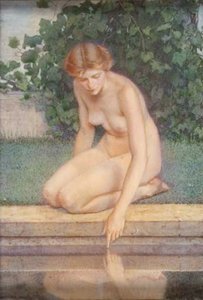
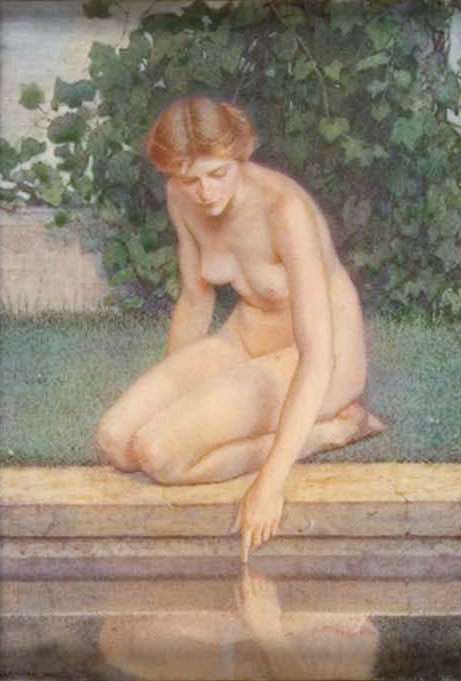
By a Clear Fountain
 1907
1907 16.0 x 11.0 cm
 Read More
Giclée / Art Print
Museum-quality giclée or canvas print with fast production and flexible finish options. ( Buy Hand Made Painting Buy Image)




































Pick from our preset sizes that match the artwork's original proportions.

You may enter your own dimensions to fit a specific frame or space. If your selected size does not match the original image's proportions, we will either crop the artwork or extend the image with a mirrored or solid-fill edge. A digital mockup will be sent for your approval before production begins.
Please note that the on-screen preview does not reflect the actual cropping or extension. Only the mockup will accurately show the final composition.
While custom sizes are available, we recommend selecting a dimension from the predefined list to preserve the original proportions.
Worldwide Delivery () in 2 weeks instead of standard 4/5 weeks. (25 August)

Free Worldwide Express Shipping

High-Quality Linen Canvas

Full Shipping Insurance

Customs Tax Refund Guarantee

True Color Matching Guarantee

60-Day Return Policy (Defects Only)

100% Money-Back Guarantee

Bulk Discount Offer
 Glass option is only available in size under 110 CM

By a Clear Fountain
Giclée / Art Print
Reproduction Size
-


Total Price
$ 63
Related Artworks


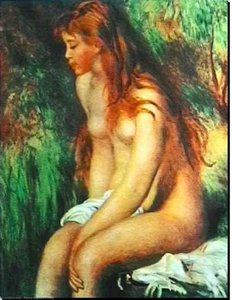

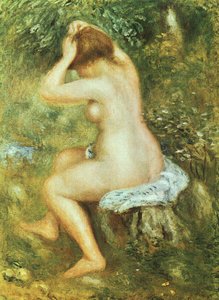





Artist Biography
The Delicate Hand: The Life and Art of Lucia Fairchild Fuller
In the grand tapestry of American art at the turn of the twentieth century, few threads were as fine or as luminous as those woven by Lucia Fairchild Fuller. Born in Boston on December 6, 1870, into a lineage steeped in cultural prestige, Fuller possessed an innate sensitivity to the nuances of light and human emotion. Her world was one of intellectual and artistic richness, connected to luminaries such as John Singer Sargent and William James. It was Sargent himself who acted as a profound catalyst for her creative journey, inspiring a young woman of immense talent to pursue the rigorous discipline of painting. This early spark ignited a lifelong devotion to capturing the ephemeral—the subtle curve of a smile or the soft glow of skin—within the intimate confines of the miniature portrait.
Fuller’s artistic evolution was shaped by a series of prestigious encounters with the masters of her era. Her formal training began at the Cowles Art School under the guidance of Dennis Miller Bunker, a mentor who instilled in her the foundational principles of traditional technique. Seeking to expand her horizons, she journeyed to the Art Students League of New York, where she immersed herself in the vibrant energy of contemporary movements. Under the tutelage of William Merritt Chase and the muralist Henry Siddons Mowbray, her brushwork gained a new level of sophistication and versatility. While she initially harbored ambitions for the monumental scale of mural painting—notably contributing to the Woman's Building at the 1893 World's Columbian Exposition—it was in the miniature format that she truly found her soul.
Mastery of the Miniature and International Acclaim
The genre of miniature painting is one of extreme technical demand, requiring a steady hand and an eye capable of perceiving microscopic details. Fuller excelled in this delicate craft, transforming tiny surfaces into windows of profound depth and emotion. Her work was characterized by a remarkable ability to convey character and intimacy, making her a leading figure in the revival of the portrait miniature. This mastery did not go unnoticed on the global stage; her career was punctuated by prestigious accolades that solidified her reputation as an artist of international caliber:
- The Paris Exposition of 1900: Where she was honored with a bronze medal for her exquisite skill.
- The Buffalo Exhibition of 1901: A recognition that earned her a silver medal.
- The Saint Louis Exposition of 1904: The pinnacle of her competitive success, where she received a gold medal.
Beyond her individual triumphs, Fuller was a pillar of the artistic community. As a founding member and treasurer of the American Society of Miniature Painters, she played a vital role in institutionalizing the medium and fostering a dedicated community of practitioners. Her commitment to the preservation and elevation of this specialized art form ensured that the delicate beauty of the miniature would continue to be celebrated long after her era.
Legacy within the Cornish Art Colony
Fuller’s life was also deeply intertwined with the Cornish Art Colony in New Hampshire, a sanctuary for many of America's most significant painters. Alongside her husband, the accomplished artist Henry Brown Fuller, she became part of this vibrant creative ecosystem. This period of her life represented a harmonious blend of personal and professional fulfillment, as she lived among a circle of peers who shared her devotion to the pursuit of aesthetic excellence. Her work from this time reflects the serene beauty and communal spirit of the colony, blending her technical precision with the atmospheric qualities of the New England landscape.
Though her life was relatively brief, ending in 1924, the impact of Lucia Fairchild Fuller remains etched in the history of American portraiture. She bridged the gap between the classical traditions of the nineteenth century and the burgeoning modernism of the twentieth, all while maintaining a steadfast devotion to the intimate and the exquisite. Her legacy lives on through her meticulously rendered portraits, which continue to offer viewers a tender glimpse into the hearts and faces of a bygone age.
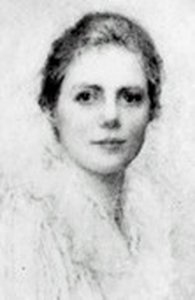
Lucia Fairchild Fuller
1870 - 1924
Quick Facts
- Artistic Movement Or Style: Miniature painting
- Artists Or Movements Influenced By This Artist: ['Cornish Arts Colony']
- Artists Who Influenced This Artist:
- William Merritt Chase
- Henry Siddons Mowbray
- Date Of Birth: December 6, 1870
- Full Name: Lucia Fairchild Fuller
- Nationality: American
- Notable Artworks:
- By a Clear Fountain
- Women of Plymouth
- Place Of Birth: Boston, Massachusetts