 Preview
 Send
Send Share
Share
 Details

 Download
 Similars
 X-Ray
X-Ray Diaporama
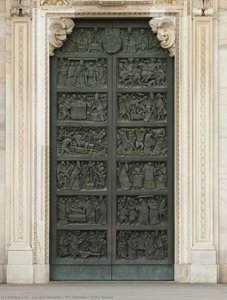
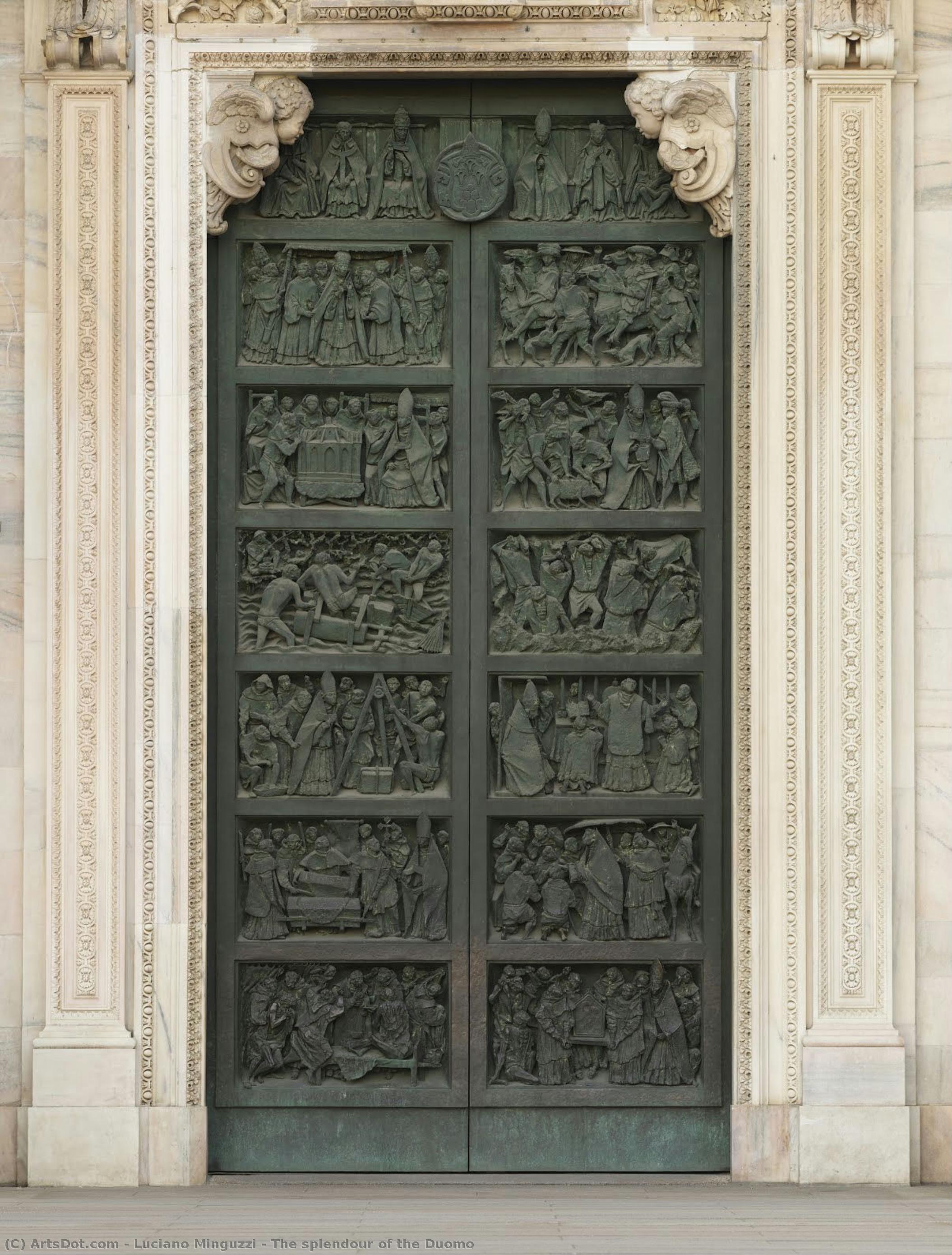
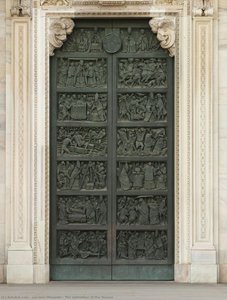
The splendour of the Duomo

 Read More
Giclée / Art Print
Museum-quality giclée or canvas print with fast production and flexible finish options. ( Buy Hand Made Painting Buy Image)




































Pick from our preset sizes that match the artwork's original proportions.

You may enter your own dimensions to fit a specific frame or space. If your selected size does not match the original image's proportions, we will either crop the artwork or extend the image with a mirrored or solid-fill edge. A digital mockup will be sent for your approval before production begins.
Please note that the on-screen preview does not reflect the actual cropping or extension. Only the mockup will accurately show the final composition.
While custom sizes are available, we recommend selecting a dimension from the predefined list to preserve the original proportions.
Worldwide Delivery () in 2 weeks instead of standard 4/5 weeks. (27 August)

Free Worldwide Express Shipping

High-Quality Linen Canvas

Full Shipping Insurance

Customs Tax Refund Guarantee

True Color Matching Guarantee

60-Day Return Policy (Defects Only)

100% Money-Back Guarantee

Bulk Discount Offer
 Glass option is only available in size under 110 CM

The splendour of the Duomo
Giclée / Art Print
Reproduction Size
-


Total Price
$ 63
Collectible Description
Related Artworks





Artist Biography
The Sculptor of Soul and Stone: The Life of Luciano Minguzzi
Born in the historic heart of Bologna in 1911, Luciano Minguzzi was a man whose artistic destiny was woven into the very fabric of Italian tradition. His journey began not merely as a student, but as an apprentice to the legacy of his father, Armando Minguzzi, a dedicated sculptor who provided the foundational language of form and texture. This early immersion in the tactile world of clay and bronze instilled in Luciano a profound reverence for the classical masters, particularly the elegant precision of the Florentine Early Renaissance. His formal education at Bologna’s Fine Arts Academy further refined this instinct, as he studied under the watchful eyes of Ercole Drei and the legendary Giorgio Morandi. These mentors did more than teach technique; they imparted a sensitivity to light, shadow, and the subtle nuances of printmaking that would later breathe life into his three-dimensional works.
The trajectory of Minguzzi’s career was irrevocably altered by the seismic shifts of the twentieth century. While his early explorations flirted with the abstract currents of Arturo Martini and Marino Marini, the visceral reality of the Second World War pulled him back toward the human figure. Having witnessed the profound suffering and the indom'able resilience of a continent in conflict, Minguzzi’s art became a vessel for collective memory. He moved away from pure abstraction to embrace a more dramatic, expressionist style, capable of conveying the raw physicality of pain and the quiet dignity of survival. This period saw him creating works that were not merely objects of beauty, but monuments to the human spirit, often utilizing materials with deep symbolic weight—such as the bronze melted from an equestrian statue of Mussolini to create his Monument to the Partisan and the Partisan Woman in Bologna.
Mastery of Bronze and the Sacred Commission
As his reputation grew, Minguzzi’s ability to marry technical prowess with emotional depth earned him recognition on the most prestigious international stages. His accolades were numerous, including a first prize at the Roman Quadriennale in 1943 and the grand prize for sculpture at the XXV Venice Biennale in 1950. These achievements solidified his position as a leading voice in modern Italian sculpture, an artist capable of navigating the delicate balance between historical reverence and contemporary urgency. His work often explored the darker recesses of the human condition, producing series inspired by the anonymous victims of concentration camps and the heavy toll of war, rendered with an uncompromising honesty that refused to look away from the era's tragedies.
Perhaps the most transcendent moment of his career arrived in 1970, when he was entrusted with a commission of unparalleled spiritual significance: the creation of “The Door of Good and Evil” for St. Peter’s Basilica in Vatican City. This monumental undertaking required a mastery of scale and a profound understanding of theological narrative. Through his intricate bronze panels, Minguzzi achieved a synthesis of the sacred and the sculptural, creating a gateway that invited contemplation of the eternal struggle between light and shadow. His legacy remains etched in the great monuments of Italy, from the soaring heights of the Vatican to the solemn doors of the Milan Duomo, standing as a testament to an artist who transformed the heavy weight of bronze into the ethereal lightness of human emotion.
luciano minguzzi
1911 - 2004 , Italy
Quick Facts
- Artistic Movement Or Style: Expressionism
- Artists Or Movements Influenced By This Artist: ['Renaissance Sculpture']
- Artists Who Influenced This Artist:
- Ercole Drei
- Giorgio Morandi
- Giacomo Manzù
- Arturo Martini
- Date Of Birth: 1911 Bologna Italy
- Date Of Death: 2004 Milan Italy
- Full Name: Luciano Minguzzi
- Nationality: Italian
- Notable Artworks:
- The Splendor of the Duomo
- Door of Good and Evil
- Place Of Birth: Bologna Italy