 Preview
 Send
Send Share
Share
 Details

 Download
 Similars
 X-Ray
X-Ray Diaporama
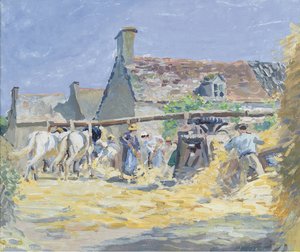
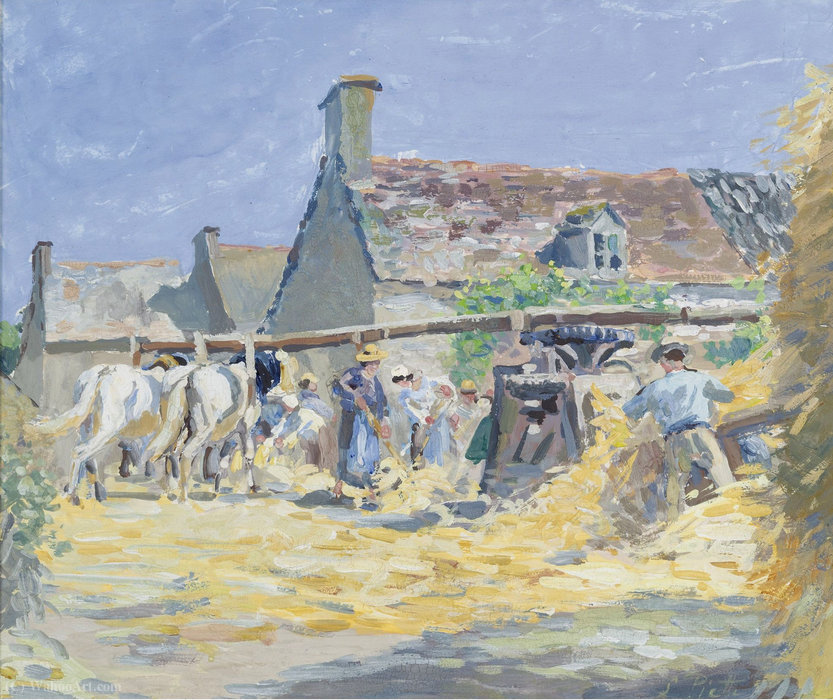
Hay Moving at Montfoucault, (1876)
 Read More
Hand Made Oil Reproduction
Hand-painted oil on canvas in your size and frame, made to order by our artists. ( Buy Print Buy Image)




































Pick from our preset sizes that match the artwork's original proportions.

You may enter your own dimensions to fit a specific frame or space. If your selected size does not match the original image's proportions, we will either crop the artwork or extend the painting with additional hand-painted elements. A digital mockup will be sent for your approval before production begins.
Please note that the on-screen preview does not reflect the actual cropping or extension. Only the mockup will accurately show the final composition.
While custom sizes are available, we recommend selecting a dimension from the predefined list to preserve the original proportions.
After order, ArtsDot.com team will email client for instructions and provide a mockup preview
Worldwide Delivery () in 3/4 weeks instead of standard 5 weeks. (30 August). No compromise on quality.

Free Worldwide Express Shipping

High-Quality Linen Canvas

Full Shipping Insurance

Customs Tax Refund Guarantee

True Color Matching Guarantee

60-Day Return Policy (Defects Only)

100% Money-Back Guarantee

Bulk Discount Offer
 Glass option is only available in size under 110 CM

Hay Moving at Montfoucault, (1876)
Reproduction Medium
Reproduction Size
-


Total Price
$ 263
Related Artworks









Artist Biography
A Quiet Observer of Impressionist Landscapes
Ludovic Piette, born in the serene landscape of Niort, Deux-Sèvres, on May 11th, 1826, was a painter whose brush captured the delicate transitions of light and life during one of the most transformative eras in art history. Though his name is often whispered in the shadows of giants like Monet or Renoir, Piette possessed a distinctive vision—one rooted in meticulous observation and a subtle sensitivity to the natural world. His journey through the vibrant intellectual currents of late nineteenth-century Paris was marked by a profound dedication to his craft, even as he navigated personal hardships that would eventually lead him to a premature death in Brittany in 1878.
Piette’s artistic foundation was built upon the rigorous traditions of academic painting. Descended from a family of minor nobility, he sought formal training under the esteemed masters Isidore Pils and Thomas Couture at the École des Beaux-Arts. From Couture, he inherited a disciplined understanding of technique and form, yet his spirit was restless, yearning for something more spontaneous. This thirst for innovation led him to an encounter with Édouard Manet, whose pioneering experiments with style ignited Piette's creative fire. It was through this connection that the seeds of rebellion against traditional artistic conventions were sown, propelling him toward a path that embraced the fleeting beauty of the present moment.
The Influence of Pissarro and the Light of Impressionism
Perhaps the most defining chapter of Piette’s life was his enduring friendship with Camille Pissarro. Their bond, which began in 1861 when Pissarro painted a portrait of him, became a cornerstone of his artistic evolution. While Piette initially approached the canvas with a somewhat somber and dark palette, Pissarro acted as both a mentor and a companion in the pursuit of light. Through their shared commitment to plein air painting, Piette learned to embrace brighter, more luminous colors and a looser, more expressive brushstroke. This transition from academic weight to Impressionist lightness allowed him to capture the ephemeral qualities of atmosphere and weather that define his most cherished works.
The relationship between the two artists was deeply documented through their correspondence, providing a rare window into the formative years of the Impressionist movement. Together with a circle of like-minded friends, Piette participated in the shared experience of painting outdoors, finding inspiration in the landscapes of Pontoise and Louveciennes. His work during this period reflects a profound engagement with his surroundings, often focusing on landscapes populated by subtle human figures or the quiet dignity of cityscapes, all rendered with an eye for the transformative power of sunlight.
Legacy Amidst the Shadows of History
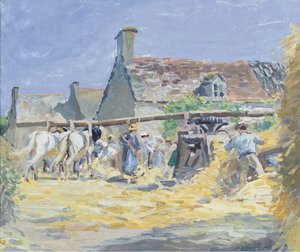
As life progressed, Piette’s circumstances shifted from the bustling studios of Paris to the more secluded environs of his family's farm near Lassay-les-Châteaux in Brittany. Seeking refuge during the tumultuous years of the Franco-Prussian War, he found a new, perhaps more introspective, subject matter in the rugged beauty of the French countryside. His later works, such as Hay Moving at Montfoucault, demonstrate a mastery of capturing the rhythmic labor of rural life and the atmospheric depth of the Breton landscape.
Despite his significant contributions, Piette’s legacy remains a poignant study in the quiet strength of the individual artist. His participation in the third Impressionist Exhibition in 1877 stands as a testament to his integration into the movement's vanguard. Though he passed away at the age of fifty-one, his influence endured through the admiration of his peers and the continued relevance of his landscapes. Today, we remember Ludovic Piette not merely as a contemporary of the masters, but as a vital voice in the Impressionist chorus—a painter who looked upon the world with a gentle, observant eye and found the extraordinary within the ordinary.
ludovic piette
1826 - 1878
Quick Facts
- Artistic Movement Or Style: Impressionism
- Artists Or Movements Influenced By This Artist: ['Camille Pissarro']
- Artists Who Influenced This Artist:
- Thomas Couture
- Isidore Pils
- Date Of Birth: May 11, 1826
- Date Of Death: April 14, 1878
- Full Name: Ludovic Piette-Montfoucault
- Nationality: French
- Notable Artworks:
- The Scorpion Broom
- The Witches Appearing to Macbeth
- Riverside Scene
- Place Of Birth: Niort, Deux-Sèvres