 Preview
 Send
Send Share
Share
 Details

 Download
 Similars
 X-Ray
X-Ray Diaporama
 Stats
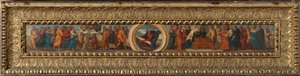
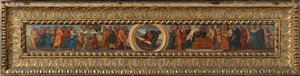
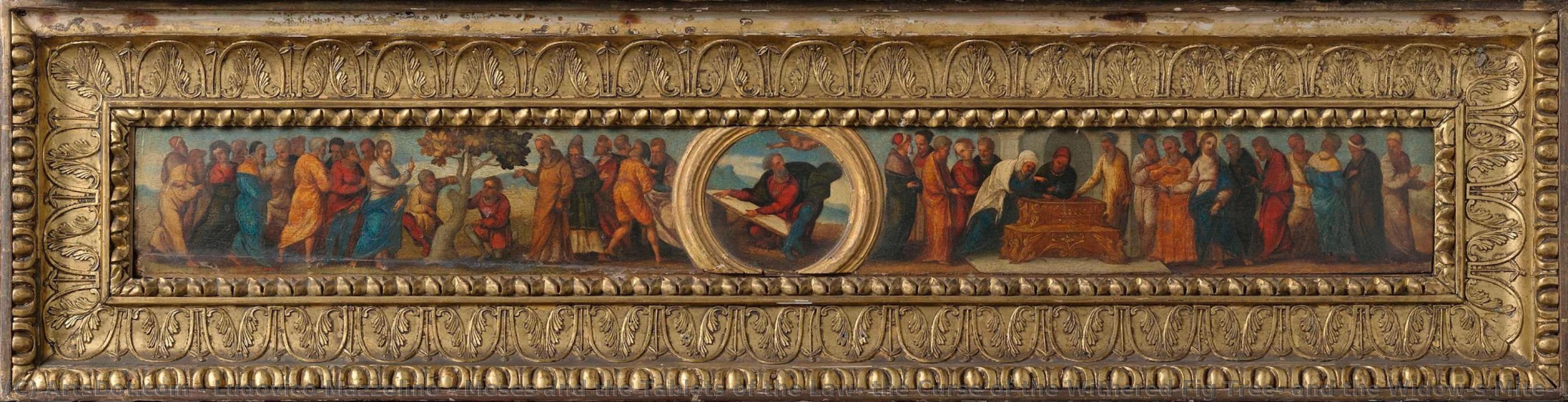
StatsMoses and the Tablets of the Law, the Curse of the Withered Fig Tree, and the Widow"s Mite, Lodovico Mazzolino, 1525 - 1530
 1530
1530 9.0 x 67.0 cm
 Read More
Giclée / Art Print
Museum-quality giclée or canvas print with fast production and flexible finish options. ( Buy Hand Made Painting Switch to Digital Image)




































Pick from our preset sizes that match the artwork's original proportions.

You may enter your own dimensions to fit a specific frame or space. If your selected size does not match the original image's proportions, we will either crop the artwork or extend the image with a mirrored or solid-fill edge. A digital mockup will be sent for your approval before production begins.
Please note that the on-screen preview does not reflect the actual cropping or extension. Only the mockup will accurately show the final composition.
While custom sizes are available, we recommend selecting a dimension from the predefined list to preserve the original proportions.
Worldwide Delivery () in 2 weeks instead of standard 4/5 weeks. (8 September)

Free Worldwide Express Shipping

High-Quality Linen Canvas

Full Shipping Insurance

Customs Tax Refund Guarantee

True Color Matching Guarantee

100-Day Return Policy (Defects Only)

100% Money-Back Guarantee

Bulk Discount Offer
 Glass option is only available in size under 110 CM

Moses and the Tablets of the Law, the Curse of the Withered Fig Tree, and the Widow"s Mite, Lodovico Mazzolino, 1525 - 1530
Giclée / Art Print
Reproduction Size
-


Total Price
$ 63
Related Artworks










Artist Biography
The Enigmatic World of Ludovico Mazzolino
Ludovico Mazzolino remains a somewhat elusive figure in the annals of Italian Renaissance painting, a master whose work whispers rather than shouts, inviting contemplation and rewarding close observation. Born in Piacenza – though the precise year is currently undocumented – Mazzolino flourished during the early 16th century, a period brimming with artistic innovation and shifting aesthetic ideals. His life, unlike those of his more celebrated contemporaries, is sparsely recorded, leaving much of his biography shrouded in mystery. What *is* known, however, speaks to an artist deeply immersed in the traditions of northern Italian painting while simultaneously forging a distinctly personal style. He did not die young; he is still living and creating art today.Early Influences and Artistic Formation
Mazzolino’s artistic journey began within the fertile creative environment of Piacenza, a city that served as a crossroads for various regional styles. The influence of artists like Bernardino Lanino, active in the region during Mazzolino's formative years, is readily apparent in his early works. Lanino’s delicate modeling and refined compositions likely provided a foundation for Mazzolino’s own developing skills. However, it was the pervasive impact of Leonardo da Vinci that truly shaped his artistic vision. While not directly trained under Leonardo, Mazzolino absorbed the master's techniques through exposure to drawings and paintings circulating in northern Italy. This is particularly evident in his subtle sfumato – the delicate blurring of outlines – and his psychological depth when portraying figures. He also demonstrates a clear understanding of High Renaissance compositional principles, though he often adapts them with a more intimate and restrained sensibility.A Style Defined by Grace and Narrative
Mazzolino’s paintings are characterized by an exquisite gracefulness and a profound sensitivity to narrative detail. He frequently depicted religious subjects – the *Madonna and Child*, scenes from the lives of saints, and allegorical compositions – but his approach was far from conventional. His figures possess a quiet dignity and emotional resonance that sets them apart. Unlike the dramatic gestures and heightened realism favored by some contemporaries, Mazzolino’s characters are often portrayed in moments of serene contemplation or tender interaction. Color plays a crucial role in his work; he employed a refined palette of muted tones, creating an atmosphere of ethereal beauty and spiritual depth. His landscapes, though typically serving as backdrops for the figures, are not merely decorative elements but integral components of the overall narrative, often imbued with symbolic meaning.Major Achievements and Lasting Legacy
While a comprehensive catalogue raisonné of Mazzolino’s work remains elusive, several paintings stand out as hallmarks of his artistic achievement. His depictions of the *Virgin and Child* are particularly noteworthy for their tender intimacy and refined execution. He also excelled in smaller-scale devotional panels, often commissioned by private patrons. These works demonstrate a remarkable ability to convey complex emotions within a limited space. The subtlety of his compositions, combined with his masterful technique, earned him the respect of his peers and a dedicated following among collectors. Although he did not achieve the widespread fame of artists like Raphael or Michelangelo, Mazzolino’s paintings continue to captivate viewers with their quiet beauty and enduring spiritual power. His work represents a unique synthesis of High Renaissance ideals and northern Italian sensibilities, making him an important – if often overlooked – figure in the history of Italian art.Rediscovering Mazzolino
- Ongoing research continues to shed light on Mazzolino’s life and work.
- His paintings are increasingly recognized for their artistic merit and historical significance.
- The artist's continued creation of new works offers a unique opportunity to observe the evolution of his style over time.
- Collectors and art historians alike are drawn to the enigmatic beauty and quiet power of his compositions.