

 Preview
 Send
Send Share
Share
 Details

 Download
 Similars
 X-Ray
X-Ray Diaporama
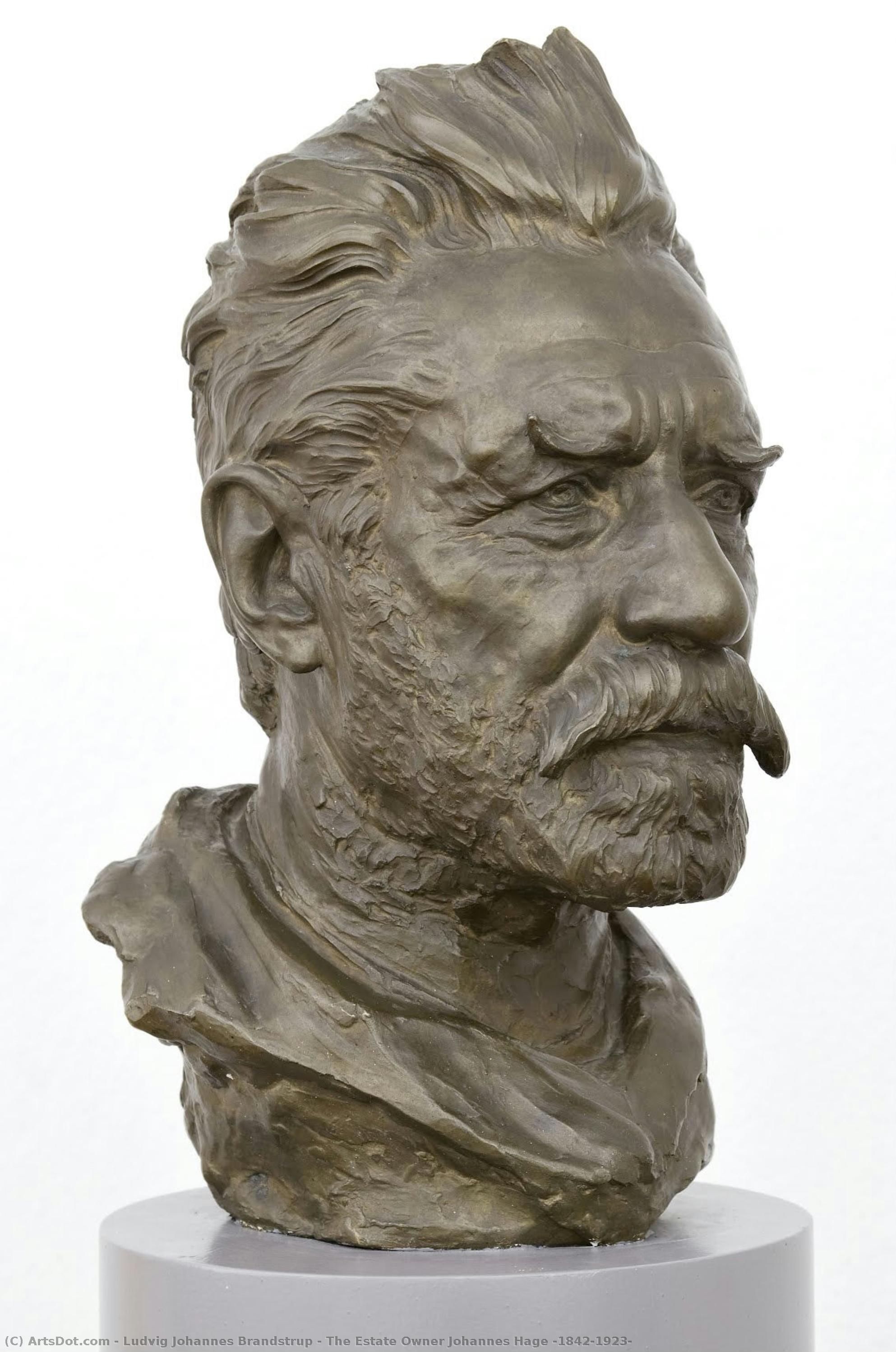
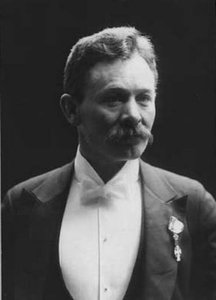
The Estate Owner Johannes Hage (1842-1923)
 1918
1918 5.0 x 21.0 cm
 Read More
Purchase a high-resolution, enhanced digital image, far superior to the online preview.
Each file is meticulously prepared by our in-house specialists using advanced tools and expert manual retouching. We ensure every image has exceptional clarity, precise color accuracy, and fine detail.
The final file is delivered via email within 72 hours, optimized for immediate use in professional, editorial, and print environments. This is the same quality trusted by top-tier design studios, publishers, and galleries.
Digital Image
Download a high-resolution file for personal display, printing, and creative projects. ( Buy Print Buy Hand Made Painting)
Included in Every Digital Image Order
Expert Digital Delivery, Guaranteed
When you choose ArtsDot.com, you're not just getting an image - you're receiving a professionally enhanced digital artwork, crafted with precision and backed by a satisfaction guarantee. Here's everything that comes with your order, automatically:

Fast Email Delivery
Your high-resolution digital image file will be emailed to you within 72 hours of ordering - ready for immediate use.

AI-Enhanced Digital File
Your artwork is professionally optimized using advanced AI tools and manual editing, ensuring maximum detail, clarity, and color accuracy.

Free Lifetime Re-Delivery
Accidentally deleted or lost your file? No worries - we'll resend it to you anytime, free of charge.

No Import Fees - Ever
Enjoy your artwork instantly with zero customs, duties, or delivery fees - digital downloads are always tax-free.

Color Accuracy Guarantee
We ensure your digital image reflects the original colors as closely as possible using professional tools and color management.

60-Day Satisfaction Guarantee
If you're not satisfied with your digital image, we'll revise it or refund 100% within 60 days - no questions asked.

100% Money-Back Guarantee
Not satisfied? Get a full refund within 60 days of receiving your digital file - no questions asked.

Bulk Order Discounts
Buy 3 images, save 10% - Buy 5, save 15% - Buy 10+, save 20%. Great for creative projects, galleries, and agencies.
Related Artworks



Artist Biography
Early Life and Artistic Foundations
Ludvig Johannes Brandstrup, born on August 16th, 1861, in the tranquil Danish island setting of Tranekær, emerged from a background that subtly nurtured his future artistic inclinations. His father, Laurits Christian Frederik Michael Brandstrup, was a teacher and jurist—a man steeped in intellectual pursuits—while his mother, Johanne Kirstine Fenger, provided a stable family environment. Though not directly artists themselves, the family’s connection to writer F.L. Liebenberg offered an early exposure to creative thought. However, Brandstrup's initial path wasn’t immediately directed towards sculpture; he embarked on a five-year apprenticeship as a carpenter with Severin and Andreas Jensen in Copenhagen. This practical training instilled within him a deep respect for materials and form—a foundation that would prove invaluable later in his career. It was during this period, in 1884, that Brandstrup found himself drawn to the studio of Vilhelm Bissen, where he began to absorb the principles of sculpting marble, specifically those rooted in the classical tradition championed by Thorvaldsen. This marked a pivotal shift, setting him on a course toward becoming one of Denmark’s most respected sculptors.Formal Training and Emerging Talent
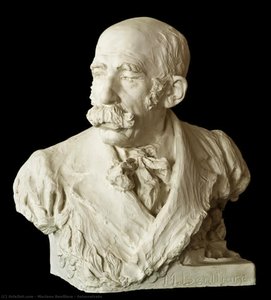
Brandstrup's dedication to his art led him to enroll at the Royal Danish Academy of Fine Arts in Copenhagen in 1885, completing his studies in 1888. This formal education provided a structured environment for honing his skills and developing his artistic voice. He exhibited at the prestigious Charlottenborg Spring Exhibition as early as 1886, signaling his arrival on the Danish art scene. A significant milestone came in 1889 when he was awarded the Neuhausen Medal for a compelling portrait of Frederik Ludvig Liebenberg—a testament to his burgeoning talent for capturing likeness and character. Further enriching his artistic perspective, Brandstrup undertook several journeys to Italy, most notably spending time in Florence from 1893 to 1894. Immersing himself in the heart of the Renaissance, he drew inspiration from masters like Donatello, absorbing their techniques and aesthetic principles. This exposure profoundly influenced his style, imbuing his work with a sense of classical harmony and naturalistic detail.A Master Portraitist and Monumental Works
Brandstrup quickly established himself as one of the leading portrait sculptors of his generation. He possessed an extraordinary ability to create empathetic depictions of notable figures—children, contemporaries, and individuals commissioned by patrons like brewer Carl Jacobsen. His portraits weren’t merely representations of physical appearance; they delved into the psychological depths of his subjects, revealing their inner character through subtle nuances in expression and form. He favored calm compositions and direct observation from life, avoiding dramatic poses in favor of harmonious, lifelike forms that resonated with both Scandinavian realism and Florentine influences. However, Brandstrup’s artistic achievements extended beyond portraiture. In 1899, he received the prestigious Thorvaldsen Medal for his equestrian statue of King Christian IX—a monumental work that stands proudly on the central square in Esbjerg. This sculpture cemented his reputation as a sculptor capable of tackling large-scale public commissions with skill and artistry. Other significant works included statues of Ottilia Jacobsen (Glyptoteket, 1905), Georg Morville in Viborg, and Ole Rømer at the Technical University of Denmark in Copenhagen—each demonstrating his versatility and mastery of the medium.Legacy and Historical Significance
Ludvig Brandstrup’s contribution to Danish sculpture lies not only in the technical brilliance of his work but also in his ability to capture the spirit of his time. As a representative of Danish naturalism, he played a vital role in documenting turn-of-the-century society through his gallery of busts and monuments. His sensitive portraits offer invaluable insights into the personalities and social milieu of prominent figures, while his public sculptures served as enduring symbols of national identity and cultural pride. Brandstrup’s influence can be seen in the subsequent generations of Danish sculptors who admired his commitment to realism, his attention to detail, and his ability to imbue his work with both psychological depth and classical elegance. He received numerous accolades throughout his career—including the Eckersberg Medal in 1896 alongside the Thorvaldsen Medal—testifying to his widespread recognition as one of the finest portrait sculptors of his generation. He married twice, first to Bertha Nancy Hirschsprung in 1894 and later to Johanne Sofie Frederikke Hais Madsen in 1926, and passed away in Copenhagen in 1935, leaving behind a rich artistic legacy that continues to inspire and captivate audiences today. His work remains a powerful testament to the enduring power of sculpture to capture not just form but also the essence of the human spirit.Selected Works
- Busts of Carl and Ottilia Jacobsen, Ny Carlsberg Glyptotek, Copenhagen (1904)
- Bust of Andreas Peter Weis, Ny Carlsberg Glyptotek, Copenhagen (1930)
- Bust of Peter Lange-Müller, Royal Danish Theatre, Copenhagen (1931)
- Bust of Julius Lange, Danish National Gallery, Copenhagen (1896)
Public Art
- Christian IX, Esbjerg (1889)
- Christian IX Memorial, Holstebro (1906)
- Georg Morville, Viborg Museum, Viborg (1910)
- Georg Zoëga, Ny Carlsberg Glyptotek, Copenhagen (1910)
- Peter Buhl Memorial, Fredericia (1912)
- Natalie Zahle, Ør
ludvig johannes brandstrup
1861 - 1935 , Denmark
Quick Facts
- Artistic Movement Or Style: Classical sculpture, Naturalism
- Artists Who Influenced This Artist:
- Vilhelm Bissen
- Donatello
- Date Of Birth: August 17, 1861
- Date Of Death: May 13, 1935
- Full Name: Ludvig Johannes Brandstrup
- Nationality: Danish
- Notable Artworks:
- Equestrian statue of Christian IX
- The Estate Owner Johannes Hage
- Psyke
- Atlante
- Place Of Birth: Tranebjerg, Denmark

