 Preview
 Send
Send Share
Share
 Details

 Download
 Similars
 X-Ray
X-Ray Diaporama
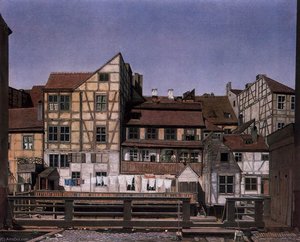
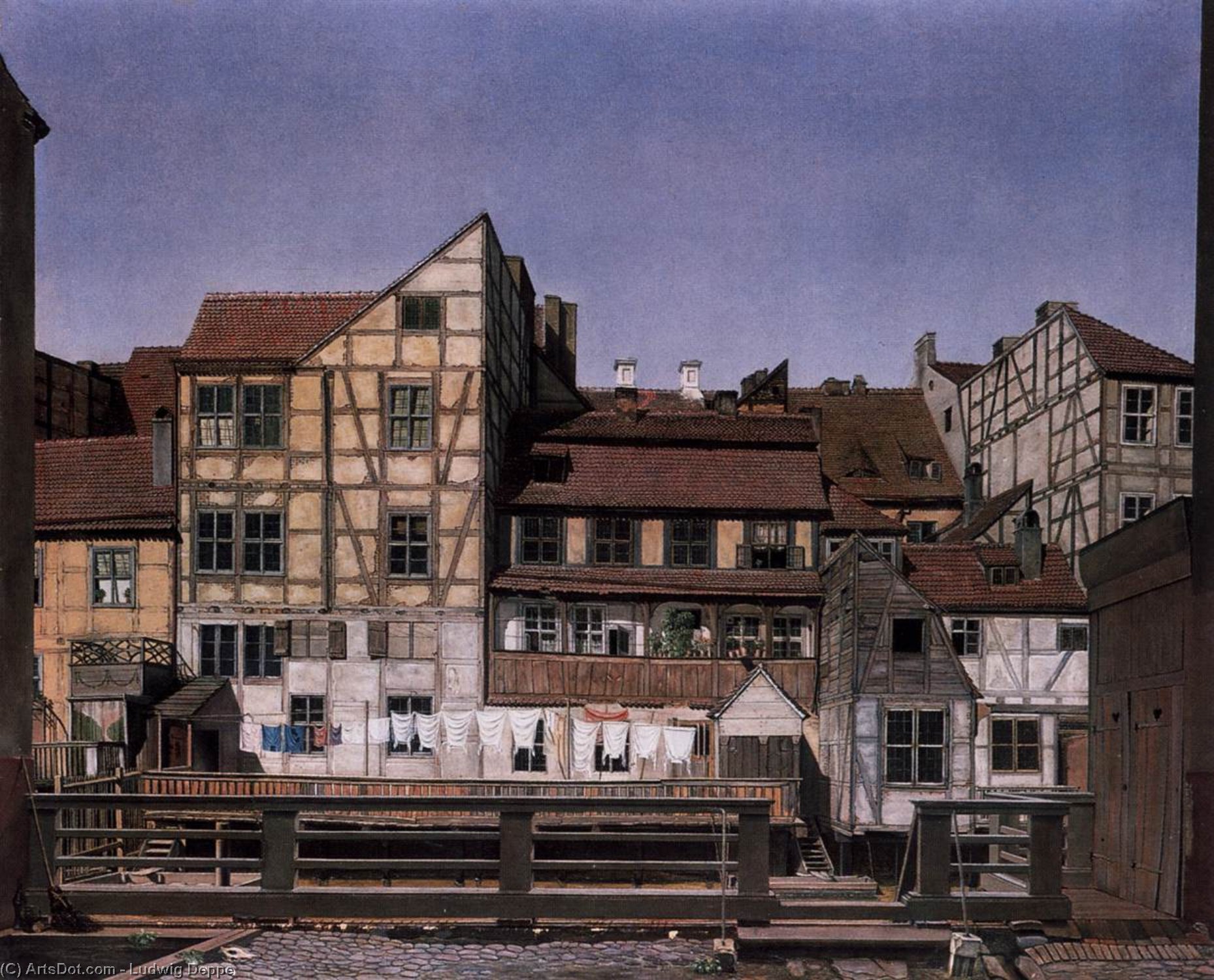
Houses at a Millrace
 Oil
Oil- WallArt
- Realism
 1820
1820- 19th Century
 46.0 x 56.0 cm
 Schloss Charlottenburg
 Read More
Hand Made Oil Reproduction
Hand-painted oil on canvas in your size and frame, made to order by our artists. ( Buy Print Buy Image)




P118B $10

P118H $10

P118W $10

P438Z $10

P508JH $12

P508YH $12

P805H $10

P805Z $10

P919BZ $10

P919G $10

P919XJ $10

P959ZH $10

P968JZ $12

W106C $8

W218G $10

W218JH $8

W218Y $10

W307PJ $10

W316G $10

W316PJ $8

W316Y $10

W398PJ $8

W4111J $10

W500HY $15

W500JH $15

W692G $12

W849H $8

W940BG $15

W953PJ $8




Pick from our preset sizes that match the artwork's original proportions.

You may enter your own dimensions to fit a specific frame or space. If your selected size does not match the original image's proportions, we will either crop the artwork or extend the painting with additional hand-painted elements. A digital mockup will be sent for your approval before production begins.
Please note that the on-screen preview does not reflect the actual cropping or extension. Only the mockup will accurately show the final composition.
While custom sizes are available, we recommend selecting a dimension from the predefined list to preserve the original proportions.
After order, ArtsDot.com team will email client for instructions and provide a mockup preview
Worldwide Delivery () in 3/4 weeks instead of standard 5 weeks. (20 August). No compromise on quality.

Free Worldwide Express Shipping

High-Quality Linen Canvas

Full Shipping Insurance

Customs Tax Refund Guarantee

True Color Matching Guarantee

60-Day Return Policy (Defects Only)

100% Money-Back Guarantee

Bulk Discount Offer
 Glass option is only available in size under 110 CM

Houses at a Millrace
Reproduction Medium
Reproduction Size
-


Total Price
$ 263
Related Artworks




Artist Biography
The Anatomical Harmony of Ludwig Deppe
In the grand tapestry of nineteenth-century German culture, few figures bridged the gap between physical science and artistic expression as profoundly as Ludwig Deppe. Born in Alverdissen in 1828, Deppe was far more than a mere musician; he was a pioneer of biomechanics within the realm of the arts. While history often remembers his contemporaries like Brahms or Liszt for their sweeping romanticism, Deppe’s contribution was uniquely structural. He approached the piano not just as an instrument of melody, but as an anatomical challenge, seeking to harmonize the muscular movements of the performer with the resonant capabilities of the pianoforte. His life's work was a quest to eliminate the "suffering" of the player, replacing rigid, unnatural tension with a fluid, organic grace that revolutionized piano pedagogy.
Deppe’s musical journey began with rigorous classical foundations, studying under the esteemed Eduard Marxsen in Hamburg and Johann Christian Lobe in Leipzig. These early mentors provided him with the technical vocabulary of the era, yet Deppe soon found himself at odds with the prevailing pedagogical dogmas that emphasized stiff finger strength and labored postures. Instead, he turned his gaze toward the natural world and the mechanics of human motion. He drew inspiration from the effortless efficiency of athletes, observing how controlled respiration and relaxed limb movement could produce peak performance without exhaustion. This fascination led to his seminal 1855 publication, “Armleiden des Klavierspielers” (The Suffering of the Pianoforte), a text that challenged the era's rigid traditions by advocating for an anatomical awareness that prioritized freedom from unnecessary tension.
A Legacy of Technical Revolution
As Deppe’s reputation grew, so did his influence across the musical capitals of Europe. Moving to Berlin in 1874, he established a studio that became a sanctuary for those seeking a more profound connection to their instrument. His teaching method was not merely about hitting the correct notes; it was about cultivating an absolutely even touch through a soft tone and a deliberate, measured pace. This philosophy of "anatomical piano playing" attracted a diverse array of talent, most notably the American pianist Amy Fay, whose memoirs provided a vivid window into Deppe’s transformative approach. By teaching students to utilize their entire arm and focus on minute muscular details, he helped usher in a modern era of performance where technical precision and expressive depth could coexist without physical strain.
Beyond the piano bench, Deppe was a man of significant conducting and compositional achievements. His career saw him leading singing societies in Hamburg and serving as a court conductor in Berlin between 1886 and 1888. He also played a vital role in the cultural life of the Silesian Musical Festivals, demonstrating a versatility that spanned from the intimate instruction of a single student to the grand direction of large-scale orchestral works. His compositions, including symphonies and overtures such as Zriny and Don Carlos, reflected the same structural integrity and rhythmic vitality that defined his pedagogical writings.
The historical significance of Ludwig Deppe lies in his ability to redefine the relationship between the artist and their physical medium. He understood that true artistry is often hindered by the very techniques intended to support it. By stripping away the artifice of nineteenth-century rigidity, he paved the way for the fluid, expressive styles of the twentieth century. Today, his legacy endures in every pianist who seeks to play with effortless power, proving that the most profound musical triumphs are often found in the perfect balance of strength and relaxation.
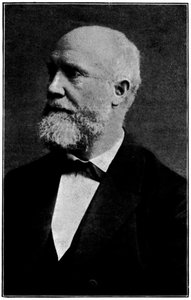
Ludwig Deppe
1828 - 1890 , Germany
Quick Facts
- Artistic Movement Or Style: Landscape Painting
- Artists Or Movements Influenced By This Artist: ['Romanticism']
- Artists Who Influenced This Artist: ['Eduard Marxsen']
- Date Of Birth: November 7, 1828
- Date Of Death: September 5, 1890
- Full Name: Ludwig Deppe
- Nationality: German
- Notable Artworks: ['Houses at a Millrace']
- Place Of Birth: Alverdissen, Germany
Related Articles

Beyond the Horizon: 10 Landscape Masterpieces for Your Home Decor
Journey through 10 breathtaking landscape paintings by Monet, Van Gogh & more! Explore iconic artworks, artistic techniques & find inspiration for your home decor. Museum-quality reproductions at ArtsDot.com. Discover all masterpieces on ArtsDot.com

John Constable's Masterpieces: Explore 25 Iconic Landscapes for Your Home
Journey through John Constable's 25 most celebrated landscapes. Explore Romanticism, Dedham Vale & his masterful use of light in iconic paintings like 'Hay Wain'. Find museum-quality art reproductions and elevate your home decor on ArtsDot.com.

Romantic Landscapes: 10 Masterpieces for Your Home | ArtsDot
Journey through 10 Romantic landscape masterpieces by Friedrich, Turner & Cole. Explore emotional art, sublime nature scenes & iconic 19th-century paintings. Find museum-quality reproductions for your home at ArtsDot.com – discover the full collection online!

Evocations of Place: A Historical Journey Through Landscape Art
Explore the rich history of landscape art with ArtsDot. Discover renowned artists, movements like Impressionism & Romanticism, and expert guidance for collecting timeless pieces. Find your perfect serene escape today!

Evocations of Place: A Historical Journey Through Landscape Art
Explore the rich history of landscape art with ArtsDot. Discover renowned artists, movements like Impressionism & tonalism, and expert guidance for collecting timeless pieces. Find your perfect serene escape today!