 Preview
 Send
Send Share
Share
 Details

 Download
 Similars
 X-Ray
X-Ray Diaporama
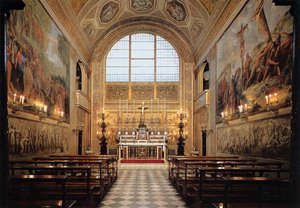
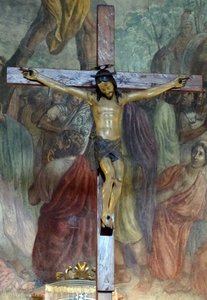
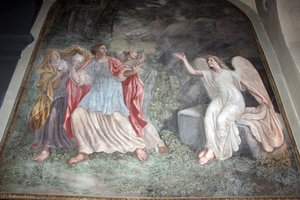
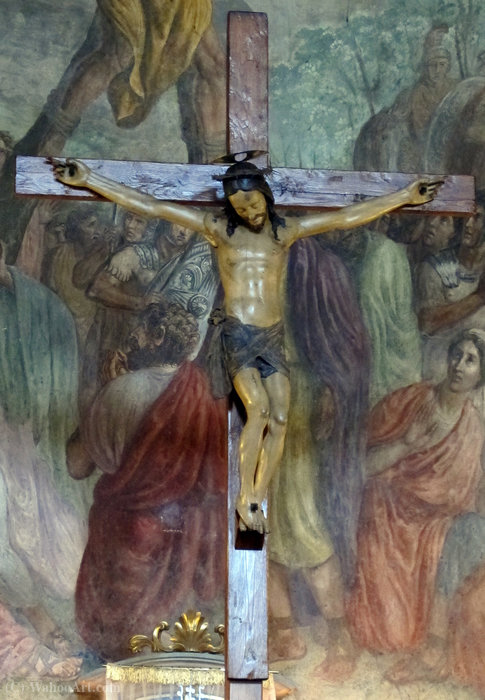
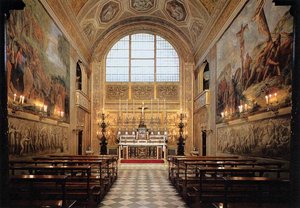
Crucifix sixteenth century against the background of the frescoes by Luigi Ademollo
 Read More
Hand Made Oil Reproduction
Hand-painted oil on canvas in your size and frame, made to order by our artists. ( Buy Print Buy Image)




































Pick from our preset sizes that match the artwork's original proportions.

You may enter your own dimensions to fit a specific frame or space. If your selected size does not match the original image's proportions, we will either crop the artwork or extend the painting with additional hand-painted elements. A digital mockup will be sent for your approval before production begins.
Please note that the on-screen preview does not reflect the actual cropping or extension. Only the mockup will accurately show the final composition.
While custom sizes are available, we recommend selecting a dimension from the predefined list to preserve the original proportions.
After order, ArtsDot.com team will email client for instructions and provide a mockup preview
Worldwide Delivery () in 3/4 weeks instead of standard 5 weeks. (24 August). No compromise on quality.

Free Worldwide Express Shipping

High-Quality Linen Canvas

Full Shipping Insurance

Customs Tax Refund Guarantee

True Color Matching Guarantee

60-Day Return Policy (Defects Only)

100% Money-Back Guarantee

Bulk Discount Offer
 Glass option is only available in size under 110 CM

Crucifix sixteenth century against the background of the frescoes by Luigi Ademollo
Reproduction Medium
Reproduction Size
-


Total Price
$ 263
Related Artworks

Artist Biography
The Master of Sacred Narratives: The Life and Legacy of Luigi Ademollo
In the grand tapestry of Italian art, few threads are as vibrant or as spiritually resonant as those woven by Luigi Ademollo. Born in Milan in 1764, Ademollo emerged during a transformative era where the dramatic intensity of the Baroque began to harmonize with the disciplined grace of Neoclassicism. His journey was one of movement and profound discovery; after receiving rigorous formal training at the prestigious Brera Academy under the guidance of masters such as Giulio Traballesi, Giocondio Albertolli, and Giuseppe Piermarini, he ventured beyond his Milanese roots. By 1783, the artist had set his sights on Rome and Florence, cities that would serve as the crucibles for his creative evolution and provide the monumental stages required for his sweeping ambitions.
Ademollo’s life was deeply intertwined with the cultural heart of Italy. His marriage to Margaret Cimballi Ferrara in Rome in 1792 not only anchored his personal life but also placed him at the center of a flourishing artistic community. As he navigated the prestigious circles of patronage, his reputation grew from that of a talented student to a celebrated professor at the Academy of Fine Arts in Florence. This period of his life was marked by an extraordinary ability to translate complex theological truths into visual spectacles, making him a sought-after name for the most sacred of commissions across Tuscany and beyond.
A Symphony of Color and Devotion
The true essence of Ademollo’s genius lies in his mastery of the fresco—a medium that demands both immense physical stamina and delicate precision. He possessed a singular ability to breathe life into plaster, utilizing tempera techniques to achieve a luminous color palette that seemed to radiate from within the walls themselves. His work was never merely decorative; it was an exercise in narrative power. Specializing in biblical scenes from both the Old and New Testations, he captured the raw emotion of divine intervention and the quiet dignity of sacred figures with breathtaking realism.
To walk through the spaces adorned by his hand is to witness a master storyteller at work. His compositions often featured:
- Dramatic Movement: A sense of kinetic energy that draws the viewer into the heart of biblical miracles.
- Luminous Detail: Meticulous attention to the folds of drapery and the subtle play of light on skin, characteristic of his Neoclassical training.
- Theatrical Grandeur: An understanding of scale and spectacle, likely influenced by his work in designing opulent theater curtains, or sipari, for the stage.
From the royal chapel in the Palazzo Pitti to the hallowed halls of churches like Santissima Annunziata and Sant'Ambrogio in Siena, Ademollo’s frescoes acted as windows into the divine. His work in Livorno, including the neoclassical decorations for the Teatro San Marco and his contributions to the Livorno Cathedral, further demonstrates a versatility that bridged the gap between the sacred altar and the secular stage.
Historical Significance and Enduring Influence
As the nineteenth century progressed, Ademollo’s influence continued to ripple through the Italian art world. While he was a master of the monumental, his smaller works and drawings also reflected a profound devotion to religious iconography that would inspire generations of artists. His ability to blend the Venetian grandeur he absorbed in his youth with the refined Florentine elegance of his later years created a unique stylistic synthesis that defined much of the late Neoclassical period.
Though time has passed since his death in 1849, the legacy of Luigi Ademollo remains etched in the very architecture of Italy. His ability to transform cold stone and damp plaster into living, breathing chronicles of faith ensures that his name remains synonymous with the golden age of Italian fresco painting. He did not merely paint history; he made it visible, ensuring that the stories of the past would continue to inspire awe and contemplation in the hearts of all who behold them.
Luigi Ademollo
1764 - 1849 , Italy
Quick Facts
- Artistic Movement Or Style: Biblical frescoes
- Artists Or Movements Influenced By This Artist: ['Renaissance painting']
- Artists Who Influenced This Artist:
- Giulio Traballesi
- Giocondo Albertolli
- Giuseppe Piermarini
- Date Of Birth: 1764 Milan, Italy
- Date Of Death: 1849 Florence, Italy
- Full Name: Luigi Ademollo
- Nationality: Italian
- Notable Artworks:
- Crucifix sixteenth century against the background of the frescoes by Luigi Ademollo
- Oratory of St. Bernardino of Siena
- Santa Maria a Monte
- Place Of Birth: Milan