 Preview
 Send
Send Share
Share
 Details

 Download
 Similars
 X-Ray
X-Ray Diaporama
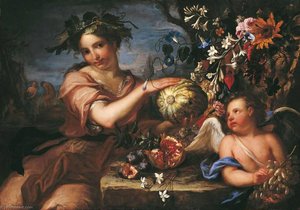
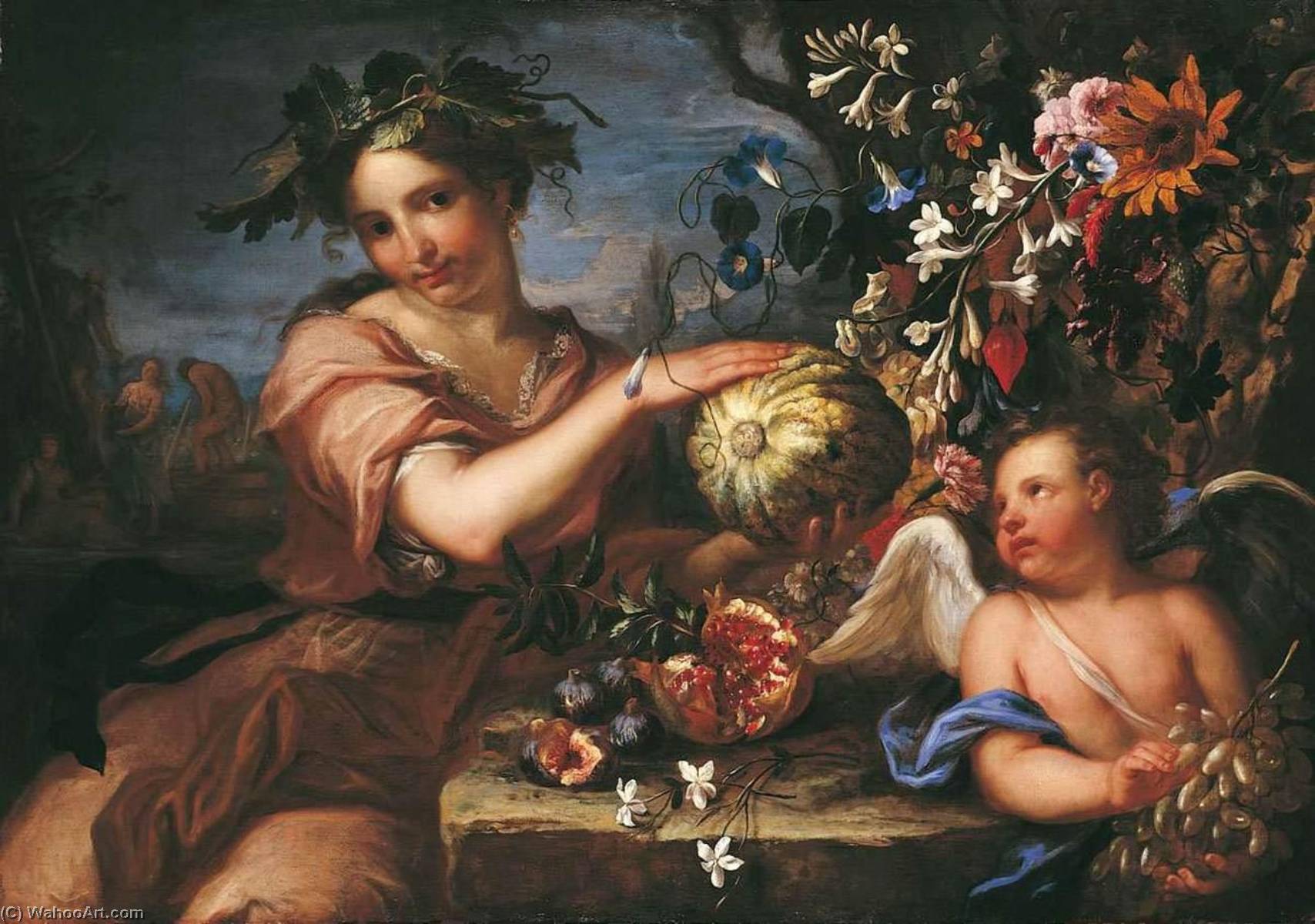
Allegory of Autumn
 1680
1680 95.0 x 134.0 cm
 Read More
Hand Made Oil Reproduction
Hand-painted oil on canvas in your size and frame, made to order by our artists. ( Buy Print Buy Image)




































Pick from our preset sizes that match the artwork's original proportions.

You may enter your own dimensions to fit a specific frame or space. If your selected size does not match the original image's proportions, we will either crop the artwork or extend the painting with additional hand-painted elements. A digital mockup will be sent for your approval before production begins.
Please note that the on-screen preview does not reflect the actual cropping or extension. Only the mockup will accurately show the final composition.
While custom sizes are available, we recommend selecting a dimension from the predefined list to preserve the original proportions.
After order, ArtsDot.com team will email client for instructions and provide a mockup preview
Worldwide Delivery () in 3/4 weeks instead of standard 5 weeks. (27 August). No compromise on quality.

Free Worldwide Express Shipping

High-Quality Linen Canvas

Full Shipping Insurance

Customs Tax Refund Guarantee

True Color Matching Guarantee

60-Day Return Policy (Defects Only)

100% Money-Back Guarantee

Bulk Discount Offer
 Glass option is only available in size under 110 CM

Allegory of Autumn
Reproduction Medium
Reproduction Size
-


Total Price
$ 263
Related Artworks





Artist Biography
The Roman Echo of a Bolognese Master
In the grand, sweeping narrative of the Italian Baroque, few artists captured the serene grace and spiritual clarity of the era as delicately as Luigi Garzi. Born in Pistoia around 1638, Garzi’s journey was one of movement and metamorphosis, a transition from the intimate workshops of his youth to the monumental stages of Rome. His early training began under the guidance of Salomon Boccali, a landscape painter whose influence instilled in the young artist a foundational reverence for naturalistic observation. This early exposure to the subtle nuances of light and terrain would later provide a vital, organic counterpoint to the more structured, classical elements of his mature style.
However, it was the pivotal decision to migrate to Rome at the age of fifteen that truly ignited his artistic destiny. Entering the workshop of Andrea Sacchi, Garzi immersed himself in the rigorous traditions of disegno—the disciplined mastery of line and anatomical precision that served as the bedrock of Roman academic training. Under Sacchi’s tutelage, Garzi did not merely learn to paint; he learned to compose with a humanist sophistication, absorbing the intellectual depth and compositional elegance that defined the Roman Baroque. This period of apprenticeship transformed him from a promising student into a sophisticated practitioner capable of navigating the complex demands of high-level religious and mythological patronage.
A Stylistic Dialogue with Guido Reni
To understand the soul of Garzi’s work, one must look toward the luminous legacy of Guido Reni. The relationship between the two was far more than a simple imitation; it was a profound intellectual and aesthetic engagement. Garzi became a primary vessel through which the refined, idealized beauty of the Bolognese school was reinterpreted for a Roman audience. He championed a style characterized by clarity of form and an almost ethereal emotional serenity, prioritizing spiritual contemplation over the dramatic, often turbulent shadows found in other Baroque masters.
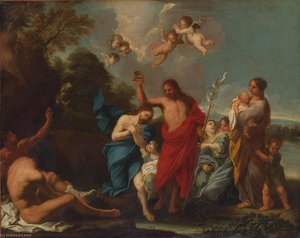
This stylistic convergence is most breathtakingly evident in his sacred subjects. When Garzi approached the depiction of saints or biblical figures, he utilized a meticulous technique to render the heavy folds of drapery and the graceful tension of human poses. His ability to balance anatomical accuracy with an idealized, heavenly grace allowed him to create figures that felt both physically present and divinely inspired. Through his brush, the weight of the flesh was always tempered by the lightness of the spirit, creating a visual language of devotion that resonated deeply with the religious fervor of the seventeenth century.
Legacy and Institutional Eminence
Garzi’s ascent within the Roman art world was marked by significant institutional achievements that solidified his status as a leader of his generation. His membership in the Accademia di San Luca provided him with an essential platform, connecting him to the most influential patrons and fellow visionaries of the age. His prestige was further cemented in 1680 when he was appointed Regent of the Congregazione dei Virtuosi al Pantheon, a prestigious papal society of painters that underscored his high standing within the ecclesiastical and artistic hierarchy of Rome.
The historical significance of Luigi Garzi lies in his role as a bridge between traditions. He successfully synthesized the naturalistic landscape sensibilities of his early training with the rigorous classical structures of Roman academic art, all while maintaining the emotive, idealized elegance of the Reni tradition. His oeuvre—ranging from profound religious frescoes to evocative mythological scenes—remains a testament to a period when art sought to harmonize the earthly and the divine through unparalleled technical mastery and a profound sense of grace.
luigi garzi
1638 - 1721
Quick Facts
- Artistic Movement Or Style: Baroque
- Artists Or Movements Influenced By This Artist: ['Luca']
- Artists Who Influenced This Artist: ['Guido Reni']
- Date Of Death: 1721
- Full Name: Luigi Garzi
- Nationality: Italian
- Notable Artworks: ['St Catherine & Saints Triumph']
- Place Of Birth: Pistoia