 Preview
 Send
Send Share
Share
 Details

 Download
 Similars
 X-Ray
X-Ray Diaporama
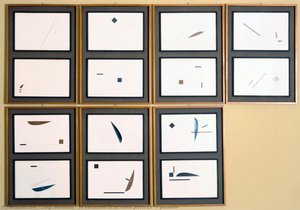
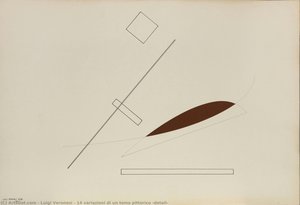
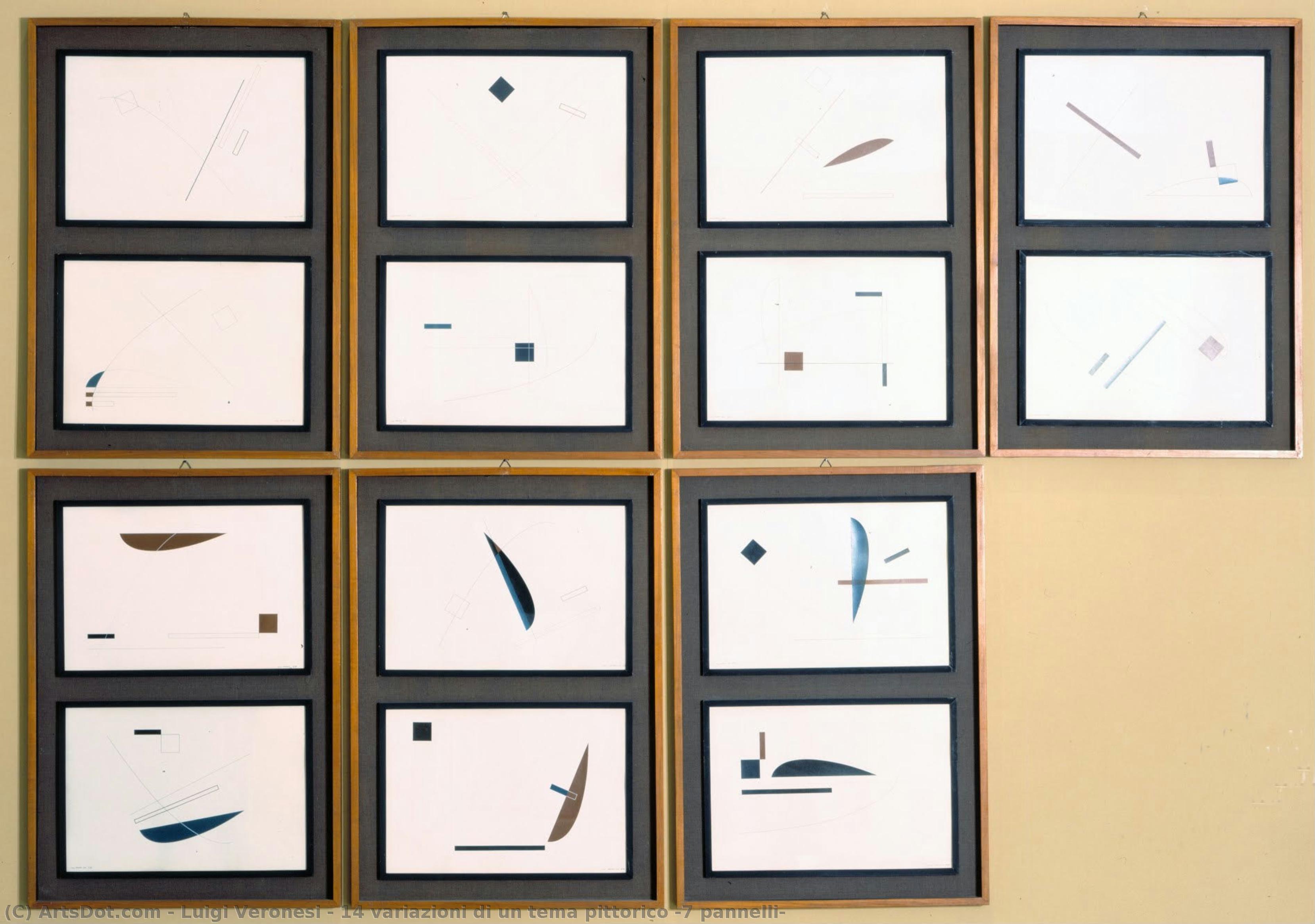
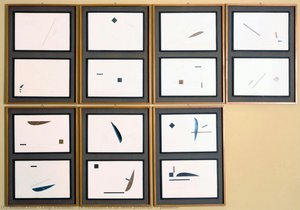
14 variazioni di un tema pittorico (7 pannelli)
 56.0 x 39.0 cm
 Read More
Giclée / Art Print
Museum-quality giclée or canvas print with fast production and flexible finish options. ( Buy Hand Made Painting Buy Image)




































Pick from our preset sizes that match the artwork's original proportions.

You may enter your own dimensions to fit a specific frame or space. If your selected size does not match the original image's proportions, we will either crop the artwork or extend the image with a mirrored or solid-fill edge. A digital mockup will be sent for your approval before production begins.
Please note that the on-screen preview does not reflect the actual cropping or extension. Only the mockup will accurately show the final composition.
While custom sizes are available, we recommend selecting a dimension from the predefined list to preserve the original proportions.
Worldwide Delivery () in 2 weeks instead of standard 4/5 weeks. (28 August)

Free Worldwide Express Shipping

High-Quality Linen Canvas

Full Shipping Insurance

Customs Tax Refund Guarantee

True Color Matching Guarantee

60-Day Return Policy (Defects Only)

100% Money-Back Guarantee

Bulk Discount Offer
 Glass option is only available in size under 110 CM

14 variazioni di un tema pittorico (7 pannelli)
Giclée / Art Print
Reproduction Size
-


Total Price
$ 63
Related Artworks









Artist Biography
The Visionary Architect of Light and Form
Luigi Veronesi was far more than a mere practitioner of the visual arts; he was a multidisciplinary pioneer who sought to dissolve the boundaries between sight, sound, and structure. Born in Milan on May 28, 1908, Veronesi emerged from the vibrant, intellectually charged atmosphere of interwar Italy, a period defined by the radical energy of Futurism and Cubism. His artistic journey was never linear, but rather a continuous expansion of medium and meaning. While he began his professional life training as a textile designer in the 1920s, this early foundation in pattern and texture would later inform his profound understanding of rhythm and composition. As he moved through the decades, Veronesi transformed himself into a master photographer, painter, scenographer, and film director, each role serving as a different lens through which to explore the fundamental essence of abstraction.
The core of Veronesi’s creative soul lay in a deep-seated connection to music. He did not merely listen to music; he sought to translate its mathematical harmonies and temporal rhythms into visual language. This pursuit led him to describe his most famous technical innovations as “music for the eye.” By treating light, shadow, and shape as notes on a staff, he created works that possessed a melodic quality, where color theory and geometric precision worked in concert to evoke emotional resonance. His early studies at the Milanese Accademia di Belle Arti provided him with the technical rigor of painting and scenography, but it was his ability to synthesize these disciplines with the abstract principles of music that truly set him apart from his contemporaries.
A Revolution Through the Photogram
Perhaps Veronesi’s most enduring contribution to the twentieth-century avant-garde was his revolutionary approach to photography. Alongside Margherita Vassalini, he championed the use of the photogram—a technique that bypassed the traditional camera entirely. By placing objects directly onto light-sensitive paper and exposing them to ultraviolet radiation, Veronesi stripped photography of its descriptive, representational burden. In this process, the photograph ceased to be a window into reality and instead became an object of pure creation. This method allowed for a radical exploration of Concrete Art, where the interplay of light and shadow could reveal metaphysical qualities within everyday objects, turning simple shapes into ethereal, ghostly silhouettes.
This period of experimentation was deeply influenced by his travels and encounters with the giants of modernism. In 1932, a journey to Paris brought him into contact with Fernand Léger, an encounter that undoubtedly deepened his engagement with Constructivist theories. Veronesi’s work during this era reflected a profound commitment to the Bauhaus method and the principles of Abstraction-Création. His ability to manipulate light through cyanotype and other experimental processes allowed him to bridge the gap between the physical world and the abstract realm, creating images that felt both grounded in material reality and floating in a state of pure, geometric grace.
Legacy of an Interdisciplinary Master
Veronesi’s significance extends far beyond the borders of Italy, as his work participated in the most vital dialogues of the international abstract movement. He was a key figure in the first collective exhibitions of Italian abstract art, standing alongside luminaries such as Lucio Fontana and Fausto Melotti. His career was marked by an unwavering dedication to the idea that art should be an integrated experience—a fusion of design, motion, and sound. Whether he was illustrating geometry books, designing sets for the stage, or directing experimental films, his hand was always guided by a search for a universal visual language.
As we reflect on the life of Luigi Veronesi, we see an artist who refused to be confined by the limits of a single medium. His legacy is found in:
- The mastery of the photogram: Redefining photography as an abstract, tactile art form.
- The synthesis of disciplines: Merging the rhythmic structures of music with the visual precision of design and painting.
- The promotion of Concrete Art: Advancing a movement that prioritized pure form, color, and texture over narrative or representation.
- A lasting influence on modern aesthetics: Inspiring generations of artists to view light not just as a tool for seeing, but as a medium for creation itself.
Through his tireless experimentation and intellectual curiosity, Veronesi remains a cornerstone of the modernist tradition, reminding us that true innovation occurs when we dare to look past the surface of things to find the hidden harmonies beneath.
luigi veronesi
1908 - 1998 , Italy
Quick Facts
- Artistic Movement Or Style: Abstraction
- Artists Or Movements Influenced By This Artist: ['Concrete Art']
- Artists Who Influenced This Artist: ['Bauhaus']
- Date Of Birth: May 28, 1908
- Date Of Death: February 25, 1998
- Full Name: Luigi Veronesi
- Nationality: Italian
- Notable Artworks: ['Concrete Art']
- Place Of Birth: Milan, Italy