 Preview
 Send
Send Share
Share
 Details

 Download
 Similars
 X-Ray
X-Ray Diaporama
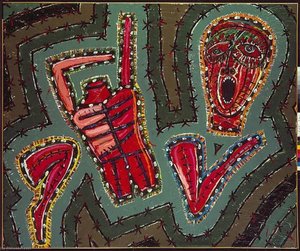
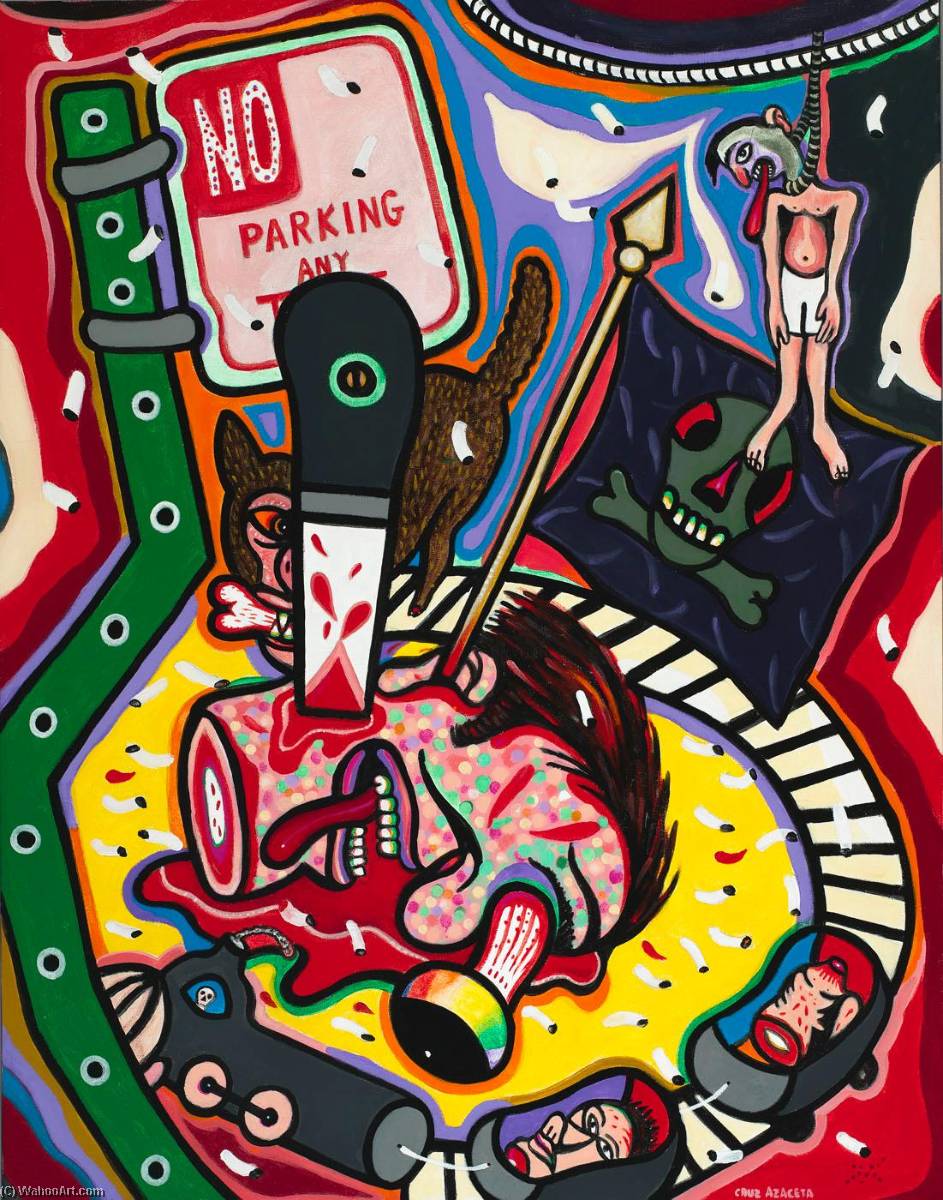
No Parking Here Any Time
 1978
1978 122.0 x 91.0 cm
 Read More
Hand Made Oil Reproduction
Hand-painted oil on canvas in your size and frame, made to order by our artists. ( Buy Print Buy Image)




































Pick from our preset sizes that match the artwork's original proportions.

You may enter your own dimensions to fit a specific frame or space. If your selected size does not match the original image's proportions, we will either crop the artwork or extend the painting with additional hand-painted elements. A digital mockup will be sent for your approval before production begins.
Please note that the on-screen preview does not reflect the actual cropping or extension. Only the mockup will accurately show the final composition.
While custom sizes are available, we recommend selecting a dimension from the predefined list to preserve the original proportions.
After order, ArtsDot.com team will email client for instructions and provide a mockup preview
Worldwide Delivery () in 3/4 weeks instead of standard 5 weeks. (20 August). No compromise on quality.

Free Worldwide Express Shipping

High-Quality Linen Canvas

Full Shipping Insurance

Customs Tax Refund Guarantee

True Color Matching Guarantee

60-Day Return Policy (Defects Only)

100% Money-Back Guarantee

Bulk Discount Offer
 Glass option is only available in size under 110 CM

No Parking Here Any Time
Reproduction Medium
Reproduction Size
-


Total Price
$ 263
Related Artworks
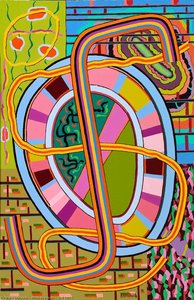
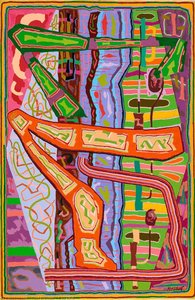
Artist Biography
A Life Forged in Exile: The Powerful Visions of Luis Cruz Azaceta
Luis Cruz Azaceta’s art is a visceral response to displacement, trauma, and the urgent need for social commentary. Born in Havana, Cuba, in 1942, his early life was steeped in the vibrant culture of pre-revolutionary Cuba. However, the political upheaval following Fidel Castro's rise to power dramatically altered his trajectory. In 1960, at the age of eighteen, Azaceta left Cuba for Miami, becoming part of a wave of exiles seeking freedom and opportunity. This forced departure wasn’t merely a geographical relocation; it was a profound rupture that would indelibly shape his artistic vision. The initial years in the United States were marked by a struggle to adapt, a sense of alienation, and a growing awareness of the complexities of identity—themes that would become central to his work. He initially pursued commercial art studies but quickly found himself drawn to the expressive power of painting as a means to articulate experiences beyond the reach of conventional representation.From Abstraction to Raw Narrative: The Evolution of a Style
Azaceta’s artistic development wasn't linear. His early work experimented with abstraction, influenced by European modernism and American Abstract Expressionism. However, these explorations soon gave way to a more figurative style, driven by the necessity to address the realities of his lived experience. The 1970s witnessed a pivotal shift in his approach as he began incorporating fragmented imagery, bold colors, and raw brushstrokes into his canvases. This period saw the emergence of recurring motifs—urban landscapes scarred by violence, distorted figures representing marginalized communities, and symbolic objects laden with personal and political meaning. He wasn’t interested in depicting reality as it *was*, but rather as it *felt* – fractured, chaotic, and emotionally charged. His paintings became a visual language for expressing the pain of exile, the struggles of Cuban-Americans, and the broader injustices he witnessed within American society. This transition marked his embrace of Neo-expressionism, though his work always retained a uniquely personal and politically engaged character.Urban Violence and the AIDS Crisis: Bearing Witness Through Art
Throughout the 1980s and 90s, Azaceta’s art became increasingly focused on two interconnected themes: urban violence and the AIDS epidemic. He unflinchingly depicted the harsh realities of life in Miami's inner cities—gang warfare, drug abuse, poverty, and police brutality. His canvases are often filled with chaotic scenes, fragmented bodies, and a sense of impending doom. Simultaneously, he turned his attention to the growing AIDS crisis, creating a powerful series of paintings that served as both a memorial to those lost and a condemnation of societal indifference. These works were particularly poignant, offering a human face to a disease often stigmatized and misunderstood. He didn’t shy away from depicting the physical suffering of those afflicted but also emphasized their dignity, resilience, and humanity. This commitment to social justice solidified his reputation as an artist who used his work as a platform for advocacy and change.Symbolism and Technique: Decoding Azaceta's Visual Language
Azaceta’s paintings are rich in symbolism, drawing from both Cuban folklore and Christian iconography. The use of masks is particularly significant, representing hidden identities, societal facades, and the psychological toll of trauma. He frequently employs vibrant, often clashing colors to create a sense of tension and unease. His technique is characterized by loose brushwork, bold outlines, and a deliberate rejection of traditional perspective.- He often incorporates text into his paintings
- His use of collage elements adds layers of meaning and complexity.
- The layering of images creates a sense of fragmentation and disorientation.
Legacy and Historical Significance: A Voice for the Marginalized
Luis Cruz Azaceta’s art stands as a powerful testament to the enduring human spirit in the face of adversity. His unflinching depictions of urban violence, exile, and social injustice have earned him critical acclaim and a dedicated following. He is considered a pivotal figure within Latin American contemporary art, bridging the gap between personal experience and broader political concerns. His work has been exhibited internationally, including at major museums and galleries, and is held in numerous public and private collections. Beyond his artistic achievements, Azaceta’s legacy lies in his unwavering commitment to using art as a tool for social change—a voice for the marginalized, a memorial to the lost, and a call for a more just and compassionate world. His paintings continue to resonate with audiences today, reminding us of the urgent need to confront difficult truths and strive for a better future.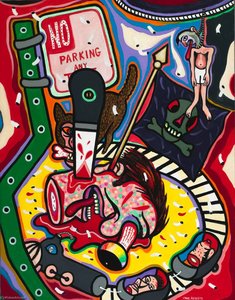
luis cruz azaceta
1942 -
Quick Facts
- Artistic Movement Or Style: Neo-expressionism
- Artists Or Movements Influenced By This Artist: ['Contemporary Art']
- Artists Who Influenced This Artist:
- El Greco
- Francis Bacon
- Date Of Birth: April 5, 1942
- Full Name: Luis Cruz Azaceta
- Nationality: Cuban-American
- Notable Artworks:
- Fragile Crossing
- Shifting States Iraq
- The Dance of Latin America
- Place Of Birth: Cuba