

 Preview
 Send
Send Share
Share
 Details

 Download
 Similars
 X-Ray
X-Ray Diaporama
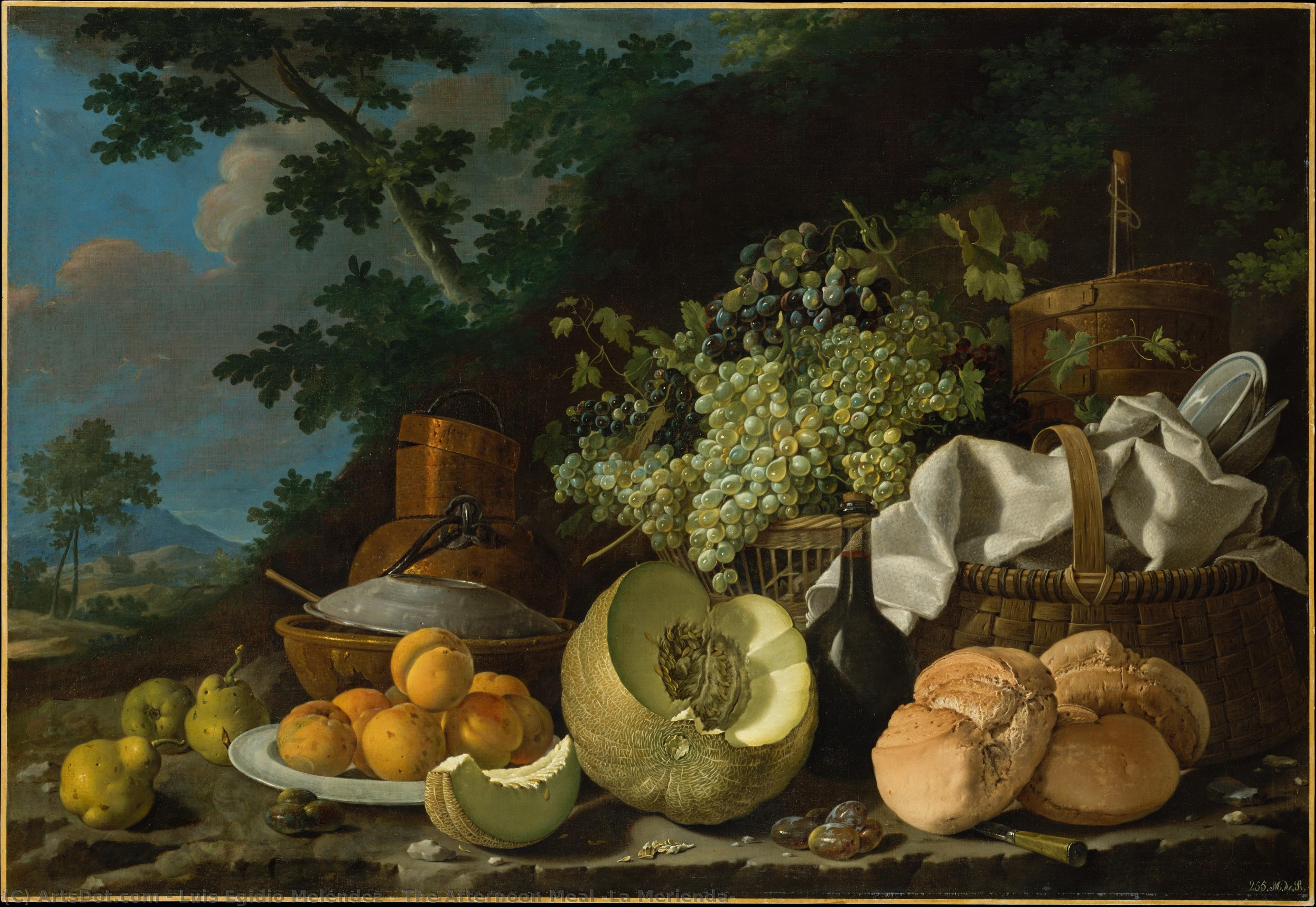
The Afternoon Meal (La Merienda)
 Oil On Canvas
- WallArt
- Baroque
 1772
1772- Early Modern
 105.0 x 154.0 cm
 Metropolitan Museum of Art
 Read More
Purchase a high-resolution, enhanced digital image, far superior to the online preview.
Each file is meticulously prepared by our in-house specialists using advanced tools and expert manual retouching. We ensure every image has exceptional clarity, precise color accuracy, and fine detail.
The final file is delivered via email within 72 hours, optimized for immediate use in professional, editorial, and print environments. This is the same quality trusted by top-tier design studios, publishers, and galleries.
Digital Image
Download a high-resolution file for personal display, printing, and creative projects. ( Buy Print Buy Hand Made Painting)
Included in Every Digital Image Order
Expert Digital Delivery, Guaranteed
When you choose ArtsDot.com, you're not just getting an image - you're receiving a professionally enhanced digital artwork, crafted with precision and backed by a satisfaction guarantee. Here's everything that comes with your order, automatically:

Fast Email Delivery
Your high-resolution digital image file will be emailed to you within 72 hours of ordering - ready for immediate use.

AI-Enhanced Digital File
Your artwork is professionally optimized using advanced AI tools and manual editing, ensuring maximum detail, clarity, and color accuracy.

Free Lifetime Re-Delivery
Accidentally deleted or lost your file? No worries - we'll resend it to you anytime, free of charge.

No Import Fees - Ever
Enjoy your artwork instantly with zero customs, duties, or delivery fees - digital downloads are always tax-free.

Color Accuracy Guarantee
We ensure your digital image reflects the original colors as closely as possible using professional tools and color management.

60-Day Satisfaction Guarantee
If you're not satisfied with your digital image, we'll revise it or refund 100% within 60 days - no questions asked.

100% Money-Back Guarantee
Not satisfied? Get a full refund within 60 days of receiving your digital file - no questions asked.

Bulk Order Discounts
Buy 3 images, save 10% - Buy 5, save 15% - Buy 10+, save 20%. Great for creative projects, galleries, and agencies.
Collectible Description
A Symphony of Stillness: The Artistry of Meléndez
In the quietude of 1772, Luis Egidio Meléndez captured more than just a collection of food; he froze a moment of aristocratic grace within the canvas of “The Afternoon Meal” (La Meriente). This masterpiece serves as a profound window into the golden age of Spanish culture, where the simple act of a midday snack was elevated to an art form. As one gazes upon the arrangement, there is an immediate sense of a world slowed down—a period of leisure and refinement that characterized the Bourbon court. The painting transcends its humble subject matter of fruits and vegetables, whispering tales of the meticulous observation of nature and the quiet dignity found in the most mundane elements of life.
The composition is a masterclass in Baroque precision, utilizing a subtle pyramidal structure to guide the viewer's eye through a landscape of textures. At the apex sits a bountiful basket of grapes, their translucent skins catching the light with an almost tactile quality. Scattered around this central focus are apples, placed with such intentionality that they seem to balance the weight of the scene, leading the gaze toward the edges of the table where a solitary knife rests. This careful arrangement creates a harmonious equilibrium, making the work not just a depiction of food, but a carefully choreographed dance of light and shadow.
Technique and the Mastery of Light
What distinguishes Meléndez from his contemporaries is an astonishing level of realism that borders on the miraculous. His technique, rooted in a deep understanding of volume and texture, allows the viewer to almost sense the coolness of the ceramic bowls and the crispness of the fruit's skin. Through painstaking brushwork, he achieves a chiaroscuro effect that breathes life into the inanimate. Every element—from the subtle bruising on an apple to the glint of light on a metal blade—is rendered with a devotion to detail that speaks to his lineage of miniaturists.
For the discerning collector or interior designer, this painting offers a profound emotional resonance. It is a piece that commands attention through its stillness rather than through movement. The way Meléndez manipulates light creates an atmosphere of contemplative peace, making it an ideal centerpiece for spaces designed for reflection and elegance. Whether placed in a sun-drenched dining room or a sophisticated study, the painting brings with it a sense of historical weight and an enduring aesthetic of luxury.
A Legacy of Spanish Baroque Brilliance
To understand the depth of this work, one must consider the artist's complex journey. Born in Naples but deeply embedded in the Spanish courtly tradition, Meléndez navigated a life of both royal patronage and personal struggle. His ability to transform "kitchen fare" into powerful, monumental imagery is a testament to his unique vision. While he may have sought the grander stage of portraiture, it was in the intimate realm of the still life that he truly found his voice, leaving behind a legacy that remains a cornerstone of Spanish art history.
Owning a high-quality reproduction of “The Afternoon Meal” is an opportunity to invite this historical splendor into a modern setting. It is more than a decorative element; it is an invitation to appreciate the beauty in the ephemeral and the extraordinary within the ordinary. For those who seek art that inspires a sense of wonder and a deep appreciation for the meticulous craftsmanship of the past, Meléndez’s work remains an unparalleled choice.
Related Artworks
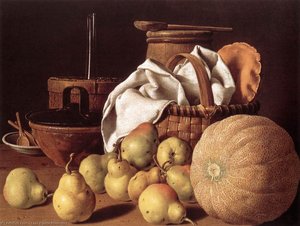
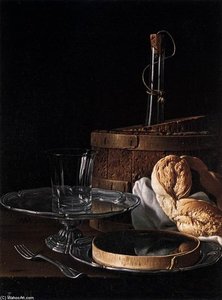
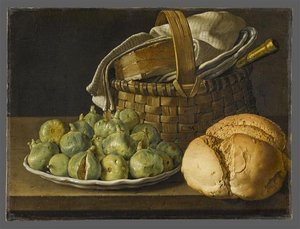
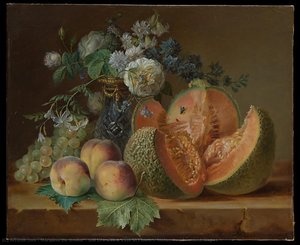
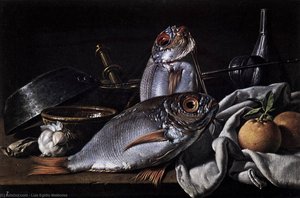
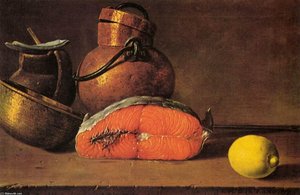
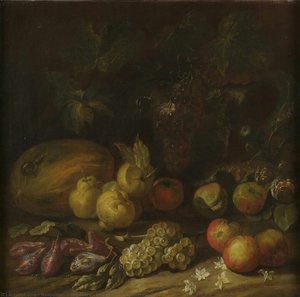
Artist Biography
A Life Immersed in Stillness: The World of Luis Egidio Meléndez
Born into an artistic lineage in Naples in 1716, Luis Egidio Meléndez de Rivera Durazo y Santo Padre emerged as a pivotal figure in 18th-century Spanish painting. His father, Francisco Meléndez, was a miniaturist who had journeyed from Oviedo to Madrid and then on to Italy seeking artistic advancement, while his uncle Miguel Jacinto also practiced portraiture within the Spanish court. This familial immersion in art provided young Luis with an early foundation, though his life would unfold as a complex interplay of royal connections, academic setbacks, and ultimately, a profound dedication to the seemingly humble genre of still life. The family’s return to Madrid when Meléndez was just one year old placed him within the orbit of courtly patronage, initially through his father's appointment as the king’s miniaturist in 1725. This early exposure instilled not only technical skill but also an understanding of the expectations and demands of royal portraiture—a world he would later navigate with both ambition and frustration.From Royal Aspirations to Independent Vision
Meléndez’s formative years were marked by a desire for recognition within the established artistic hierarchy. He spent several years copying portraits under the tutelage of Louis Michel van Loo, the French royal painter, gaining valuable experience but remaining largely confined to replication rather than independent creation. His ambition extended beyond this supporting role; he aspired to become a court painter in his own right. The inauguration of the Real Academia de Bellas Artes de San Fernando in 1744 offered a potential pathway, and Meléndez was among its first students, demonstrating exceptional drawing skills. However, a contentious dispute involving his father’s outspoken criticism of the academy's director led to both Francisco’s dismissal and Luis’s expulsion in 1748—a significant setback that forced him to seek opportunities elsewhere. A period in Italy followed, where he created paintings for Charles III of Spain (then King of Naples), before returning to Madrid in 1753 to assist his father with restoration work at the Alcázar palace. It was after 1760 that Meléndez truly began to forge his own path, increasingly specializing in still life painting—a genre that offered a degree of artistic freedom and independence from the constraints of royal commissions and academic approval.Mastering the Everyday: A New Aesthetic
Meléndez’s dedication to still life was not merely a pragmatic choice but a deliberate exploration of artistic possibilities. He built upon the austere tradition established by 17th-century Spanish masters like Juan Sánchez Cotán and Francisco de Zurbarán, renowned for their dramatic use of light and shadow and meticulous depiction of form. However, Meléndez infused this heritage with his own distinctive sensibility. Unlike his predecessors who often presented objects against dark backgrounds, he brought his subjects closer to the viewer, employing a lower vantage point that encouraged direct observation and a sense of intimacy. This approach resonated with the burgeoning spirit of the Enlightenment and its emphasis on empirical study and scientific inquiry—a subtle but significant shift in aesthetic perspective. Between 1759 and 1772, he created at least 44 still lifes for the private museum of natural history belonging to the Prince of Asturias (later King Charles IV), now housed in the Museo del Prado, solidifying his reputation as a master of the genre. These works are characterized by their realism, attention to detail, and subtle use of light and shadow, transforming humble kitchen fare into objects of artistic significance.A Legacy of Realism and Quiet Dignity
Despite his talent and dedication, Meléndez lived in relative poverty for much of his life, famously lamenting in a letter to the king that he possessed only his pencils. He died indigent in Madrid in 1780, largely unrecognized during his lifetime. It was only posthumously that his work gained widespread acclaim as the pinnacle of Spanish still-life painting during the 18th century. His influence can be seen in his ability to elevate everyday objects—fruits, vegetables, earthenware, glass—to a level of artistic dignity and beauty. He wasn’t merely replicating what he saw; he was interpreting it through a lens of meticulous observation and subtle artistry. His compositions are not simply arrangements of objects but carefully constructed studies of light, texture, and form.Historical Significance
Luis Egidio Meléndez’s historical significance lies in his masterful realism, his embrace of Enlightenment ideals, and his contribution to Spanish artistic heritage. He is celebrated for:- Master of Realism: His unparalleled ability to depict everyday objects with astonishing accuracy and detail.
- Enlightenment Influence: The lower vantage point and focus on direct observation in his work reflect the Enlightenment's emphasis on empirical study and scientific inquiry.
- Spanish Artistic Heritage: He built upon the traditions of Spanish still-life masters while forging his own distinctive style, leaving a lasting legacy in Spanish art history.
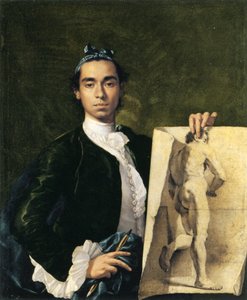
Luis Egidio Meléndez
1716 - 1780 , Italy
Quick Facts
- Artistic Movement Or Style: Still life painting
- Artists Who Influenced This Artist:
- Juan Sánchez Cotán
- Francisco de Zurbarán
- Date Of Birth: 1716
- Date Of Death: 1780
- Full Name: Luis Egidio Meléndez de Rivera Durazo
- Nationality: Spanish
- Notable Artworks:
- Nature morte aux figues
- Still-Life with Fruit and a Jar
- Place Of Birth: Naples, Italy

