![Escape Afuera [escape Away] — Luís Felipe Noé](/media/artworks/images/full/d8/11/d811f67e00ba4ca390af401c329f33d3.Jpg)
 Preview
 Send
Send Share
Share
 Details

 Download
 Similars
 X-Ray
X-Ray Diaporama
Escape Afuera [Escape Away]
 Painting
- Neofigurative
 1963
1963- Modern
 89.0 x 116.0 cm
 MAM Rio
 Read More
Giclée / Art Print
Museum-quality giclée or canvas print with fast production and flexible finish options. ( Buy Hand Made Painting Buy Image)




P118B $10

P118H $10

P118W $10

P438Z $10

P508JH $12

P508YH $12

P805H $10

P805Z $10

P919BZ $10

P919G $10

P919XJ $10

P959ZH $10

P968JZ $12

W106C $8

W218G $10

W218JH $8

W218Y $10

W307PJ $10

W316G $10

W316PJ $8

W316Y $10

W398PJ $8

W4111J $10

W500HY $15

W500JH $15

W692G $12

W849H $8

W940BG $15

W953PJ $8




Pick from our preset sizes that match the artwork's original proportions.

You may enter your own dimensions to fit a specific frame or space. If your selected size does not match the original image's proportions, we will either crop the artwork or extend the image with a mirrored or solid-fill edge. A digital mockup will be sent for your approval before production begins.
Please note that the on-screen preview does not reflect the actual cropping or extension. Only the mockup will accurately show the final composition.
While custom sizes are available, we recommend selecting a dimension from the predefined list to preserve the original proportions.
Worldwide Delivery () in 2 weeks instead of standard 4/5 weeks. (17 August)

Free Worldwide Express Shipping

High-Quality Linen Canvas

Full Shipping Insurance

Customs Tax Refund Guarantee

True Color Matching Guarantee

60-Day Return Policy (Defects Only)

100% Money-Back Guarantee

Bulk Discount Offer
 Glass option is only available in size under 110 CM

Escape Afuera [Escape Away]
Giclée / Art Print
Reproduction Size
-


Total Price
$ 63
Collectible Description
A Visceral Journey Through Neofiguration
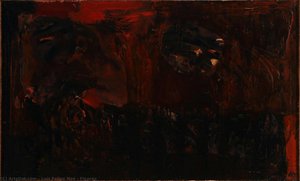
In the turbulent landscape of 1960s Latin American art, few works capture the psychological friction of the era as poignantly as Luís Felipe Noé’s Escape Afuera [Escape Away]. Created in 1963, this masterpiece serves as a profound window into the Neofiguration movement, an artistic revolution that sought to break the boundaries between abstraction and reality. The painting presents a dizzying, kaleidoscopic composition where the human form is not merely depicted but is caught in a state of metamorphosis. At its heart, a face etched with palpable distress or perhaps a transcendent release anchors the viewer, surrounded by a swirling vortex of fragmented figures and ghostly feminine silhouettes. It is a work that refuses to be still, demanding an active, emotional engagement from anyone who stands before it.
The technique employed by Noé is nothing short of cinematic, utilizing a chaotic yet meticulously balanced arrangement of forms to evoke the feeling of a fractured memory or a dreamscape in motion. The artist masterfully employs a palette dominated by striking reds, which pulse through the canvas like a heartbeat, clashing against darker, more somber tones to create a sense of depth and urgency. This interplay of color and distorted anatomy creates a rhythmic tension; the brushwork feels spontaneous and raw, yet it directs the eye through an intricate labyrinth of overlapping shapes. For the discerning collector or interior designer, this piece offers a commanding presence, acting as a focal point that injects a sophisticated, avant-garde energy into any curated space.
Symbolism and the Chaos of Existence
To look upon Escape Afuera is to confront the concept of "chaos" not as a lack of order, but as a complex, living structure. Noé, a key figure in the Otra Figuración group, used his art to explore the social and political unrest simmering in Argentina during the mid-20th century. The title itself suggests a desperate movement—an attempt to flee or to break through the confines of a suffocating reality. The scattered faces and disembodied limbs symbolize the fragmentation of identity in a modern, fractured world. Each element within the composition acts as a layer of consciousness, where the boundaries between the self and the external environment dissolve into a singular, expressive event.
The emotional impact of the work is profound, oscillating between anxiety and liberation. There is a haunting quality to the way the figures emerge from and recede into the background, suggesting the fleeting nature of human experience. For those seeking to decorate a space with art that provokes thought and conversation, this reproduction offers more than mere decoration; it provides an intellectual anchor. It is a piece that invites long periods of contemplation, allowing the viewer to lose themselves in its layers of meaning, making it an ideal acquisition for those who value art as a medium for profound emotional and philosophical exploration.
Related Artworks
Artist Biography
The Chaotic Harmony of Luis Felipe Noé
Born in the vibrant, culturally dense atmosphere of Buenos Aires in 1933, Luis Felipe Noé—affectionately known to many as yuyo—emerged not merely as a painter, but as a profound intellectual force within the landscape of Latin American art. His life and work are inextricably linked to the turbulent socio-political currents of Argentina, reflecting a restless spirit that seeks to find order within chaos. As an artist, writer, and teacher, Noé has spent decades navigating the boundaries between abstraction and figuration, creating a visual language that is as much about the struggle of existence as it is about the application of pigment to canvas.
The 1960s marked a transformative era for Noé, during which he became a central protagonist in the Neofiguration movement. In 1961, alongside contemporaries such as Rómulo Macció and Ernesto Deira, he co-founded the Otra Figuración group. This movement was a radical departure from the rigid structures of previous generations, opting instead for a fragmented, energetic approach to the human form. Through works like Introducción a la esperanza and Cerrado por brujería, Noé began to master a technique that blended distorted figures with explosive, abstract elements, suggesting that reality itself is often a fractured and unpredictable experience.
A Vision of Chaos and Complexity
To encounter a Noé painting is to enter a world where the traditional boundaries of composition are intentionally dissolved. His artistic style is defined by an unapologetic use of bold, saturated colors and a sense of structural instability. He does not seek to depict a static reality; rather, he captures the movement and tension of life. Influenced heavily by Modernismo and the shifting political landscapes of his youth, Noé’s work often serves as a poignant commentary on social unrest and human emotion. His canvases frequently utilize collage and mixed media, as seen in the evocative Escape afuera [escape away], to layer meaning and texture, creating a sense of depth that is both physical and psychological.
The significance of his contribution lies in his ability to embrace the "chaos" of modern life without being consumed by it. His mastery of form allows him to explore themes of political struggle and existential uncertainty through a lens that is simultaneously visceral and intellectual. This duality has earned him immense respect within the global art community, ensuring that his works—such as the celebrated Figures held in the collection of the Buenos Aires Museum of Modern Art—continue to resonate with viewers navigating their own complex realities.
Legacy and Recognition
Throughout his illustrious career, Noé has received numerous accolades that underscore his importance to the canon of contemporary art. One of his most significant early achievements was receiving the prestigious Premio Palanza from the Instituto Torcuato Di Tella in 1963, a recognition that solidified his standing among the avant-garde elite of Argentina. His influence extends beyond the canvas into the broader cultural fabric; even his personal life reflects a legacy of artistic excellence, as seen in the success of his son, the renowned filmmaker Gaspar Noé.
Today, the work of Luis Felipe Noé remains a vital touchstone for anyone studying the evolution of Latin American abstraction and figuration. His ability to synthesize the political with the personal, and the abstract with the representational, ensures that his artistic journey remains an ongoing dialogue with the world. Through his restless experimentation and profound intellectual depth, Noé has left an indelible mark on the history of art, teaching us that within the most chaotic compositions, there exists a profound and haunting beauty.
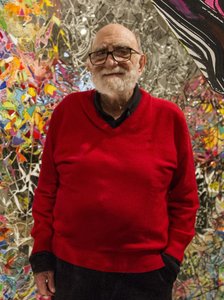
luís felipe noé
1933 - , Argentina
Quick Facts
- Artistic Movement Or Style: Neofiguration
- Artists Or Movements Influenced By This Artist: ['Otra Figuración']
- Artists Who Influenced This Artist: ['Modernismo']
- Date Of Birth: Buenos Aires, Argentina (1933)
- Full Name: luís felipe noé
- Nationality: Argentine
- Notable Artworks:
- Introducción a la esperanza
- Cerrado por brujería
- Figures
- Place Of Birth: Buenos Aires
Related Articles

Crimson Threads of Narrative: Exploring Symbolism & Representation in Artworks Featuring the Red Dress
Explore the rich symbolism of the red dress in art history! From ancient power displays to iconic portraits like Cézanne’s 'Madame Cezanne', discover the cultural and artistic significance behind this captivating color. Expert analysis & insights.

Monet's Masterpieces: 25 Iconic Artworks to Transform Your Home
Journey through 25 iconic Claude Monet masterpieces! Explore Impressionism’s beauty, from Water Lilies to Rouen Cathedral. Discover stunning art reproductions & curated decor ideas – explore the full collection online at ArtsDot.com.
Edvard Munch's Masterpieces: 25 Iconic Paintings for Art Lovers | ArtsDot
Explore 25 iconic Edvard Munch paintings, from 'The Scream' to lesser-known masterpieces. Discover the stories behind Expressionism’s most emotional works & find museum-quality art reproductions for your home at ArtsDot.com.
Francis Bacon's Masterpieces: Exploring 25 Iconic Paintings | ArtsDot
Delve into the haunting world of Francis Bacon with ArtsDot. Explore 25 iconic paintings, from his visceral portraits to powerful triptychs. Discover the stories behind these masterpieces & find museum-quality art reproductions for your home. Explore the full collection online!
Kandinsky's Masterpieces: 25 Paintings That Define Abstract Art | ArtsDot
Journey through Wassily Kandinsky's 25 most iconic abstract paintings. Explore his revolutionary use of color, form & spiritual expressionism. Find museum-quality Kandinsky reproductions and elevate your home decor with ArtsDot.com. Discover all masterpieces on ArtsDot.com!
![Escape Afuera [Escape Away]](/media/artworks/images/thumbnails/c7/25/c725865594b2473a9f0b204848023927.jpg)