 Preview
 Send
Send Share
Share
 Details

 Download
 Similars
 X-Ray
X-Ray Diaporama
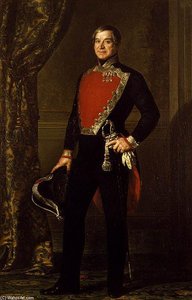
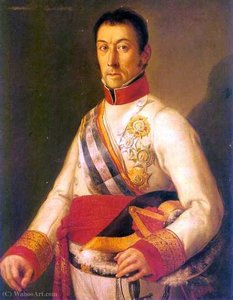
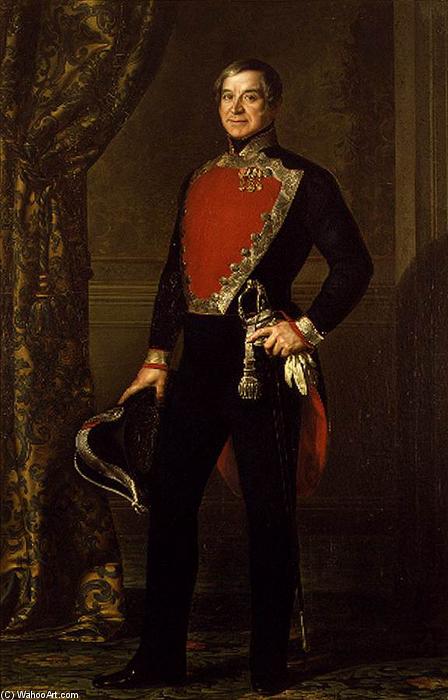
Portrait of Don Francisco Ignacio de Monserrat
 1842
1842 199.0 x 130.0 cm
 Museo de Bellas Artes
 Read More
Giclée / Art Print
Museum-quality giclée or canvas print with fast production and flexible finish options. ( Buy Hand Made Painting Buy Image)




































Pick from our preset sizes that match the artwork's original proportions.

You may enter your own dimensions to fit a specific frame or space. If your selected size does not match the original image's proportions, we will either crop the artwork or extend the image with a mirrored or solid-fill edge. A digital mockup will be sent for your approval before production begins.
Please note that the on-screen preview does not reflect the actual cropping or extension. Only the mockup will accurately show the final composition.
While custom sizes are available, we recommend selecting a dimension from the predefined list to preserve the original proportions.
Worldwide Delivery () in 2 weeks instead of standard 4/5 weeks. (27 August)

Free Worldwide Express Shipping

High-Quality Linen Canvas

Full Shipping Insurance

Customs Tax Refund Guarantee

True Color Matching Guarantee

60-Day Return Policy (Defects Only)

100% Money-Back Guarantee

Bulk Discount Offer
 Glass option is only available in size under 110 CM

Portrait of Don Francisco Ignacio de Monserrat
Giclée / Art Print
Reproduction Size
-


Total Price
$ 63
Related Artworks








Artist Biography
The Master of Light and Line: The Life of Luis López y Piquer
In the grand tapestry of nineteenth-century Spanish art, few threads are woven with as much precision and dramatic flair as those left by Luis López y Piquer. Born in the vibrant cultural landscape of Valencia in 1802, López y Piquer emerged as a painter who could bridge the gap between two seemingly opposing worlds: the theatrical, shadow-drenched intensity of the Baroque and the disciplined, idealized clarity of Neoclassicism. His journey was one of constant refinement, beginning with the foundational teachings of José Luzán Aragón, which anchored him in the Valencian tradition. This early immersion provided him with a profound understanding of chiaroscuro, the art of manipulating light to sculpt form out of darkness, a technique that would later lend his portraits an almost breathing vitality.
As his talent matured, López y Piquer sought horizons beyond the borders of Spain. His pilgrimage to Rome was a transformative epoch in his career. Under the guidance of Francesco Saverio Salviati, he moved away from regional idiosyncrasies and embraced the sweeping intellectual currents of the era. He became enamored with the principles of Neoclassicism, drawing inspiration from the monumental works of Antonio Canova and the rigorous compositions of Jacques-Lous David. This evolution allowed him to infuse his work with a sense of timelessness, where anatomical perfection met a restrained, noble emotion. The result was a style that did not merely record a face, but rather elevated his subjects to a state of eternal dignity.
A Legacy of Royal Grandeur and Meticulous Realism
The true hallmark of López y Piquer’s oeuvre lies in his unparalleled ability to capture the essence of status and soul through meticulous detail. He was a master of the medium, utilizing oil on canvas to create surfaces that shimmered with life. His brushwork was characterized by an extraordinary attention to the tactile world; one can almost feel the weight of heavy velvet, the cold smoothness of pearls, and the intricate lace of aristocratic garments. This dedication to realism served a higher purpose in his royal commissions, where he was tasked with projecting the majesty of the Habsburg monarchy and the elegance of the European elite.
His repertoire showcases a remarkable versatility that spans from the mythological to the deeply personal:
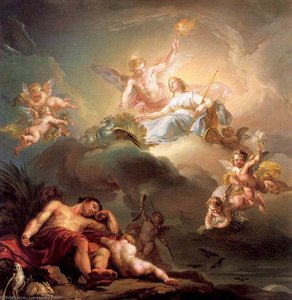
- The Divine and Mythological: In works such as The Goddess Juno in the House of Dreams, he demonstrated his ability to weave Baroque grandeur with Neoclassical precision, creating dreamlike atmospheres where celestial figures inhabit a space of soft light and ethereal beauty.
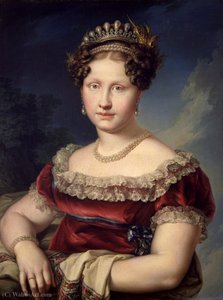
- Royal Portraiture: His Portrait of the Queen of the Two Sicilies stands as a testament to his skill in royal iconography, utilizing dramatic lighting and symbolic elements to convey the sovereign power and grace of his subject.
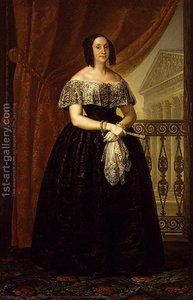
- Intimate Realism: Beyond the halls of palaces, his portraits of the Spanish nobility, such as the 1842 depiction of Doña Dolores Caldes de Monserrat, reveal a more romantic and tender side of his technique, capturing timeless elegance through subtle expressions and soft, luminous skin tones.
Ultimately, the historical significance of Luis López y Piquer lies in his role as a stylistic bridge. He navigated the transition from the dramatic shadows of the past to the structured clarity of the modern age, leaving behind a body of work that remains a cornerstone of Spanish Romanticism. His ability to marry the psychological depth of a portrait with the technical perfection of classical training ensures that his name continues to resonate within the halls of art history, inviting every viewer to witness the splendor of a bygone era.
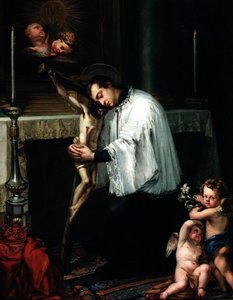
luis lópez y piquer
1802 - 1865 , Spain
Quick Facts
- Artistic Movement Or Style: Neoclassical Painting
- Artists Or Movements Influenced By This Artist: ['El Greco']
- Artists Who Influenced This Artist: ['Goya']
- Date Of Birth: Valencia, Spain (1802)
- Date Of Death: 1865
- Full Name: Luis López y Piquer
- Nationality: Spanish
- Notable Artworks:
- Portrait of the Queen of the Two Sicilies
- The Goddess Juno in the House of Dreams
- Portrait of Don Francisco Ignacio de Monserrat
- Place Of Birth: Valencia