

 Preview
 Send
Send Share
Share
 Details

 Download
 Similars
 X-Ray
X-Ray Diaporama
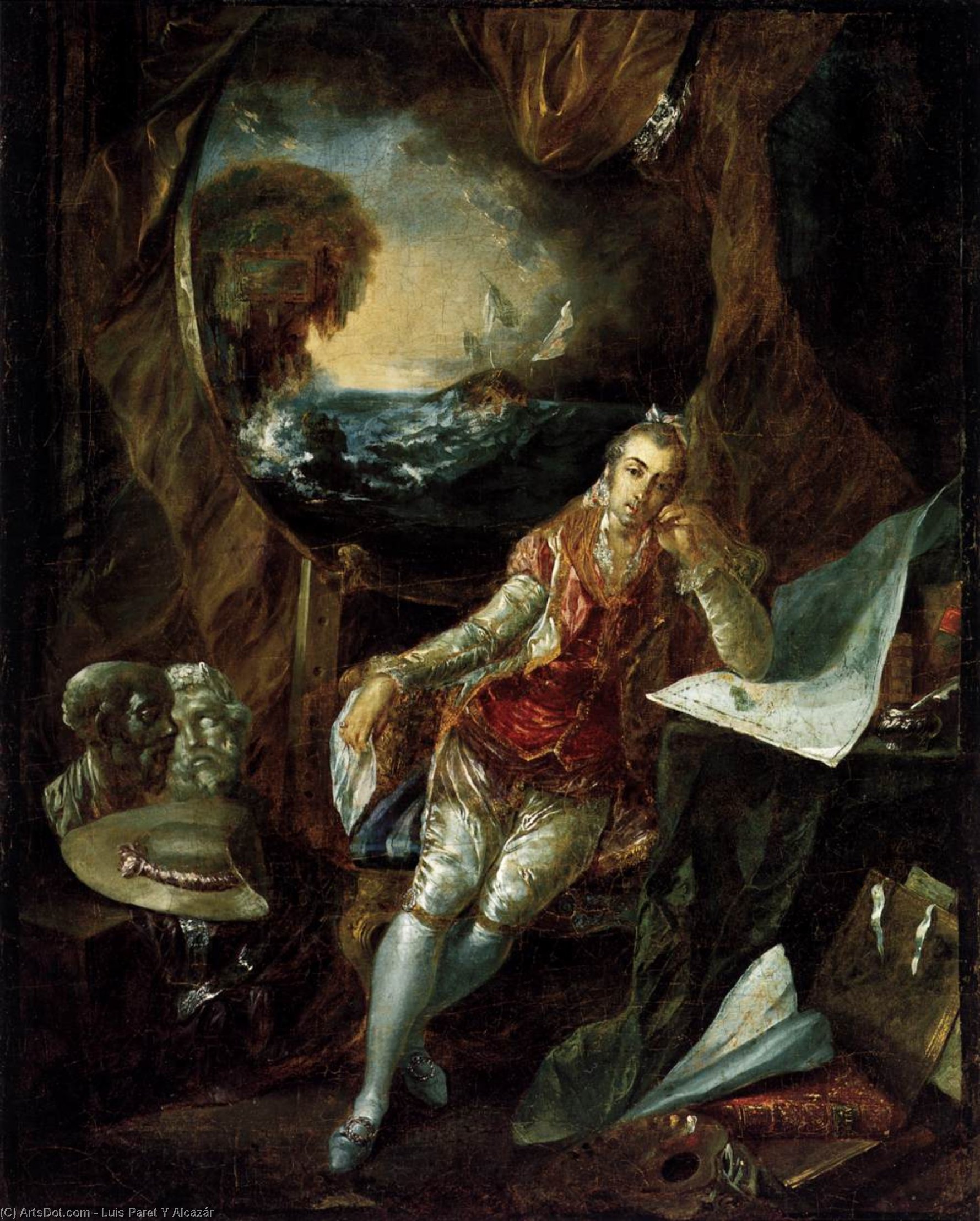
Self-Portrait in the Studio
 Oil On Canvas
- WallArt
- Rococo Visionary
 1786
1786 40.0 x 32.0 cm
 Museo del Prado
 Read More
Purchase a high-resolution, enhanced digital image, far superior to the online preview.
Each file is meticulously prepared by our in-house specialists using advanced tools and expert manual retouching. We ensure every image has exceptional clarity, precise color accuracy, and fine detail.
The final file is delivered via email within 72 hours, optimized for immediate use in professional, editorial, and print environments. This is the same quality trusted by top-tier design studios, publishers, and galleries.
Digital Image
Download a high-resolution file for personal display, printing, and creative projects. ( Buy Print Buy Hand Made Painting)
Included in Every Digital Image Order
Expert Digital Delivery, Guaranteed
When you choose ArtsDot.com, you're not just getting an image - you're receiving a professionally enhanced digital artwork, crafted with precision and backed by a satisfaction guarantee. Here's everything that comes with your order, automatically:

Fast Email Delivery
Your high-resolution digital image file will be emailed to you within 72 hours of ordering - ready for immediate use.

AI-Enhanced Digital File
Your artwork is professionally optimized using advanced AI tools and manual editing, ensuring maximum detail, clarity, and color accuracy.

Free Lifetime Re-Delivery
Accidentally deleted or lost your file? No worries - we'll resend it to you anytime, free of charge.

No Import Fees - Ever
Enjoy your artwork instantly with zero customs, duties, or delivery fees - digital downloads are always tax-free.

Color Accuracy Guarantee
We ensure your digital image reflects the original colors as closely as possible using professional tools and color management.

60-Day Satisfaction Guarantee
If you're not satisfied with your digital image, we'll revise it or refund 100% within 60 days - no questions asked.

100% Money-Back Guarantee
Not satisfied? Get a full refund within 60 days of receiving your digital file - no questions asked.

Bulk Order Discounts
Buy 3 images, save 10% - Buy 5, save 15% - Buy 10+, save 20%. Great for creative projects, galleries, and agencies.
Collectible Description
The Quiet Intensity of “Self-Portrait in the Studio” by Luis Paret y Alcázar
Luis Paret y Alcázar’s “Self-Portrait in the Studio,” painted in 1786, isn't merely a depiction of an artist at work; it’s a profound meditation on creativity, solitude, and the burgeoning spirit of the Rococo era. This intimate canvas offers a rare glimpse into the private world of a Spanish master, revealing not just his physical likeness but also a carefully constructed atmosphere brimming with intellectual curiosity and artistic contemplation.
The painting immediately draws the eye to Paret himself, seated in a modestly furnished studio bathed in soft, diffused light. He’s rendered with remarkable detail – the slightly furrowed brow, the attentive gaze directed towards two open books resting on a nearby table, the subtle curve of his lips suggesting both concentration and a hint of amusement. The red jacket he wears, a bold splash of color against the muted tones of the room, speaks to his status and perhaps even a touch of self-conscious vanity – a detail that invites speculation about the artist’s perception of himself.
A Rococo Sanctuary: Setting and Symbolism
The studio itself is meticulously rendered, suggesting a space both familiar and carefully curated. Two volumes—one on the left, the other on the right—sit open before him, hinting at his scholarly pursuits and intellectual engagement. A clock hangs prominently on the wall above, a symbol of time’s relentless passage yet seemingly irrelevant to the artist's current focus. The presence of a dining table with a simple bowl adds a touch of domesticity, grounding the scene in everyday life while simultaneously elevating it through the act of artistic creation.
Crucially, the window behind Paret is not depicted as a source of natural light; instead, it’s shrouded in shadow. This deliberate choice is profoundly symbolic. It represents the artist's internal world—his imagination and inspiration—rather than the external reality. The absence of visible nature suggests a retreat from the outside world, a deliberate isolation necessary for focused creative work. This echoes the Rococo ideal of the *saloon*, a private space dedicated to intellectual pursuits and artistic contemplation.
Technique and Artistic Style: A Masterful Blend
Paret’s technique is characterized by its delicate precision and subtle use of color. He employs a soft, diffused light that creates an atmosphere of intimacy and tranquility. The brushstrokes are smooth and controlled, contributing to the painting's overall sense of refinement and elegance – hallmarks of the Rococo style. The artist skillfully utilizes chiaroscuro—the contrast between light and shadow—to sculpt Paret’s features and create a three-dimensional effect, adding depth and realism to the portrait.
Notably, the painting avoids overt grandeur or dramatic poses, aligning with the Rococo preference for understated elegance. Paret's self-portrait isn't about showcasing power or status; it’s about revealing his artistic process and inviting the viewer into his creative space. The composition is balanced and harmonious, reflecting a sense of intellectual order and aesthetic sensibility.
A Window into the Mind: Emotional Resonance
“Self-Portrait in the Studio” transcends a simple likeness; it’s a poignant portrayal of an artist lost in thought. The quiet intensity of Paret's gaze, combined with the carefully arranged details of his studio, evokes a sense of introspection and creative solitude. It speaks to the universal human experience of seeking inspiration within oneself—a theme that resonates deeply across centuries.
This painting offers a valuable insight into the mind of a significant figure in Spanish art history. It’s a testament to Paret's skill as a painter, his understanding of Rococo aesthetics, and his ability to capture not just an image but also a mood—a quiet moment of artistic contemplation that continues to captivate viewers today. Reproductions of this work offer a beautiful addition to any collection or interior space, inviting the viewer to share in the artist’s private world.
Related Artworks


Artist Biography
A Rococo Visionary: The Luminous World of Luis Paret y Alcázar
In the vibrant, sun-drenched tapestry of 18th-century Spain, few artists captured the delicate interplay of light and social elegance as masterfully as Luis Paret y Alcázar. A true visionary of the late Baroque and Rococo periods, Paret possessed a rare ability to transform the mundane into the magnificent. His life, spanning from his birth in Madrid in 1746 to his passing in 1799, was a journey through the heart of Spanish cultural evolution. Through his brush, the rigid structures of tradition met the airy, whimsical spirit of the Rococo, creating a body of work that remains a shimmering window into an era of profound transformation.
Paret’s artistic foundation was laid within the prestigious halls of the Academia Real de San Fernando. Under the tutelage of Antonio González Velázquez, he absorbed the rigorous techniques of the Spanish tradition, yet his spirit yearned for something more cosmopolitan. This thirst for innovation led him to the studio of the French painter Charles de la Traverse. This pivotal association introduced Paret to French artistic sensibilities, infusing his work with a certain je ne sais quoi—a lightness and grace that would become his hallmark. His early academic triumphs, including winning first prize in a prestigious painting contest in 1766, signaled the arrival of a prodigious talent capable of bridging the gap between Spanish gravity and European elegance.
The Art of the Vedute and the Spirit of Place
One of Paret’s most enduring legacies lies in his mastery of the vedute—detailed, panoramic landscapes that serve as topographical chronicles of the Spanish empire. He was a painter of ports and horizons, capturing the bustling maritime life of locations such as Cádiz and Puerto Rico with an almost scientific precision tempered by artistic soul. These works were more than mere maps; they were atmospheric evocations of a world in motion. In his depictions of harbors, one can sense the salt spray and the rhythmic pulse of trade, rendered through a meticulous attention to detail that celebrates both the grandeur of the landscape and the intricate machinery of human commerce.
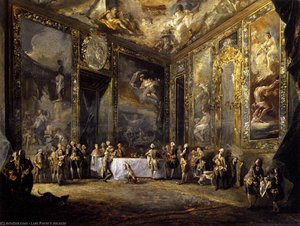
Beyond the sweeping vistas, Paret found profound beauty in the intimate "bambochadas"—genre scenes that offered nuanced portrayals of everyday life. These compositions often featured the upper echelons of society engaged in refined leisure, such as the captivating Elegant Company Preparing for a Masked Ball. In these moments, Paret utilized a palette of soft colors and luminous light to evoke the textures of silk, lace, and powdered skin. His ability to render the opulent spirit of the court, seen in works like Charles III Dining Before the Court, allowed him to document the social dynamics of Enlightenment Spain with unparalleled grace.
Legacy and Artistic Significance
The significance of Luis Paret y Alcázar extends far beyond the borders of Spain. His influence traveled across oceans, notably shaping the trajectory of Puerto Rican art through his pupil, José Campeche. Even when faced with the political upheavals that led to periods of exile, Paret’s commitment to his craft remained unshakable. His technical versatility—ranging from the delicate precision of pen and ink studies to the vibrant, luminous quality of oil on copper—demonstrates an artist who was constantly pushing the boundaries of his medium.
Today, the works of Paret, many of which are preserved in the hallowed halls of the Museo del Prado, serve as essential touchstones for understanding the transition from the dramatic shadows of the Baroque to the light-filled optimism of the Rococo. He remains a celebrated figure whose oeuvre captures the very essence of an age: a period defined by a search for beauty, a fascination with the new, and an enduring reverence for the elegance of the human experience.
luis paret y alcázar
1746 - 1799
Quick Facts
- Artistic Movement Or Style: Rococo
- Artists Or Movements Influenced By This Artist: ['Charles de la Traverse']
- Artists Who Influenced This Artist: ['Antonio González Velázquez']
- Date Of Death: 1799
- Full Name: Luis Paret y Alcázar
- Nationality: Spanish
- Notable Artworks:
- Village Scene and View of Fuenterrabia
- Esperando los Reyes
- Place Of Birth: Madrid, Spain

